










Third-Party PPF Testing: REACH, RoHS and PFAS Results
A practical review of SHIELD SPIRIT third-party REACH, RoHS and PFAS testing for a transparent PPF sample.
A Test Report Is Useful Only When You Read Its Limits
A third-party test report can strengthen a PPF buying decision, but only if the result is read together with the sample description, method, detection limit and conclusion. A result marked N.D. is not a claim of absolute zero; it means the substance or measured element was not detected above the stated method or report limit.
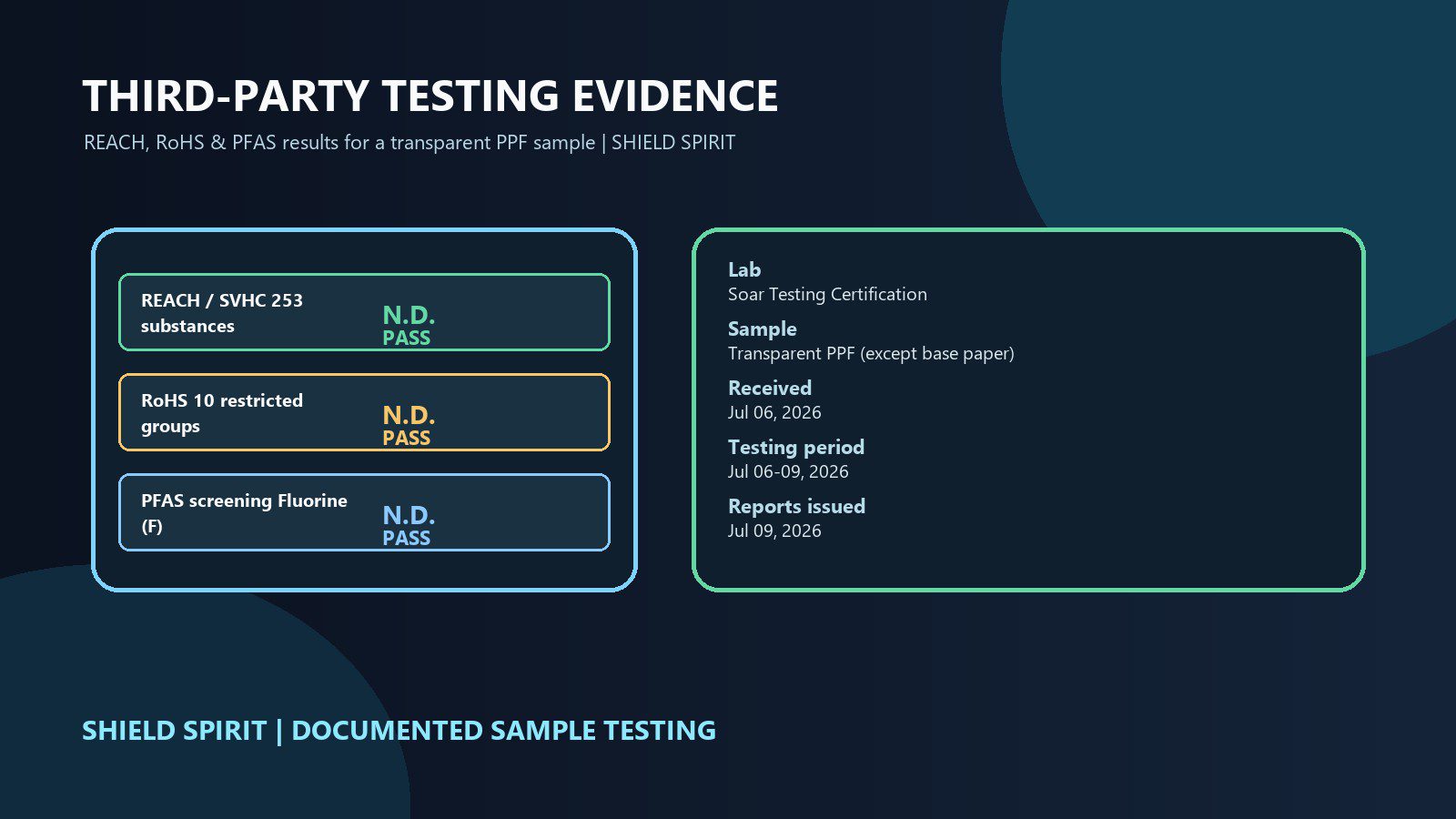
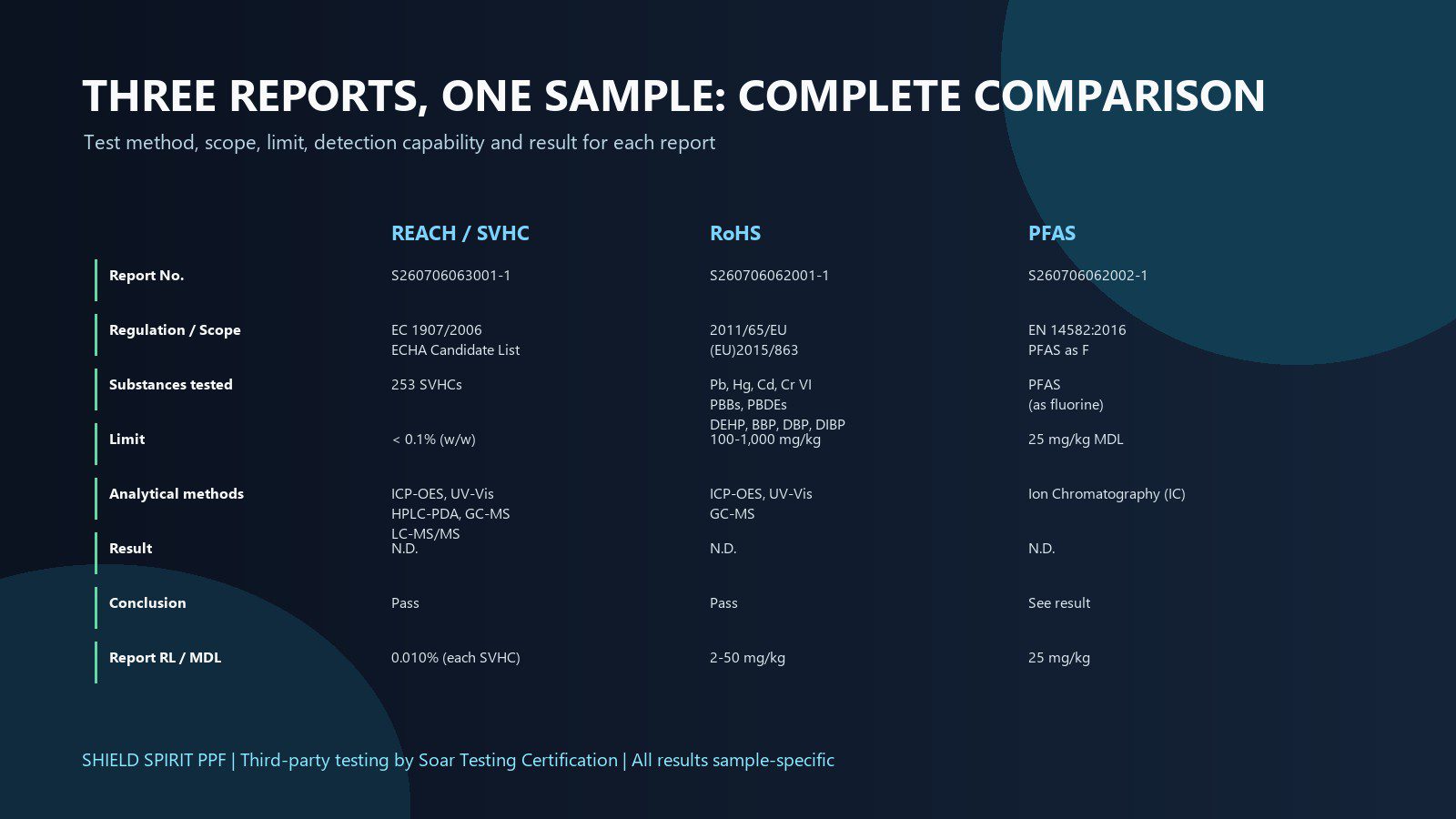
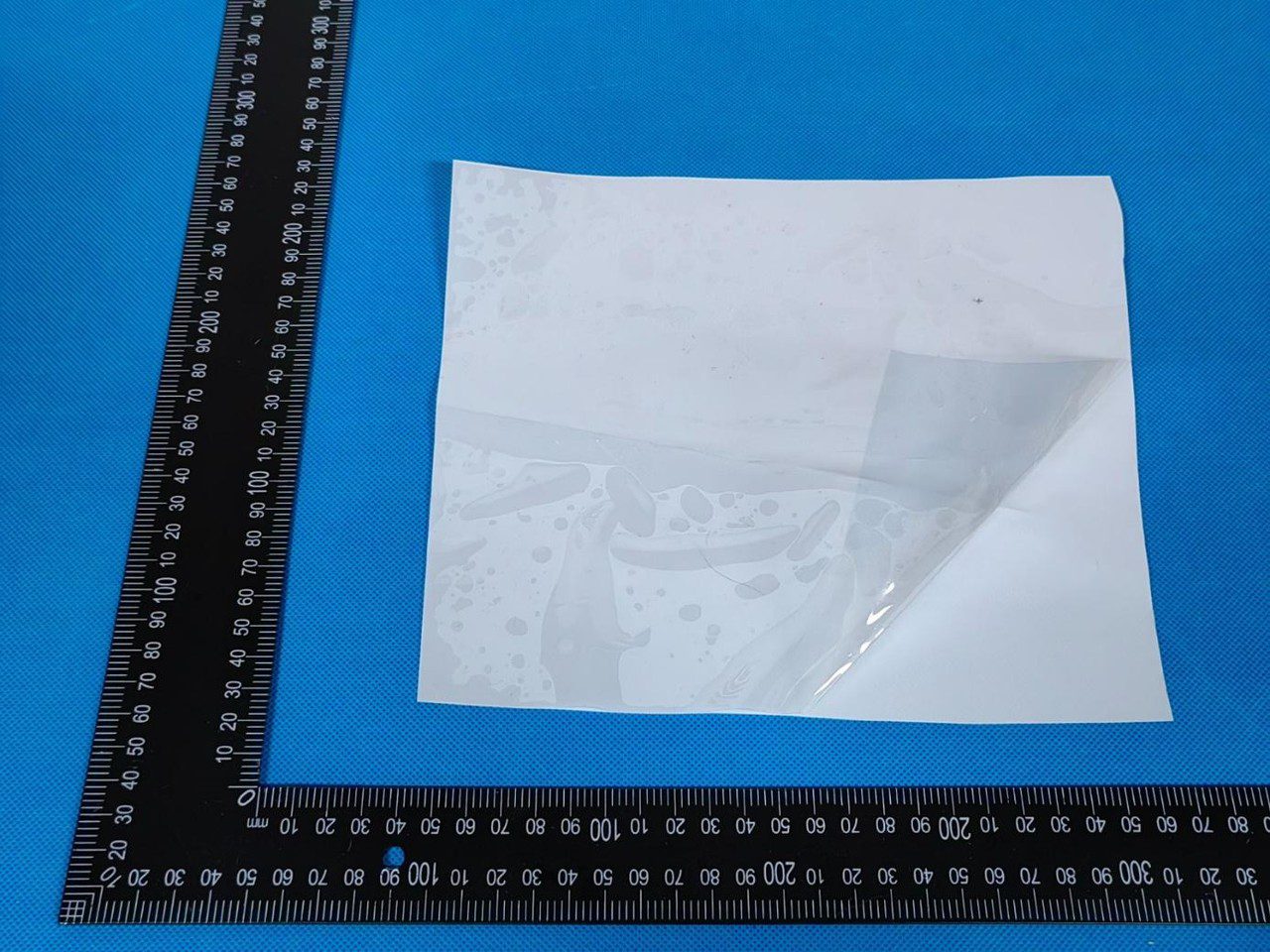
SHIELD SPIRIT commissioned three reports for the same transparent PPF sample without the base paper, all tested by Soar Testing Certification (Guangdong): one REACH / SVHC report (31 pages), one RoHS report (12 pages) and one PFAS screening report (5 pages). Together, they provide a comprehensive view of chemical-risk screening for the submitted film, while the reports remain sample-specific and method-specific.
Report Scope and Sample Identity
| Report | Report No. | Date | Sample | Sample description | Pages |
|---|---|---|---|---|---|
| REACH / SVHC | S260706063001-1 | Jul 09, 2026 | PPF Paint Protection Film (Invisible Car Wrap Film) | Transparent film, except base paper | 31 |
| RoHS | S260706062001-1 | Jul 09, 2026 | Transparent PPF | Transparent film, except base paper | 12 |
| PFAS | S260706062002-1 | Jul 09, 2026 | PPF Paint Protection Film (Invisible Car Wrap Film) | Transparent film, except base paper | 5 |
The sample was received on July 6, 2026 and tested from July 6 to July 9, 2026, with all three reports issued on July 9, 2026. The reports identify the same type of transparent PPF sample, so the results can be discussed together, but they should not be generalized automatically to every grade, lot, color or future production batch.
REACH / SVHC Results (253 Substances)
What was tested and how
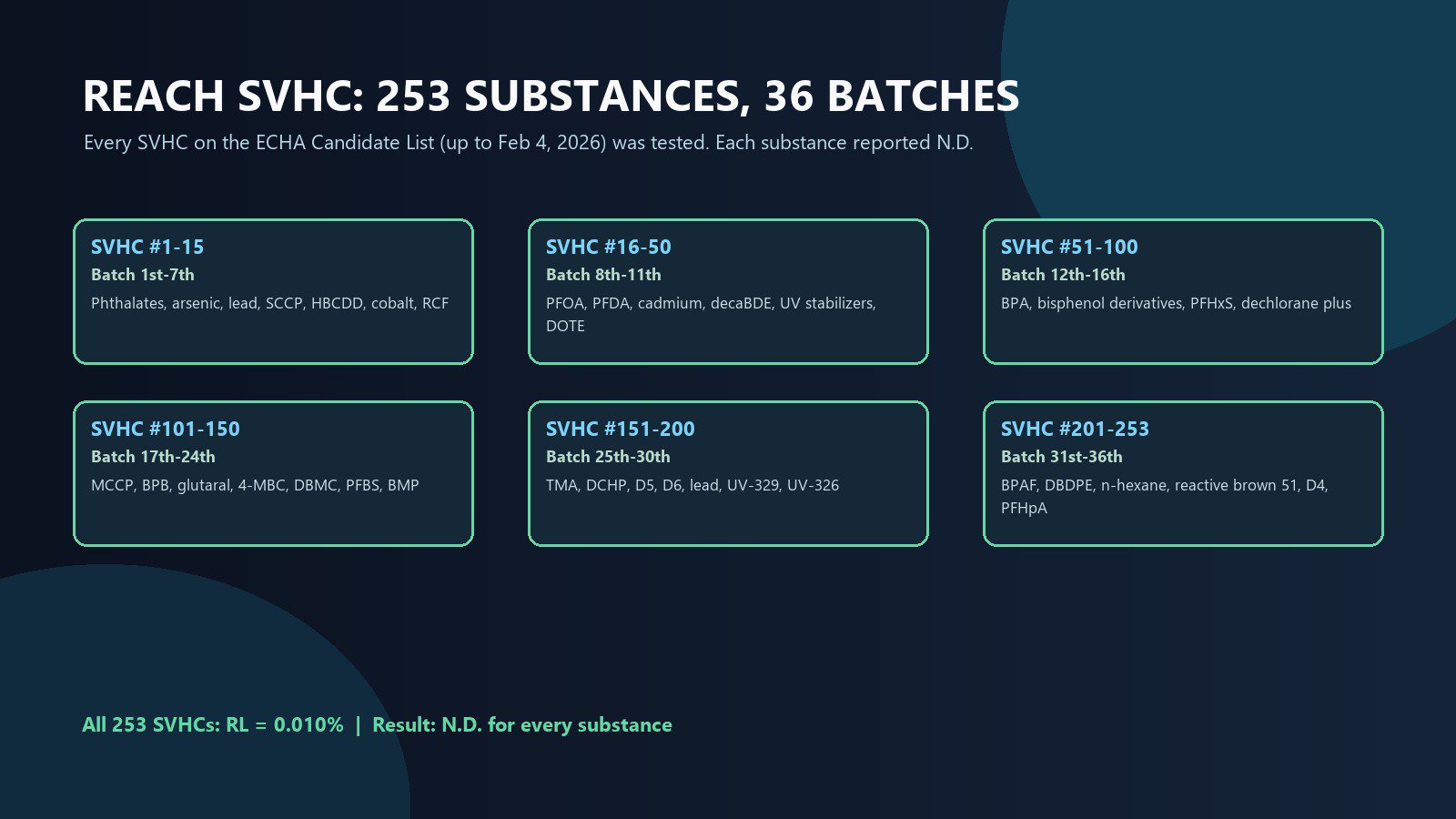
The REACH report follows Regulation (EC) No 1907/2006 and the ECHA Candidate List of 253 SVHC substances published on or before February 4, 2026. The report is 31 pages long and covers the full Candidate List across 36 publication batches, from the first batch (2008) through the thirty-sixth batch (2024-2026 additions). The laboratory used multiple analytical techniques: ICP-OES, UV-Vis, HPLC-PDA, GC-MS and LC-MS/MS, depending on the substance group. Each substance has a Report Limit (RL) of 0.010% (w/w), derived from the 0.1% threshold, measurement uncertainty, and ECHA Guidance on requirements for substances in articles (4th edition, 2017).
Result summary
| Test item | Unit | RL | Result | Conclusion |
|---|---|---|---|---|
| All tested 253 SVHCs in the chemical list | % (w/w) | 0.010% per substance based on 0.1% threshold and ECHA guidance | N.D. | Pass |
The 36-batch publication structure
The ECHA Candidate List is published in batches. The report covers all 36 batches, from the first batch (2008, SVHC #1-15 including anthracene, DBP, DEHP, BBP, SCCP, HBCDD, cobalt dichloride, sodium dichromate and arsenic compounds) through the most recent thirty-sixth batch (2024-2026, SVHC #251-253 including DBDPE, n-hexane, BPAF and its salts). Every substance in every batch was reported as N.D. below 0.010% RL.
Detailed batch breakdown
The report lists each of the 253 substances with its CAS number, EC number, and individual RL. Representative substances per batch include: Batch 1 (SVHC #1-15): anthracene, DBP, DEHP, BBP, TBTO, HBCDD, SCCP, arsenic compounds; Batch 2 (SVHC #16-28): anthracene oil, DIBP, 2,4-DNT, lead chromate, TCEP, acrylamide; Batch 3-4 (SVHC #29-44): trichloroethylene, boric acid, sodium chromate, chromium trioxide, cobalt compounds; Batch 5-7 (SVHC #45-84): strontium chromate, hydrazine, DMAC, phenolphthalein, RCF, lead azide, formamide, TGIC, Michler’s ketone, C.I. Basic Violet 3; Batch 8-10 (SVHC #85-146): DecaBDE, PFOA, APFO, cadmium, cadmium oxide, DPP, DnHP, C.I. Direct Red 28, C.I. Direct Black 38; Batch 11-15 (SVHC #147-169): cadmium chloride, sodium perborate, UV-328, UV-320, DOTE, MOTE, cadmium fluoride, BPA, benzo[a]pyrene; Batch 16-20 (SVHC #170-197): BPA, PFDA, PFHxS, Dechlorane Plus, benz[a]anthracene, chrysene, TMA, DCHP, D5, D6, D4, lead; Batch 21-25 (SVHC #198-219): HFPO-DA, TNPP, PTBP, UV-329, PFBS, BMP, TBNPA, MCCP, glutaral, bisphenol B, DBMC; Batch 26-30 (SVHC #220-240): 4-MBC, UV-326, bisphenol S, melamine, perfluoroheptanoic acid, TPP, UV-329; Batch 31-36 (SVHC #241-253): BPAF, DBDPE, n-hexane, reactive brown 51, D4, PFHpA, perfluamine, and the most recent additions.
Analytical methods per substance group
The report used ICP-OES for metals and elements (lead, cadmium, arsenic, cobalt, chromium, barium, boron), UV-Vis for hexavalent chromium and colourimetric determinations, HPLC-PDA for certain organic SVHCs, GC-MS for volatile and semi-volatile organic compounds (phthalates, PAHs, brominated flame retardants, chlorinated paraffins, siloxanes), and LC-MS/MS for polar and ionic substances (PFOA, PFDA, PFHxS, bisphenols, perfluorinated compounds). The sample preparation included acid digestion with microwave or hotplate, solvent extraction, and alkali fusion where required.
REACH notification and Article 33 — what the rules say
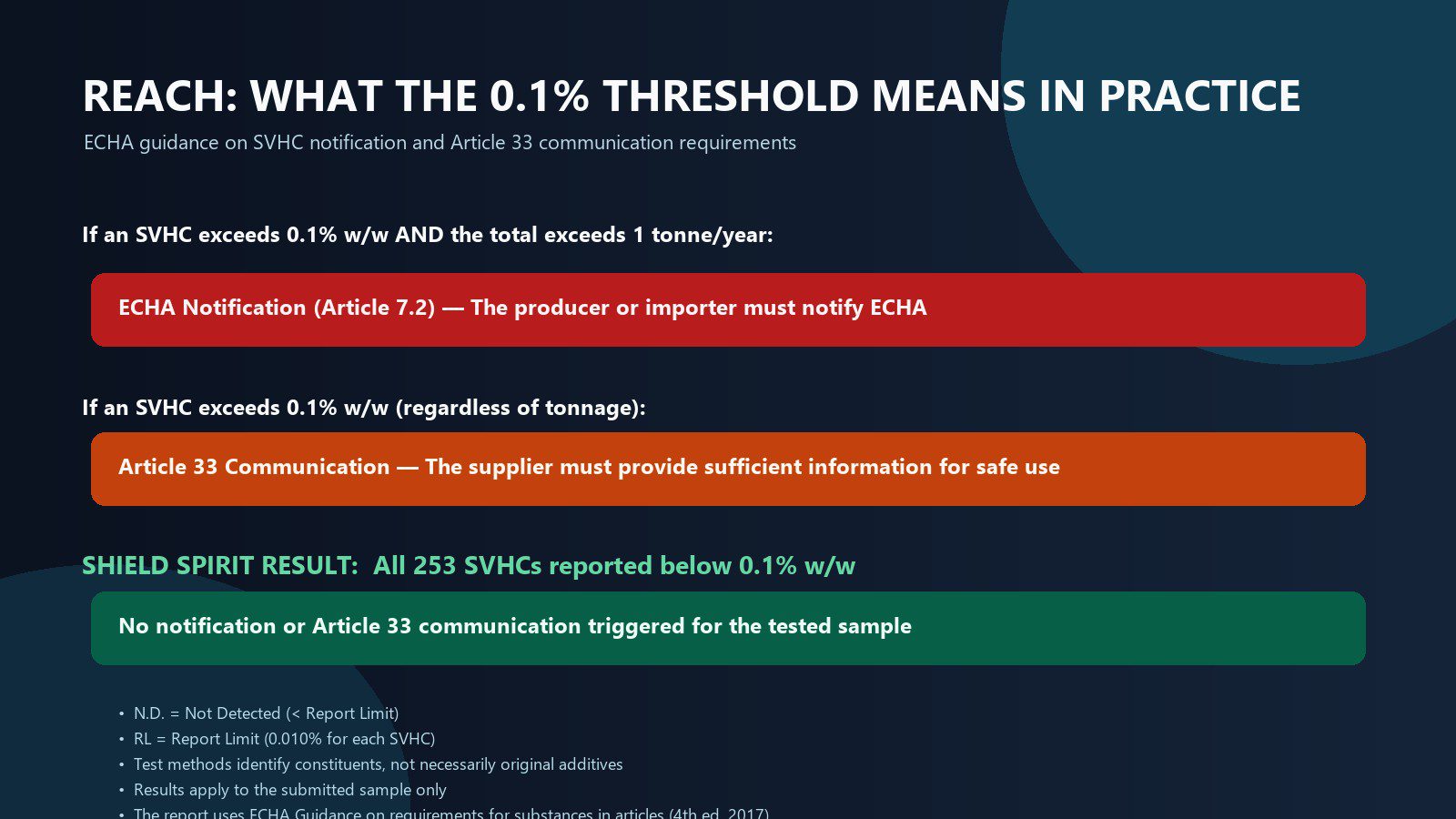
The REACH report includes important notes about two regulatory obligations that apply when an SVHC is present at or above 0.1% w/w:
ECHA Notification (Article 7.2): If the substance is present above 0.1% w/w and the total quantity exceeds one tonne per year per producer or importer, the company must notify ECHA. This is a legal obligation, not an optional step.
Article 33 Communication: If the substance is present above 0.1% w/w, the supplier must provide the recipient with sufficient information to allow safe use, including — at minimum — the name of the substance. This applies regardless of tonnage.
The SHIELD SPIRIT result for all 253 SVHCs is below 0.1% w/w, so neither notification nor Article 33 communication is triggered for the tested sample. However, the buyer should verify this for the exact finished product, supply chain and market.
RoHS Results (10 Restricted Substance Groups)
The four classic heavy metals
The RoHS report (12 pages, report no. S260706062001-1) tests the four restricted heavy metals under Directive 2011/65/EU and (EU) 2015/863. The analytical methods used were EN 62321-4:2014+A1:2017 (ICP-OES for Pb, Hg, Cd) and EN 62321-5:2014 / EN 62321-7-2:2017 (UV-Vis for Cr VI). The report includes a detailed testing flow chart showing the complete sample preparation and analysis process: acid digestion with microwave or hotplate, filtration, then ICP-OES analysis for Pb, Cd and Hg; for Cr VI, the sample undergoes alkaline digestion, heating to 90-95°C for extraction, pH adjustment, then 1,5-diphenylcarbazide colour development and UV-Vis confirmation.
| Test item | Limit | Unit | MDL | Result | Conclusion |
|---|---|---|---|---|---|
| Lead (Pb) | 1,000 | mg/kg | 2 | N.D. | PASS |
| Mercury (Hg) | 1,000 | mg/kg | 2 | N.D. | PASS |
| Cadmium (Cd) | 100 | mg/kg | 2 | N.D. | PASS |
| Hexavalent Chromium (Cr VI) | 1,000 | mg/kg | 2 | N.D. | PASS |
PBBs and PBDEs — 20 individual compounds tested, 2 sum results
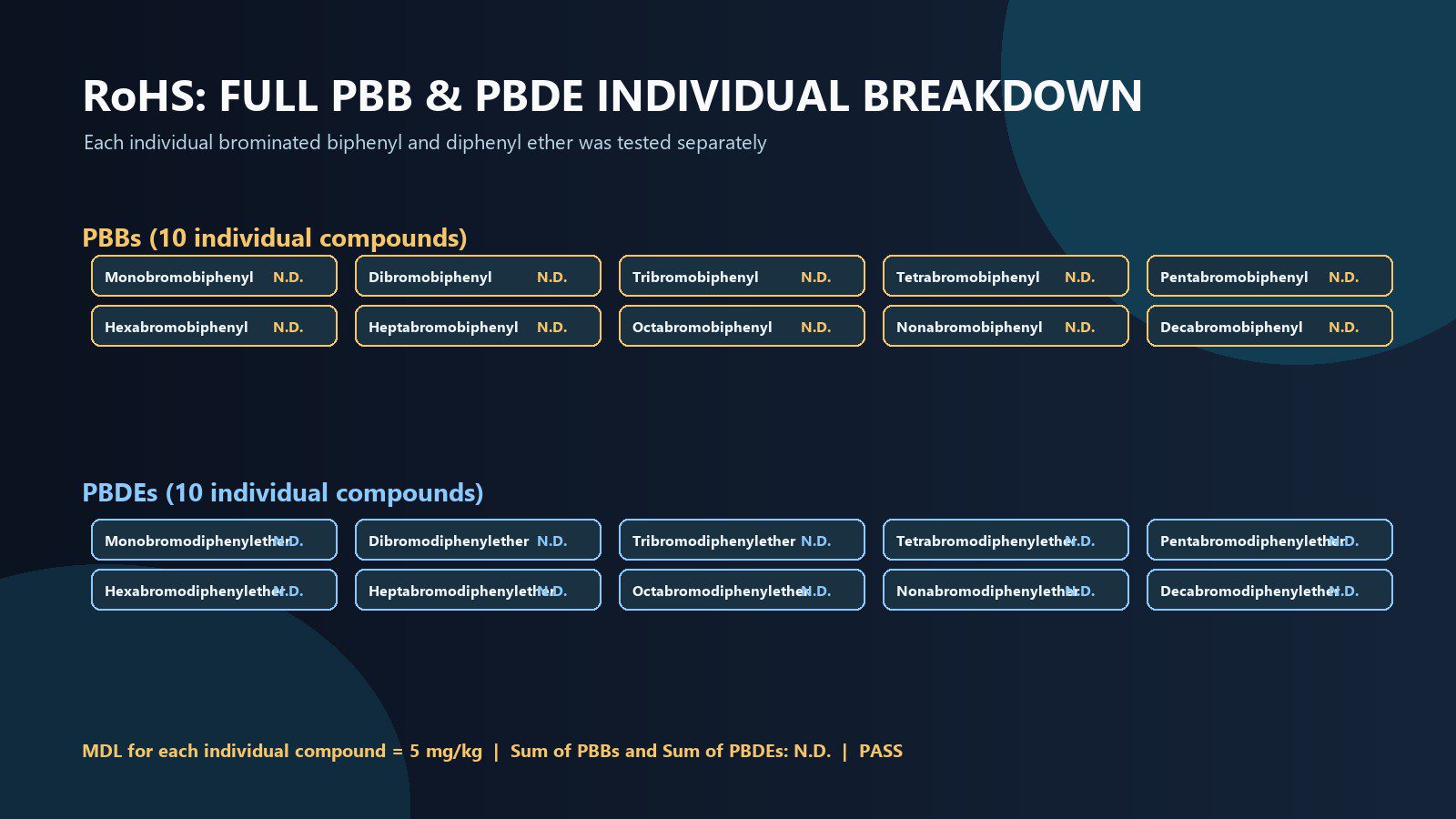
The RoHS report does not only report a sum result. It lists each individual brominated biphenyl and diphenyl ether separately, with a 5 mg/kg MDL for each compound. The test method was EN 62321-6:2015 using GC-MS. The sample preparation follows a dedicated flow: cutting, weighing, solvent extraction, concentration or dilution, filtration, then GC-MS analysis. Every individual compound from monobromobiphenyl (CAS 101-55-3) through decabromobiphenyl (CAS 13654-09-6) and from monobromodiphenylether (CAS 101-55-3) through decabromodiphenylether (CAS 1163-19-5) was reported as N.D. at a 5 mg/kg MDL.
| Group | Limit | Unit | Result | Conclusion |
|---|---|---|---|---|
| Sum of PBBs (10 individual compounds) | 1,000 | mg/kg | N.D. | PASS |
| Sum of PBDEs (10 individual compounds) | 1,000 | mg/kg | N.D. | PASS |
Phthalates (DEHP, BBP, DBP, DIBP)
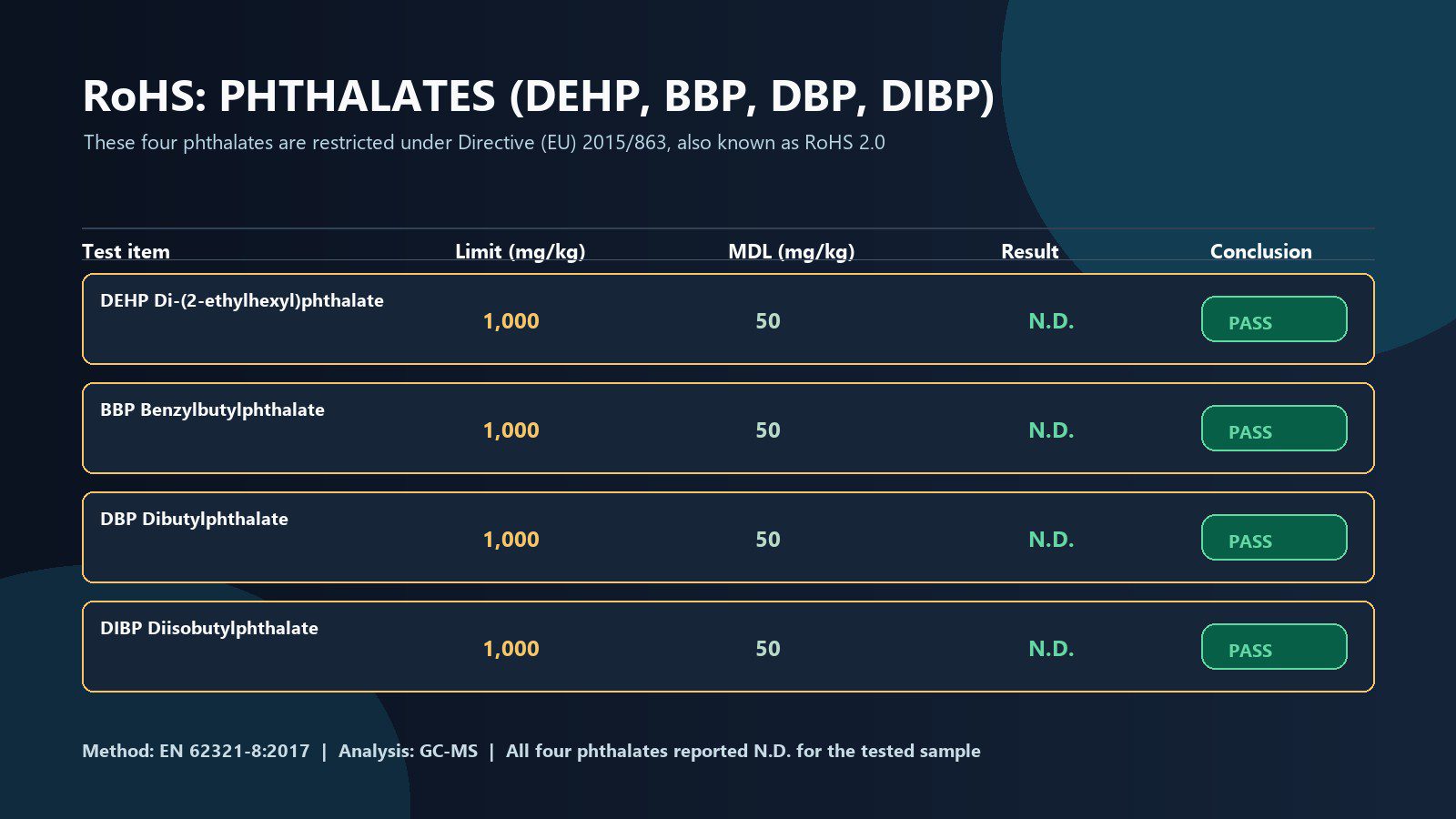
The four restricted phthalates under Directive (EU) 2015/863 were tested by EN 62321-8:2017 using GC-MS. Each has a limit of 1,000 mg/kg and an MDL of 50 mg/kg. The phthalate testing flow chart follows the same pattern: cutting, weighing, solvent extraction, concentration/dilution, filtration, then GC-MS analysis. All four were reported as N.D.
| Test item | Limit | Unit | MDL | Result | Conclusion |
|---|---|---|---|---|---|
| DEHP | 1,000 | mg/kg | 50 | N.D. | PASS |
| BBP | 1,000 | mg/kg | 50 | N.D. | PASS |
| DBP | 1,000 | mg/kg | 50 | N.D. | PASS |
| DIBP | 1,000 | mg/kg | 50 | N.D. | PASS |
What a RoHS exceedance could mean
If a restricted substance exceeds the applicable limit, the buyer may face a product-compliance review before placing the product in an in-scope market. Possible consequences include additional testing, corrective action, delayed shipment, customs or distributor questions, and difficulty supporting a customer audit. The practical cost is not only the chemical issue itself; it can also include rework, replacement stock and lost confidence in the supplier. The reported N.D. results are therefore useful evidence for the tested sample. They support a more confident technical file, but a buyer should still confirm the exact product construction, lot traceability and any legal scope that applies to the intended application.
PFAS Screening Result
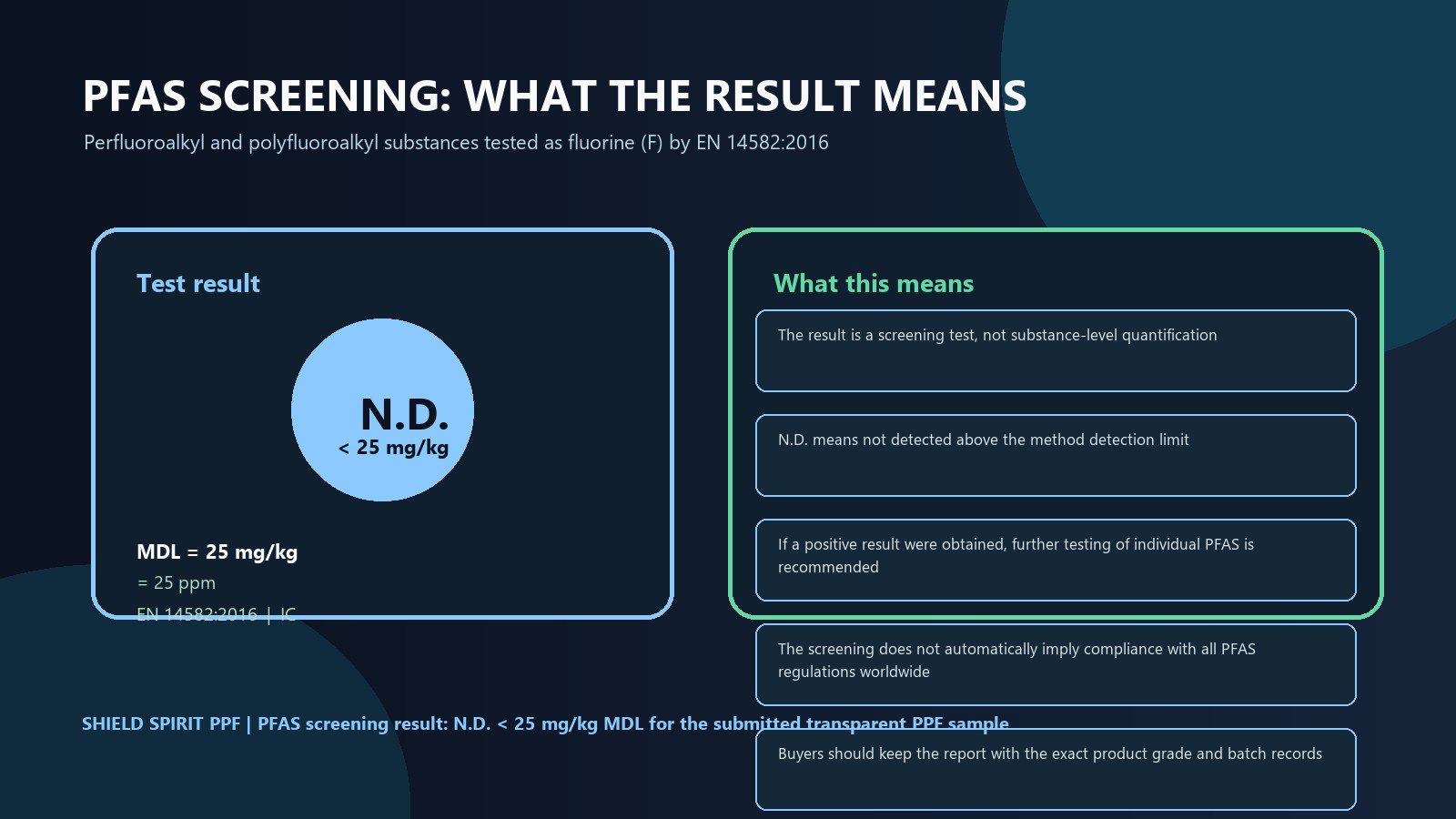
The PFAS report (5 pages, report no. S260706062002-1) tests perfluoroalkyl and polyfluoroalkyl substances as fluorine (F) by the standard method EN 14582:2016, using Ion Chromatography (IC) for analysis. The sample is a transparent film (except base paper), tested under the same conditions as the other two reports. The method detection limit (MDL) is 25 mg/kg.
| Test item | Method | Unit | MDL | Result |
|---|---|---|---|---|
| Perfluoroalkyl and polyfluoroalkyl substances (PFAS), as fluorine (F) | EN 14582:2016; Ion Chromatography (IC) | mg/kg | 25 | N.D. |
The PFAS report defines mg/kg as milligrams per kilogram, equivalent to parts per million, and defines N.D. as Not Detected, below the method detection limit. The result therefore means that fluorine associated with the reported PFAS screening item was not detected above 25 mg/kg under the stated test conditions.
This is a bounded screening result, not proof that every individual PFAS molecule is absent. The report also states: “If a positive result is obtained, further testing of individual PFAS is recommended to verify the actual concentration of PFAS in the test sample.” That wording is important for responsible communication: it tells buyers what the screening shows and where product-specific follow-up may still be needed.
Why PFAS data matters to buyers
PFAS-related requirements can vary by jurisdiction, product use and the specific substance or group being regulated. If a product produces a positive or concerning result, the buyer may need substance-level identification, additional declarations, customer notification or a reformulation discussion. A documented negative screening result can reduce uncertainty, but it should be kept together with the exact formulation and batch records.
How to Read N.D., MDL and RL
| Term | Plain-English meaning | What it does not mean |
|---|---|---|
| N.D. / Not Detected | The result is below the method detection limit or report limit | Absolute zero concentration |
| MDL / Method Detection Limit | The lowest level the method can reliably distinguish under its conditions | A universal limit for every regulation |
| RL / Report Limit | The reporting threshold used in the REACH report (0.010% per SVHC) | A guarantee covering every product or batch |
| PASS | The sample met the report’s stated criteria | Automatic compliance with every market rule |
These distinctions protect both buyers and suppliers. They prevent a technically correct report from being turned into an overly broad marketing promise, and they help importers explain exactly what evidence they hold when a customer or auditor asks for proof.
What Could Happen If a Result Exceeds a Limit?
| Risk area | Possible real-world consequence | Buyer action |
|---|---|---|
| Market access | Shipment review, import delay or a request for extra evidence | Confirm applicable rules before shipment and keep current reports |
| Customer audits | Supplier approval may be paused or corrective action requested | Maintain lot traceability, declarations and change-control records |
| Supply-chain disclosure | Substance information may need to be passed to downstream customers | Identify the legal trigger and prepare accurate communication |
| Installation and warranty | A formulation change or unstable material may affect appearance or claims | Link test evidence to the exact grade, batch and warranty scope |
| Commercial relationship | Rework, replacement stock and loss of trust | Use trial orders, retained samples and a documented escalation process |
An exceedance is not only a laboratory number. It can become a logistics issue, a documentation issue, an installer issue and a relationship issue at the same time. This is why buyers should evaluate a factory’s response process as well as the test result itself.
Why Third-Party Testing Builds Confidence in SHIELD SPIRIT
SHIELD SPIRIT presents these results as product evidence, not as a substitute for buyer due diligence. The reports show that the submitted transparent PPF sample was screened against 253 REACH SVHC substances, 20 individual PBB/PBDE compounds, 4 phthalates, 4 heavy metals and a PFAS-as-fluorine method with a 25 mg/kg MDL. Every result was reported as N.D. or PASS under the stated test conditions. That level of detail gives distributors, installers and end customers something more useful than a general “eco-friendly” label.
For product-specific comparisons, buyers can also review the premium TPU PPF range, the next-generation PCU PPF range and the standard TPU PPF range for different performance and warranty options. The right choice should be based on the exact construction, technical data sheet, certificate of analysis, warranty, installation guidance and target-market requirements.
Our recommendation is practical: use SHIELD SPIRIT’s documented testing as a strong starting point for supplier qualification, then request the report for the exact grade and production lot when the application or market requires it. Transparent evidence, clear limitations and responsive technical support are the foundation of a dependable PPF supply partnership.
Buyer Checklist
Before placing an order
Ask for the exact product grade, current TDS, COA, report date, sample description, lot traceability, warranty scope, installation instructions and the intended-market compliance package.
When reviewing a report
Check the report number, test date, sample identity, methods, units, MDL or RL, result notation and conclusion. Do not treat N.D. as absolute zero or PASS as universal approval.
For repeat production
Confirm how SHIELD SPIRIT controls formulation changes, retains samples, records lots and handles a result that needs additional investigation.
Conclusion
The three reports provide a clear, evidence-based snapshot of one transparent PPF sample. REACH testing reported all 253 tested SVHCs below the stated 0.1% w/w threshold, with each substance at or below 0.010% RL. RoHS testing reported N.D. results across all 10 restricted substance groups with PASS conclusions, including 20 individual PBB/PBDE compounds. PFAS screening reported N.D. below a 25 mg/kg MDL. None of the ECHA notification or Article 33 communication obligations are triggered for the tested sample.
For overseas buyers, the value is not a promise of universal compliance. It is a documented basis for a better conversation about materials, chemical management, traceability and long-term supply reliability. That is the standard SHIELD SPIRIT aims to bring to every PPF partnership.