










Global PPF Market Outlook 2026: Competition, Buyers and the Road Ahead
An analyst view of the 2026 global PPF market, including regional demand, competition, buyer priorities, pricing logic, risks and future growth opportunities for B2B customers.
The Global PPF Market Is Growing, but Buyers Face a Wider Choice
A larger PPF market does not automatically make sourcing easier. More brands, more Chinese manufacturers, more material claims and more private-label offers also mean that B2B buyers must separate genuine production capability from attractive sales language. The 2026 market picture points to steady demand, but the winning suppliers will be judged by repeatable film quality, documentation, installation support and the ability to adapt to regional needs.
This article uses the attached PPF B2B Export Market Survey 2026 as its starting point. It combines the survey’s regional estimates, buyer priorities, competitor framework and pricing observations with public market research and company disclosures. Market figures from commercial research providers are estimates made with different definitions, so they should be read as directional ranges rather than a single official market total.
How the Market Data Should Be Read
Three Evidence Layers
The survey uses three kinds of evidence. First, it summarizes secondary market research to estimate market size and growth. Second, it uses a buyer-oriented scoring model to rank target markets. Third, it translates supplier and installer concerns into purchasing priorities, including material authenticity, batch consistency, adhesive stability, installation behavior and warranty clarity. These three layers answer different questions and should not be mixed together.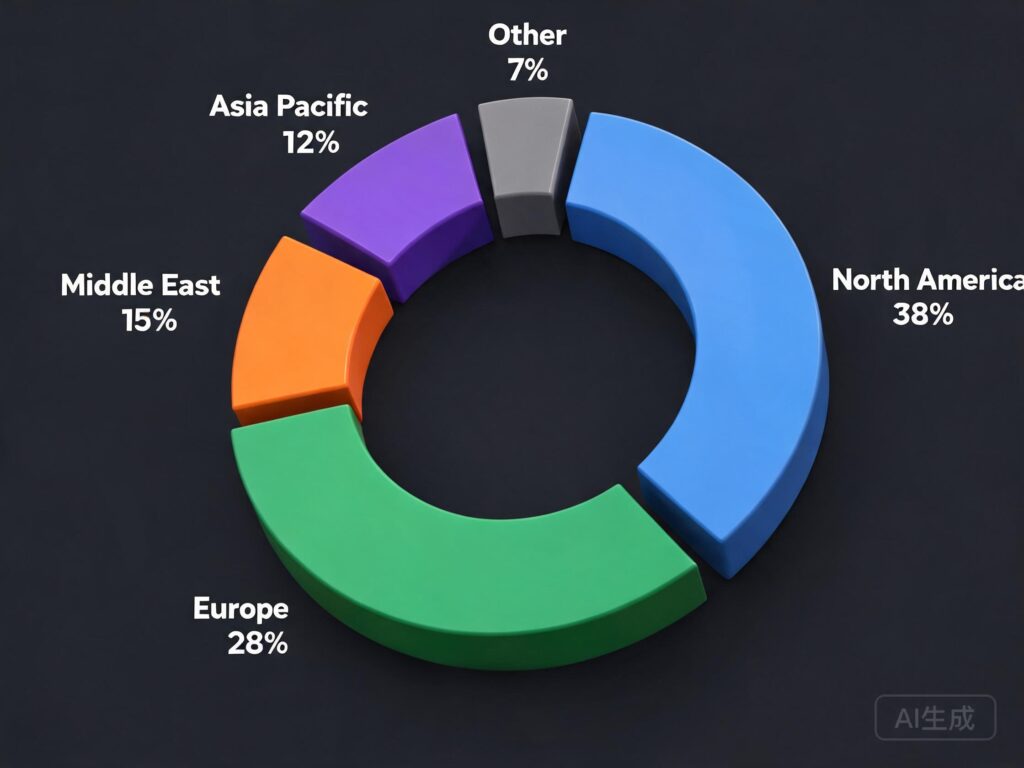
| Evidence layer | What it measures | How buyers should use it |
|---|---|---|
| Market estimates | Approximate value, regional share and growth rate | Choose where to study demand, not how much one supplier will sell |
| Market score | Attractiveness after size, growth, competition, entry barriers and strategic fit | Prioritize business-development effort |
| Buyer insight | What distributors, installers and private-label buyers worry about | Build a supplier qualification and service plan |
Market-Priority Scoring
The survey’s market-priority score assigns 30% to market size, 25% to growth rate, 20% to competition intensity, 15% to entry barriers and 10% to strategic fit. That weighting favors markets large enough to matter but still open to a capable new supplier. It is a commercial prioritization tool, not a measure of product quality or guaranteed return.Global Demand Remains in the Growth Stage
The attached survey places the global PPF market in a growth phase, with an estimated 2024 range of approximately USD 545 million to USD 1.093 billion and an indicative 2025–2032 CAGR range of 6.5% to 8.1%. Public estimates also show a growing market, although the numbers differ: MarketsandMarkets estimates USD 1.0927 billion in 2025 and USD 1.5494 billion by 2030 at a 7.2% CAGR. Grand View Research uses a narrower definition and estimates USD 527.5 million in 2025, growing to USD 744.8 million by 2033 at a 4.2% CAGR. MarketsandMarkets and Grand View Research

The difference between these estimates is itself useful information. PPF reports may include different applications, channels, materials, geographies and revenue bases. A B2B buyer should therefore ask every market report or supplier for its definition of “market size” before using the number in a business plan. The safer conclusion is that the category is expanding, while the exact total depends on the scope used.
The growth drivers are practical: premium vehicle ownership, aftermarket detailing, preservation of resale value, electric-vehicle styling and greater awareness of paint protection. MarketsandMarkets also identifies self-healing films, TPU adoption, hydrophobic properties, improved adhesives and professional installation as factors supporting growth. Its market analysis discusses these demand drivers.
Where the Competition Is Concentrated
Three Competitive Layers
The global competitive field has three visible layers. Global brands such as XPEL, 3M, SunTek and LLumar compete through brand recognition, installer networks, software, marketing and service. Regional brands such as ORAFOL, Avery Dennison, Hexis and PremiumShield compete through local distribution, technical reputation and market-specific relationships. Chinese manufacturers compete strongly through flexible OEM/ODM production, product breadth, cost control and faster customization.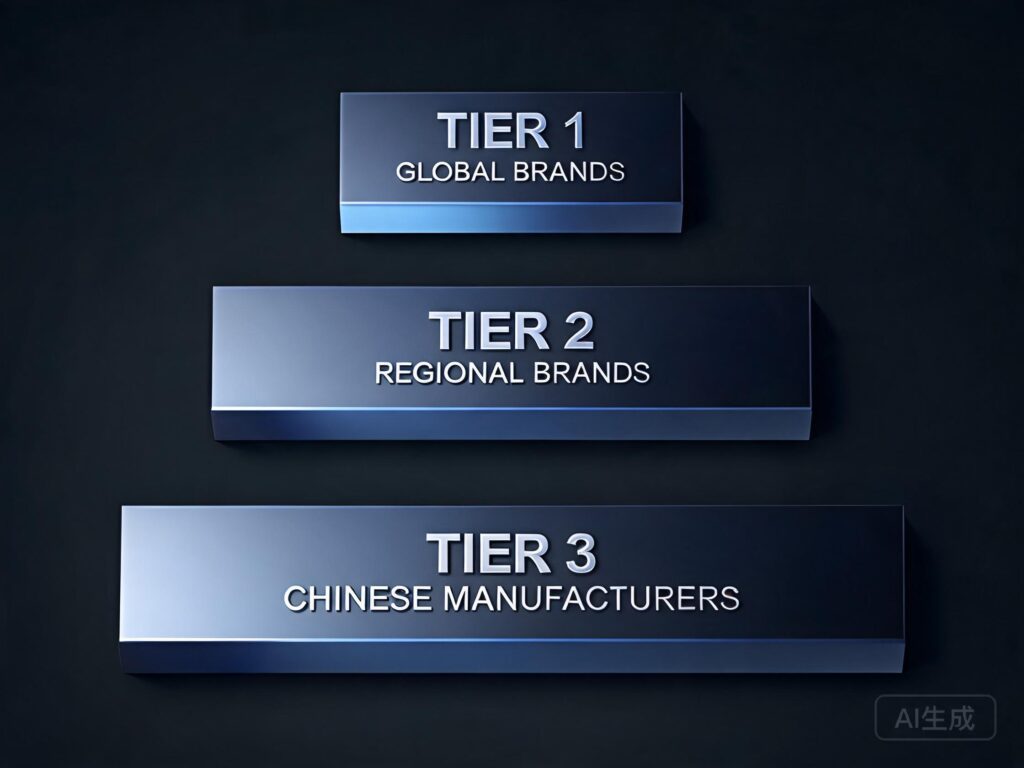
XPEL 2025 annual report describes suppliers from East Asia and other regions and smaller companies as principal competitors in the surface and paint-protection-film market. It also emphasizes that software, marketing, lead generation and customer service differentiate a film supplier from a product-only competitor. This supports a central B2B lesson: the competitive unit is not only the roll of film, but the complete system that helps a buyer sell, install and support it. XPEL annual report provides relevant public-company context.
| Competitive layer | Typical advantage | Typical weakness or risk |
|---|---|---|
| Global brands | Brand trust, installer systems, software and channel depth | Higher price and less flexibility for small private-label programs |
| Regional brands | Local reputation, compliance familiarity and distributor access | Uneven international reach and production dependence |
| Chinese manufacturers | OEM/ODM flexibility, broad product range and manufacturing value | Quality variation, documentation gaps and supplier-verification risk |
For overseas buyers, this creates a more balanced sourcing environment. A global brand may reduce market-education work, while a capable Chinese factory may provide better private-label flexibility, faster product iteration and a wider service package. The right decision depends on the buyer’s channel, target price, warranty exposure, installer network and required level of brand control.
Regional Markets Have Different Logic
United States
The survey ranks the United States as the largest single market, at approximately USD 200 million, with an indicative CAGR of 6.8%. Competition is intense, but the market also has strong installer activity, premium-vehicle demand and acceptance of private-label brands. The commercial opportunity is therefore less about entering an empty market and more about giving distributors and installers a credible alternative with consistent supply, documented performance and channel support.
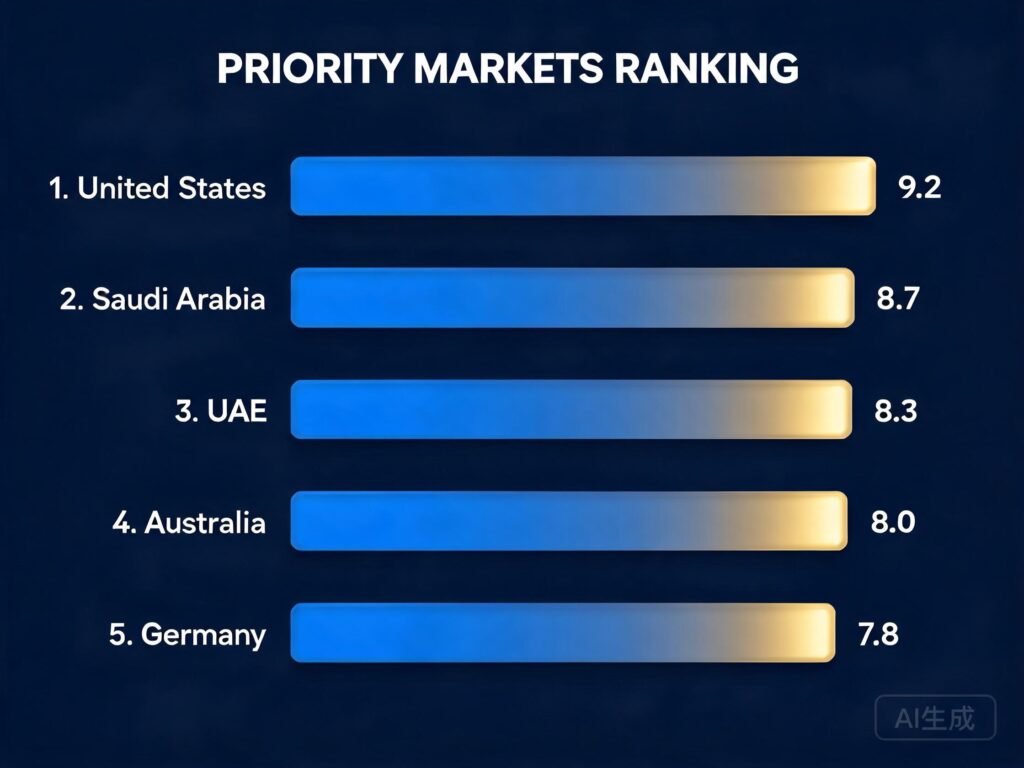
A supplier entering the United States should prepare for questions about warranty wording, product liability, installer training, pattern software, replacement handling and inventory continuity. A competitive FOB price may open a conversation, but it will not by itself overcome the cost of a failed installation or an unresolved claim.
Saudi Arabia and the United Arab Emirates
The survey gives Saudi Arabia the highest indicative growth rate among the priority markets, at 8.05%, and the UAE a 6.94% CAGR. The commercial rationale is climate-led: strong sunlight, heat, dust, sand and high-value vehicles make surface preservation visible to the customer. Saudi Arabia is also supported by a broader automotive aftermarket that is forecast by one commercial research provider to grow from USD 6.7 billion in 2025 to USD 10 billion in 2033. Saudi aftermarket estimate provides this broader aftermarket context.
For this region, buyers should prioritize UV stability, heat behavior, contamination resistance, adhesive edge performance and installer guidance for hot conditions. The UAE also functions as a regional distribution and re-export hub, so packaging, lead time, mixed-container planning and Arabic or English sales materials can matter almost as much as the base film specification.
Australia
Australia combines a smaller addressable market with high exposure to UV, coastal salt and outdoor driving. That environment rewards products with clear weathering evidence and practical installation guidance. For distributors, a credible product story should connect laboratory results to local use: how the film handles heat, how quickly a surface recovers from fine marks, how the adhesive behaves at edges and how the warranty is administered across distance.
Germany and the European Union
Germany represents a major European opportunity, but the entry burden is higher. The survey highlights REACH and RoHS as important barriers, and European buyers increasingly expect material disclosure, traceability and responsible chemical management. EU guidance states that REACH applies to chemical substances used in industrial processes and everyday articles, and that relevant obligations can extend to manufacturers, importers, distributors and downstream users. EU REACH guidance explains the relevant responsibilities.
A Chinese supplier targeting Europe should treat compliance documents as part of the product. The package may include a current SDS, substance declarations, test reports, restricted-substance statements, lot records, packaging information and a clear explanation of intended use. “We can provide documents later” is a weak commercial position when the buyer must defend the product to customs, a distributor or an installer network.
The Buyer Is Purchasing Consistency
Why Consistency Matters
The survey ranks material authenticity, batch consistency and adhesive stability among the most important purchasing factors. This ranking reflects the economics of downstream failure. One unstable roll can affect several installation jobs, create rework, damage a distributor’s reputation and turn a warranty question into a relationship problem.
| Buyer concern | Why it matters commercially | Evidence worth requesting |
|---|---|---|
| Material authenticity | The stated polymer grade affects durability, flexibility and long-term appearance | Material declaration, supplier traceability, TDS and COA |
| Batch consistency | A sample must represent the production lot, not only the best trial roll | Lot numbers, retained samples, inspection records and change-control rules |
| Adhesive stability | Lifting, residue and poor repositioning create installation cost | Peel data, aging data, installation guide and claim history |
| Warranty credibility | A promise without scope or process shifts risk to the buyer | Coverage, exclusions, evidence requirements and response timeline |
| Installation support | Good material still fails when application conditions are misunderstood | Training, manuals, pattern support and local troubleshooting |
This is why the apparent lowest price can be misleading. The survey estimates that poor film can increase installation time by 30% to 50% and waste by 10% to 20%; these figures are survey observations and should be validated in a buyer’s own trial. Even when the exact percentages vary, the direction is clear: installation behavior is part of landed cost.
Pricing Is Segmenting, Not Simply Falling
The survey records indicative China FOB ranges of USD 3.5–6.5 per square meter for clear TPU PPF, USD 4.5–8.0 for matte TPU, USD 6.0–12.0 for color PPF, USD 2.0–3.5 for PCU PPF, USD 1.5–3.0 for window film and USD 1.0–2.0 for headlight film. These are directional B2B quotation ranges from 2024–2025 and vary with thickness, width, adhesive, coating, MOQ, packaging and payment terms.
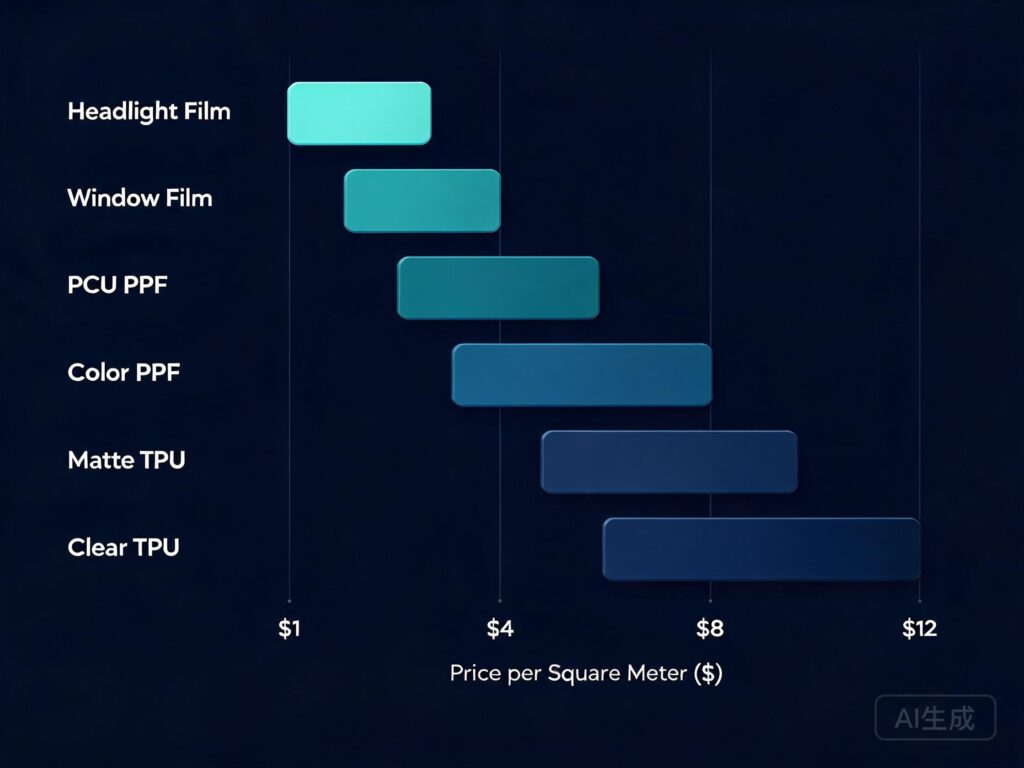
The strategic pattern is more important than any single quote. Clear TPU remains the volume anchor. Matte and color films create room for differentiation. PCU can serve buyers who want a higher-performance value proposition at a different cost position. Bundled products such as window film and headlight film can help distributors increase order value and lower customer-acquisition cost.
A disciplined buyer should compare total delivered cost rather than FOB alone. Include freight, import charges, inspection, inventory carrying cost, installation waste, claims, local training and replacement stock. A supplier that is slightly higher in unit price may be lower in total cost if its batch stability and technical support reduce downstream friction.
What the Next Five Years May Bring
The base-case outlook is continued mid-single-digit to high-single-digit growth through the early 2030s, with different research definitions producing different totals. The most likely demand centers are premium vehicles, dealer-installed protection, detailing networks, used-car value preservation, EV ownership and fleet or commercial applications. The category should broaden, but professional installation and product education will remain important constraints.
Product Roadmap
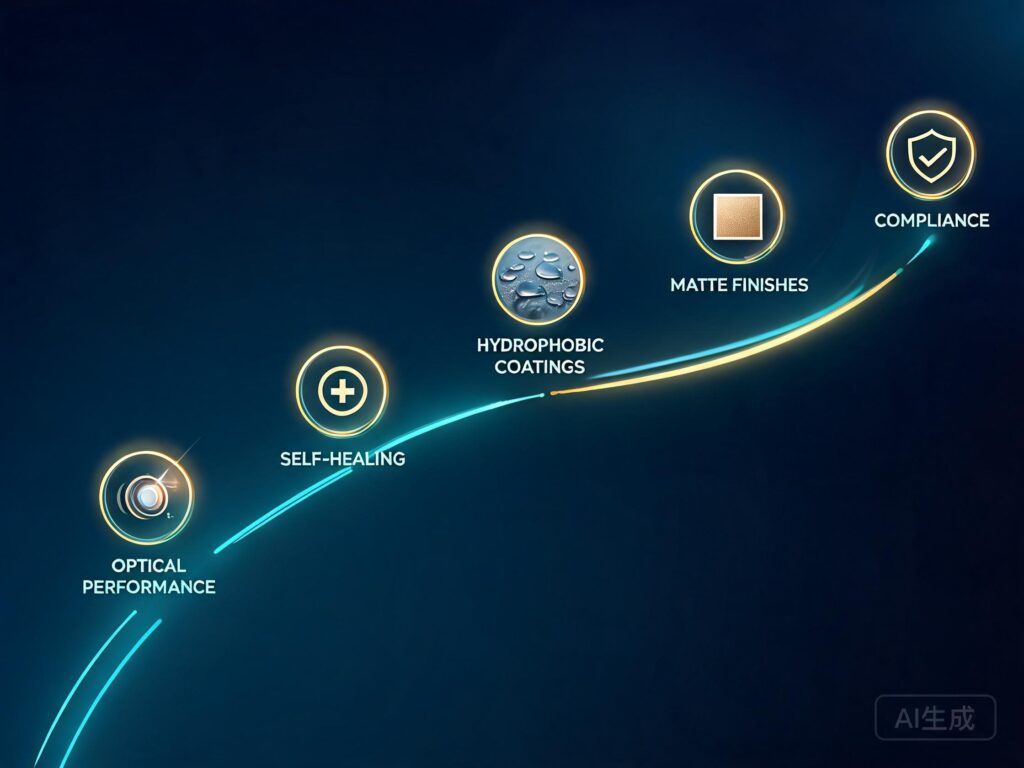
The product roadmap is likely to move in five directions: clearer and more stable optical performance; better self-healing and stain resistance; installer-friendly adhesives; more matte, color and specialty finishes; and stronger material and compliance documentation. Grand View Research identifies TPU as the leading material segment and automotive and transportation as the dominant application, while also pointing to PVC-free, low-VOC and self-healing products as opportunity areas. Grand View ResearchChannel and Supply-Chain Risks
The channel will also evolve. Private-label buyers will ask factories to support packaging, digital assets, training, samples, regional exclusivity and warranty administration. Global brands will continue to defend premium pricing through installer ecosystems and software. Chinese manufacturers that combine production flexibility with evidence, service and market knowledge will be better placed than factories that compete only on a low quotation.There are also clear downside risks. Raw-material volatility, trade-policy changes, counterfeit products, regulatory costs, quality inconsistency and substitution from ceramic coatings or other surface-protection products can pressure margins. XPEL’s annual report highlights supply, quality, raw-material, channel, trade-compliance and competitive risks, which are relevant to the wider PPF supply chain as well as to one listed company. The filing’s risk discussion illustrates why buyers should assess the full supply chain.
Why SHIELD SPIRIT Has Built Its Position
SHIELD SPIRIT’s position is connected to the same market forces identified in the survey. The company operates in the PPF industry, listens to distributor and installer requirements, follows changes in materials and coating technology, and turns those observations into product and service improvements. That approach matters because B2B customers do not buy a laboratory number in isolation; they buy a supply relationship that must work across samples, repeat orders, installation teams, marketing channels and warranty questions.
Its portfolio is designed around different buyer needs, including premium TPU PPF, PCU PPF and other film options. The PCU range is positioned as a flagship high-end solution, while the broader product range gives distributors room to build tiered offers for different markets. For private-label and OEM/ODM customers, the relevant value is the combination of manufacturing capability, customization, technical communication, packaging support and the willingness to keep learning from the market.
SHIELD SPIRIT now serves customers in more than 30 countries. That international reach does not remove the need for local verification, but it demonstrates why market awareness must be connected to daily execution. A supplier creates durable value when it can respond to the climate, compliance, price structure and installation culture of each market rather than selling one unchanged story everywhere.
For buyers evaluating SHIELD SPIRIT or any other factory, the sensible next step is a product-specific review: confirm the exact construction, TDS, COA, test methods, lot traceability, warranty scope, installation instructions and sample-to-batch consistency. A strong supplier should welcome those questions because transparency is part of the product.
Questions B2B Buyers Should Ask in 2026
Can the supplier prove the stated material and coating?
Ask for product-level documents, not only a company brochure or a generic resin name.
Does the sample represent normal production?
Confirm lot identification, retained samples, inspection criteria and how changes are communicated.
What happens after installation?
Review training, troubleshooting, replacement handling, claim evidence and response time.
Can the factory support the target market?
Check compliance documents, packaging, languages, delivery terms, MOQ flexibility and local climate guidance.
Is the quotation comparable?
Normalize thickness, width, length, adhesive system, coating, liner, packaging, MOQ and warranty before comparing prices.
Analyst Conclusion
The 2026 PPF market is attractive because demand is expanding across mature and emerging regions, but it is not a simple low-price opportunity. Competition is moving toward a full value system: credible material claims, stable production, installer-friendly performance, documented compliance, market-specific support and a warranty that can be used in real life.
The strongest Chinese manufacturers will be those that understand this shift and invest in more than capacity. SHIELD SPIRIT’s progress reflects that direction: remain close to the PPF industry, understand what B2B customers actually need, follow technical and regional changes, and keep improving the value delivered with every order. For overseas buyers, that is the difference between finding a factory and building a dependable supply partnership.