












PPF Batch Traceability: Control Every Roll Before It Reaches the Market
A roll of PPF can pass a visual inspection and still be impossible to defend when a customer reports a defect. PPF batch traceability is the control that connects the delivered roll to its product code, construction, production conditions, inspection evidence, and warranty decision.
Direct answer: Build PPF batch traceability around one unique batch or lot identifier, then connect that identifier to the approved specification, raw-material records, production date, roll number, test results, packaging, shipment, customer, and complaint history. A traceability system is useful only when the records can be retrieved quickly and matched to the physical roll.
This guide is for PPF manufacturers, private-label brands, distributors, wholesalers, installers, and procurement teams that need to control quality across repeated production and international delivery.
What PPF Batch Traceability Actually Means
PPF batch traceability is a documented chain of identity and evidence from incoming materials to finished film and then to the customer or vehicle program. It is more than printing a date on a carton.
Traceability Is a Link, Not a Label
A label becomes meaningful only when the code points to records. The record should identify the supplier, product code, grade, finish, width, nominal thickness, substrate, topcoat, adhesive, liner, production line, batch, roll, inspection status, and release decision.
Traceability Covers Forward and Backward Movement
Backward traceability answers which materials and process records were used to make a roll. Forward traceability answers which customers, shipments, installers, or vehicle programs received that roll.
Traceability Is Product-Specific
Do not treat a brand name or a broad material category as the full identity. A change in construction, coating, adhesive, liner, supplier, production site, or specification may require a new product version and a new approval path.
Why PPF Batch Traceability Protects Commercial Decisions
It Separates a Local Defect from a Systemic Problem
If one roll shows haze, edge damage, adhesive marking, or winding problems, a batch record helps determine whether the issue is isolated or affects other rolls. Without a reliable code, every similar product may become commercially suspect.
It Reduces Uncontrolled Warranty Exposure
Warranty decisions should be based on the exact product, installation conditions, care history, and stated coverage. Traceability does not prove that a claim is valid, but it gives the reviewer the evidence needed to investigate consistently.
It Protects Inventory and Cash Flow
A traceable hold can be narrower than a warehouse-wide withdrawal. That distinction matters when a distributor has multiple grades, production dates, or customers in different markets.
Traceability works best when it is combined with a documented wholesale PPF supplier evaluation rather than added after a dispute has already occurred.
What Data a PPF Batch Record Should Contain

Commercial Identity
Record the brand, product family, product code, version, finish, width, length, nominal thickness, packaging format, purchase order, customer, destination market, and warranty position.
Material and Construction Identity
Record the documented substrate, topcoat, adhesive, release liner, stabilizers where applicable, layer specification, approved supplier references, and any controlled construction change.
Production Identity
Record the production site, line or equipment, production date and shift, operator or team reference, batch number, roll number, parent roll where relevant, and the release status.
Use One Immutable Identifier
Do not recycle a batch code after a hold, rework, or specification change. A unique identifier should remain stable even if the roll is moved between warehouses or repacked for a customer.
Inspection Identity
Record measurements, sampling points, defect maps, test methods, results, acceptance criteria, inspector, inspection date, calibration status where relevant, and the final disposition.
Logistics Identity
Record carton number, pallet number, warehouse location, shipment date, carrier reference, customer receipt, storage conditions, and any transfer between facilities.
How to Build a PPF Batch Traceability Workflow

Start with the Approved Specification
Traceability cannot repair an undefined product. Begin with the approved grade, construction, dimensions, appearance standard, packaging, test plan, critical defects, and release criteria.
Assign the Batch before Production Release
Assign the batch or lot identity before finished rolls enter the release process. The code should appear on the production record, inspection record, roll label, carton, and shipping record.
Capture Roll-Level Information
Batch information may be insufficient when a parent roll is divided into multiple finished rolls. Use a roll number or equivalent child identity so that a complaint can be narrowed to the affected material.
Link Inspection Results to the Roll
A report that identifies only a product family is weak evidence for a specific shipment. Link the result to the batch and, where risk requires it, to the individual roll or sampling position.
Release, Hold, or Reject Clearly
Every batch and roll should have a visible disposition such as released, conditionally released, on hold, rework required, or rejected. Avoid informal verbal releases that disappear when personnel change.
How to Verify PPF Batch Identity before Shipment

Match the Label to the Production Record
Compare the physical label with the production record, inspection report, product code, batch code, roll number, width, length, and packaging version. Resolve mismatches before loading.
Match the Roll to the Test Evidence
The PPF material test data guide explains why values must be read together with test methods, conditions, units, and acceptance limits. The same discipline applies to batch records: a number without scope is not sufficient evidence.
Check the Packaging Chain
Confirm that the roll, carton, pallet, packing list, and commercial invoice carry compatible identifiers. Packaging is part of traceability because damaged or mixed cartons can break the chain before the customer receives the film.
Record the Release Decision
Document who reviewed the evidence, which criteria were applied, what exceptions remain, and whether the shipment is released without conditions. A signature or digital approval should be connected to the exact batch.
Which Tests Belong in a PPF Batch Record
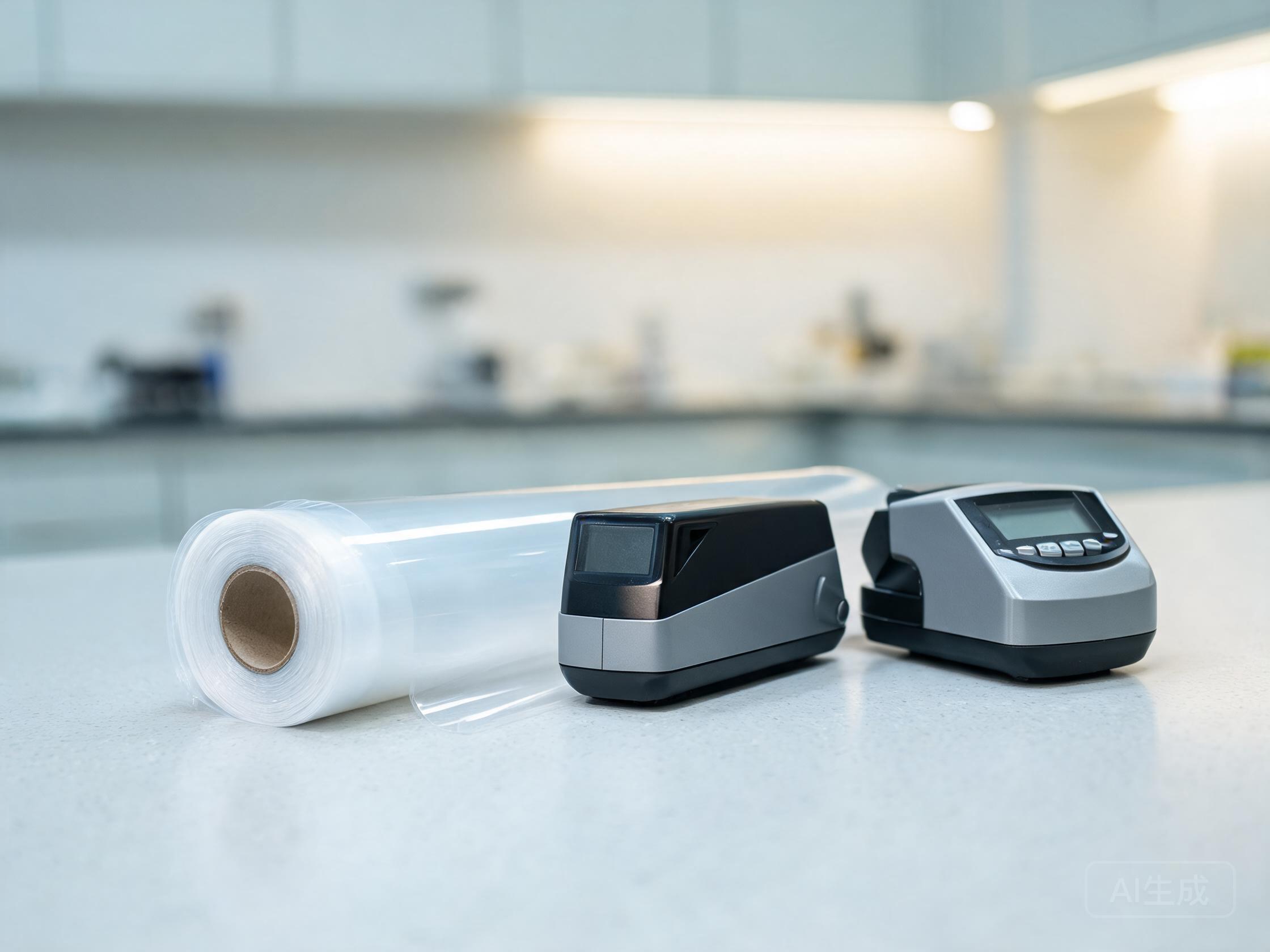
Dimensional and Visual Checks
Depending on the specification, record width, length, total construction thickness, roll winding, edge condition, clarity, haze, gloss, particles, streaks, wrinkles, and other visible defects.
Mechanical and Adhesion Checks
Where applicable, record tensile behavior, elongation, tear behavior, peel or adhesion results, and the exact methods used. Do not compare numbers generated under different procedures without explaining the difference.
Surface and Weathering Evidence
Record the relevant gloss, contact-angle, stain, chemical, heat, UV, or aging evidence only when the test scope matches the product and claim. A short demonstration should not be presented as a long-term durability result.
Separate Routine Checks from Qualification Tests
Routine release checks confirm ongoing production against a specification. Qualification or independent tests may support development, comparison, or claim review. Keep both categories visible so a routine inspection is not mistaken for a complete product qualification.
Use a Defined Acceptance Rule
Each critical characteristic needs a pass rule, sampling approach, tolerance or defect limit, and response when the result is outside the rule. The third-party PPF testing guide helps distinguish external confirmation from routine factory control.
PPF Batch Traceability for Private-Label Brands

Control Version Changes
Private-label packaging can change more often than the film construction. Keep the brand artwork, product code, packaging version, technical specification, and approved sample connected so a visual refresh does not conceal a technical change.
Protect the Golden Sample
Retain a labeled physical reference for each approved grade or version. A golden sample should point to the specification, batch, date, test evidence, and decision record; it should not replace measurable criteria.
Define Change Notification
Require written notice before changes to raw materials, substrate, topcoat, adhesive, liner, production site, process, dimensions, packaging, or test method. Define which changes require a new sample approval.
Connect Brand Claims to Evidence
Marketing language should be traceable to a product-specific construction, test method, warranty term, or controlled use condition. Do not allow a general brand claim to become an unsupported promise for every grade.
PPF Batch Traceability during a Complaint

Capture the Complaint Identity First
Ask for the product code, batch or roll number, installation date, vehicle or panel, installer, storage history, care products, photographs, and the conditions under which the issue appeared.
Place the Right Scope on Hold
If the evidence suggests a batch issue, identify affected stock using forward traceability. Hold the smallest defensible scope while the investigation continues, rather than releasing uncertain material or blocking unrelated inventory.
Compare Records with Field Evidence
Review the production record, inspection data, shipment conditions, installation notes, and complaint pattern together. A complaint may involve film, preparation, installation, storage, maintenance, or a combination of factors.
Record the Corrective Action
Document containment, root-cause work, customer communication, replacement or credit decision, specification changes, retraining, and verification that the corrective action worked. Close the record only when the decision and evidence are complete.
Common PPF Traceability Failures
The Code Exists but Cannot Be Searched
A code printed on a roll is not enough if the business cannot retrieve the corresponding production, inspection, and shipment records within a practical time.
One Code Covers Different Constructions
Combining multiple widths, finishes, suppliers, or construction versions under one identity makes a later investigation ambiguous. Split the identity when the technical or commercial risk changes.
Records Stop at the Factory Gate
Traceability should continue through warehouse transfers, export documents, customer receipt, installer allocation, and complaint handling. Otherwise the business may know which batch was made but not who received it.
Inspection Records Have No Acceptance Criteria
Numbers without limits, methods, or sampling context cannot support a consistent release decision. Define the rule before the result is reviewed.
Rework Is Not Reidentified
If a roll is rewound, repacked, cut, or reworked, retain the original identity and record the operation. Never create an apparently new product without preserving the history.
PPF Batch Traceability Checklist for Buyers
- Does every roll have a unique, readable identifier?
- Does the identifier match the product code and approved construction?
- Can the batch be linked to production date, site, line, and shift?
- Are raw-material and supplier references documented where relevant?
- Are dimensional, visual, mechanical, adhesion, and surface checks defined?
- Do test records include method, condition, unit, result, and acceptance rule?
- Are hold, release, rework, and reject decisions recorded?
- Can the batch be followed through carton, pallet, warehouse, shipment, and customer?
- Are private-label packaging versions and change notices controlled?
- Can a complaint be narrowed to affected rolls without blocking all inventory?
How Buyers Should Put Traceability into a PPF Order
Specify the Required Records
List the batch code format, roll identity, inspection report, certificate or data requirements, packaging labels, shipment records, and retention period in the purchasing specification.
Define the Release Gate
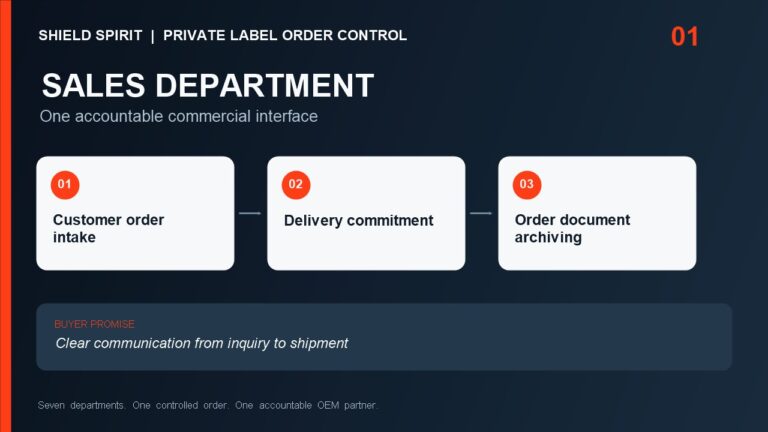
State which documents must be reviewed before shipment and which defects trigger a hold. The OEM PPF order-control process shows why approval, production, inspection, and delivery should remain connected.
Match the Grade to the Intended Program
When comparing tiers, review the exact grade rather than assuming that a material label answers every performance question. For example, the next-generation PCU PPF range should be evaluated through its product-specific construction, documents, warranty, and batch controls.
Audit Retrieval, Not Just Paperwork
Ask the supplier to demonstrate how a sample roll can be traced backward to records and forward to a shipment. A short retrieval exercise often reveals gaps that a polished certificate does not show.
PPF Batch Traceability Questions Buyers Ask
Is a batch number enough for PPF traceability?
No. The batch number must connect to the product specification, production records, inspection evidence, roll identity, packaging, shipment, and customer records. Without those links, the number is only a reference label.
How long should PPF records be kept?
Keep records for at least the period needed to support the product warranty, commercial claims, regulatory obligations, and internal risk policy. The exact period should be defined in the quality system and contract.
Should every PPF roll have a separate number?
Roll-level numbering is useful when parent rolls are divided, multiple customers share a batch, or complaints must be narrowed precisely. The appropriate level depends on the process risk and distribution model.
Can a certificate replace traceability?
No. A certificate may summarize a result, while traceability identifies which material and finished roll the result represents. Both evidence and identity are necessary.
What should happen when a batch record is incomplete?
Place the affected material on hold or give it a documented conditional disposition, identify the missing evidence, assign an owner, and define a deadline. Do not silently fill an unknown with an assumption.
Make Every PPF Roll Defensible

PPF batch traceability turns quality control from a collection of documents into a retrievable chain of evidence. It helps a supplier release the right product, helps a buyer narrow risk, and helps a brand investigate complaints without guessing.
Before the next bulk order, require the exact identity, evidence, acceptance rules, and shipment links that will let you answer one practical question: which roll was delivered, how was it approved, and what other material shares its risk?






[…] the label relates to the roll. Connect those identifiers to the vehicle using the principles in our PPF batch traceability guide before packaging records disappear. Preserve the original label and redact personal information […]
[…] lot. Then ask what records the factory can consult if your installer reports a defect. The batch traceability guide covers why lot identity matters after distribution […]