










Can Third-Party PPF Testing Confirm Factory Data?
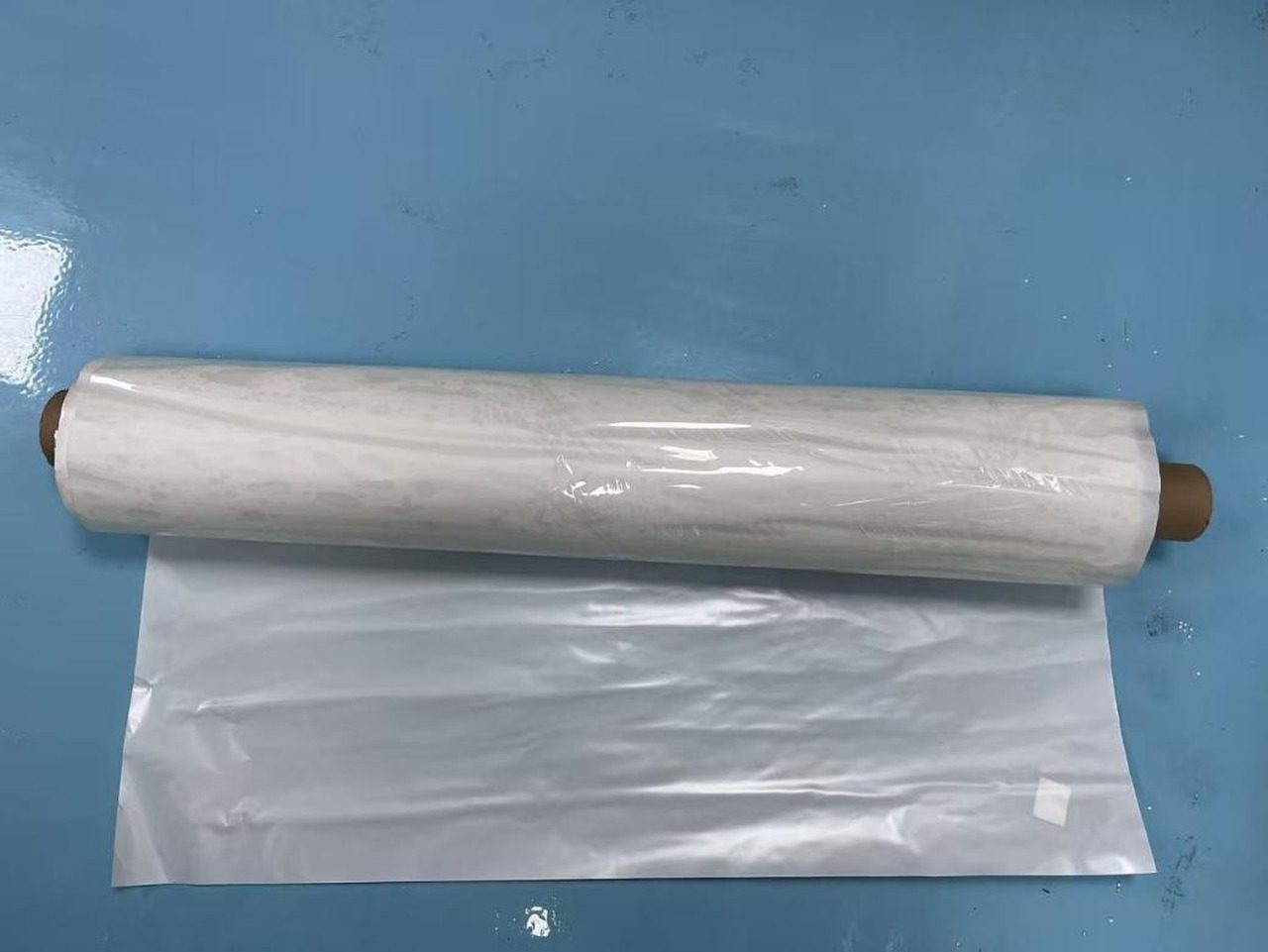
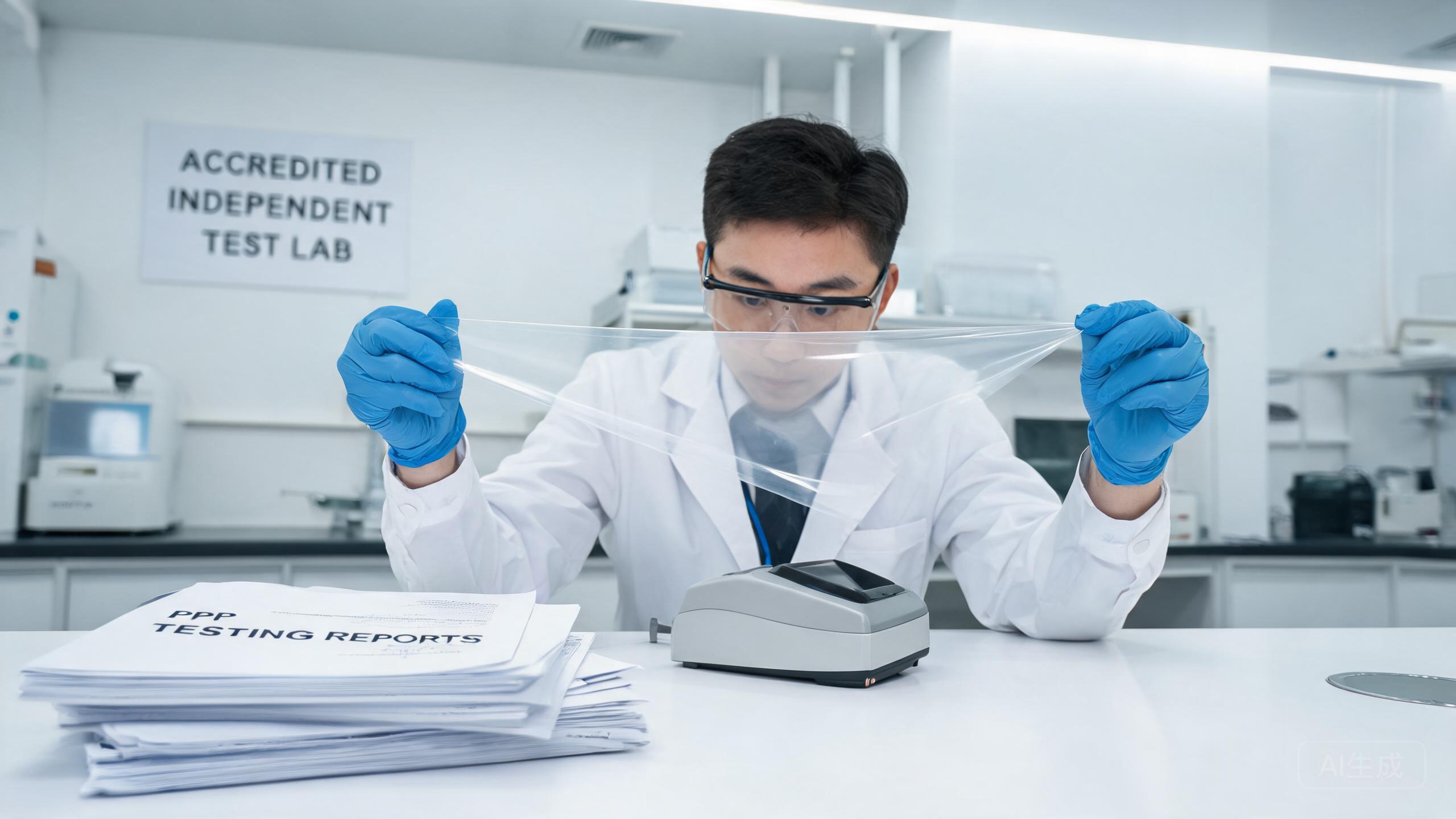
A factory data sheet can tell you what a supplier expects a PPF to achieve. It cannot, by itself, show whether one finished roll actually achieved it. That is why serious buyers sometimes request an independent laboratory report: not because factory testing has no value, but because a second measurement gives the claim a more objective reference point.
SHIELD SPIRIT supports that logic. Our internal testing is important for product development, batch control and troubleshooting. Independent testing adds a separate layer of evidence. The useful question is therefore not whether one side must be believed and the other rejected. The useful question is whether the third-party results are broadly compatible with the published product data, while keeping the differences in sample, method and scope visible.
What the independent report actually covers
Report identity and sample scope
The document discussed here is report LH260707160101E from Guangzhou Liangheng Testing Technology Service Co., Ltd. It identifies one roll of PPF Paint Protection Film (Invisible Car Wrap Film), sample ID LH2607071601. The sample was received on July 7, 2026; testing ran from July 9 to August 4, 2026; and the report was issued on August 5, 2026.
The report also states that it is responsible only for the submitted sample. Information supplied by the commissioning party was not independently certified. Page 6 says the document is not a CMA report and is intended for internal use rather than social certification. These limitations do not make the measurements useless. They define exactly how far the evidence can travel.
What it does not prove
This is a physical-performance and durability report, not a REACH, RoHS or PFAS compliance report. It does not prove that every PCT or TPU roll, every production lot or every installation environment will deliver the same result. It also does not convert a short accelerated-aging exposure into a direct promise of a five-year or ten-year outdoor life.
How a finished PPF system is built
Substrate, topcoat and adhesive
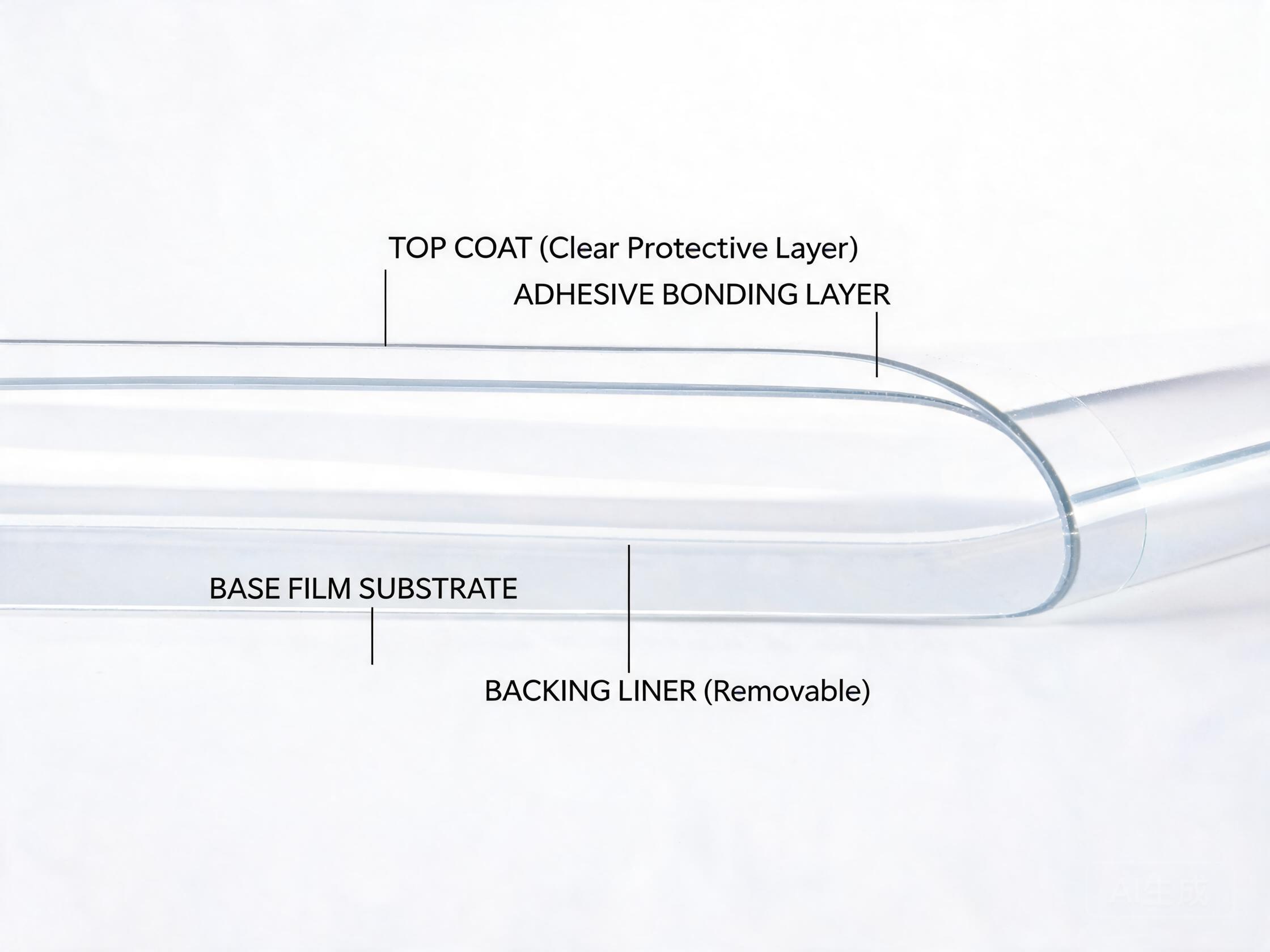
A finished PPF is a system rather than a single polymer name. The substrate provides the main balance of tensile strength, elongation, optical clarity and flexibility. The topcoat controls the exposed surface, influencing gloss, stain behavior, scratch response and resistance to contact with common liquids. The acrylic adhesive must bond to the vehicle without excessive residue, while the release liner protects the adhesive before installation.
Stabilizers and other formulation choices also matter. They can affect how a film responds to heat, ultraviolet exposure, moisture, chemicals and time. Two films may both be described as TPU or PCU and still differ in thickness, coating chemistry, adhesive design, curing history and acceptance criteria.
Why finished-film data matters
Raw substrate data is not the same as finished-film data. Coating, adhesive, liner removal, lamination and converting can change the behavior of the product that an installer actually handles. For buyers, the finished-film result is usually the more relevant starting point, provided the test method and sample construction are also disclosed.
Our published PCU product range presents PCT finished-film figures, while the premium TPU product range provides a separate TPU reference. These pages are product specifications and internal quality-control outputs; they should not be mistaken for the independent report itself.
Step-by-step: weathering tests
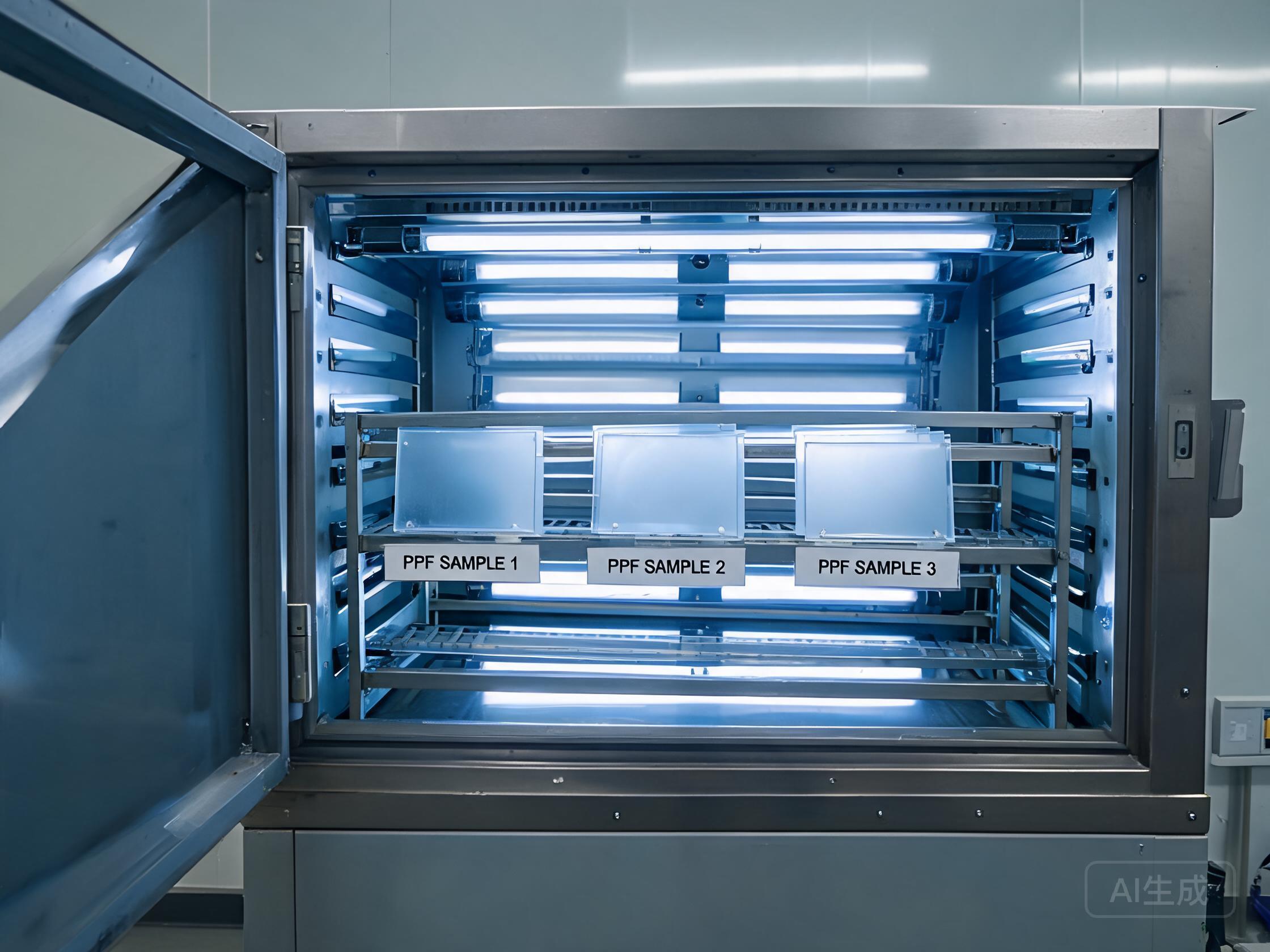
Xenon arc exposure
The report records 408 hours of xenon arc aging under GB/T 16422.2-2022. The listed control conditions include irradiance of 0.51 ± 0.02 W/(m²·nm) at 340 nm, a black-panel temperature of 65 ± 3 °C, a chamber temperature of 38 ± 3 °C, and a cycle of 18 minutes spray followed by 102 minutes dry.
Typical test sequence
- Cut and identify representative finished-film specimens without confusing the exposure face, backing side or sample direction.
- Condition and mount the specimens so the exposed surface receives the controlled light, temperature and spray cycle.
- Run the xenon arc cycle for the specified duration while controlling irradiance, black-panel temperature, chamber temperature and humidity.
- Inspect the exposed specimens against the unexposed reference using the stated evaluation procedure.
- Measure color change and record the result with the report identity, exposure time and specimen identification.
The reported average color difference is ΔE 0.36. That is a color-difference result for this exposure and sample. It is not the same unit as the product-page five-year yellowing percentage, so the two figures should not be presented as equivalent.
Important control note
The English and Chinese sections show different humidity wording: the English section is approximately 40–60%, while the Chinese section states 50 ± 10%. The report says that Chinese controls when the two languages differ, so the Chinese condition should be treated as the controlling statement. This is exactly the sort of detail a careful buyer should record rather than silently average away.
Fluorescent UVA-340 exposure
The report also records 240 hours of fluorescent UV aging under GB/T 16422.3-2022, using UVA-340 lamps. The listed sequence is 8 hours of light at a black-panel temperature of 60 ± 3 °C, followed by 4 hours of condensation at 50 ± 3 °C. Irradiance is listed as 0.76 ± 0.02 W/(m²·nm) at 340 nm.
- Prepare and identify the specimens and an unexposed reference.
- Mount the exposed surface at the prescribed distance from the UVA-340 lamps.
- Run the light portion with controlled irradiance and temperature.
- Run the condensation portion with the chamber at the stated temperature.
- Repeat the light-condensation sequence until 240 hours is reached.
- Inspect the specimen for yellowing and other visible changes under a consistent viewing condition.
No yellowing was observed in this fluorescent-UV test. That is a positive observation, but it remains an observation after 240 hours, not a direct substitute for a warranty term or a multi-year field result.
Step-by-step: chemical and surface tests
Solvent resistance
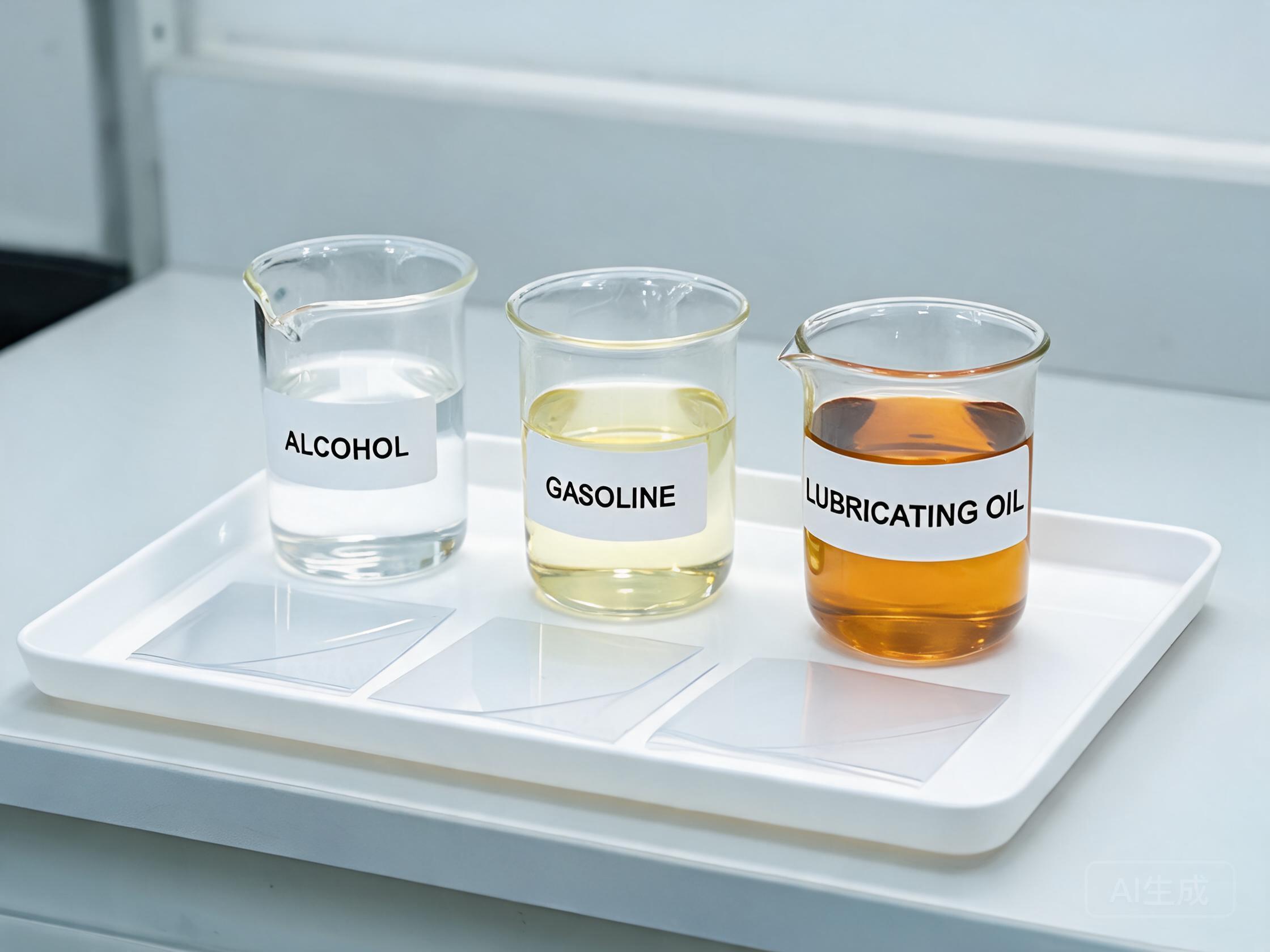
Under QC/T 1171-2022, the report lists denatured alcohol, gasoline and lubricating oil resistance as passing observations. For each liquid, the general logic is to expose a defined film surface under controlled contact conditions, remove the liquid according to the method, allow the specimen to recover if required, and inspect for the specified damage modes.
What the inspector looks for
- Bubbling or blistering that suggests loss of surface or interlayer stability.
- Softening or tack change that may affect handling and contamination pickup.
- Chalking, cracking or visible discoloration.
- Obvious gloss loss or other surface change.
The report records no bubbling, softening, chalking, cracking, obvious discoloration or obvious gloss loss for the listed liquid exposures. This supports resistance to those stated contact conditions. It does not prove resistance to every cleaner, fuel additive, pressure-washing chemical or long-term outdoor contaminant.
Appearance, tensile and elongation
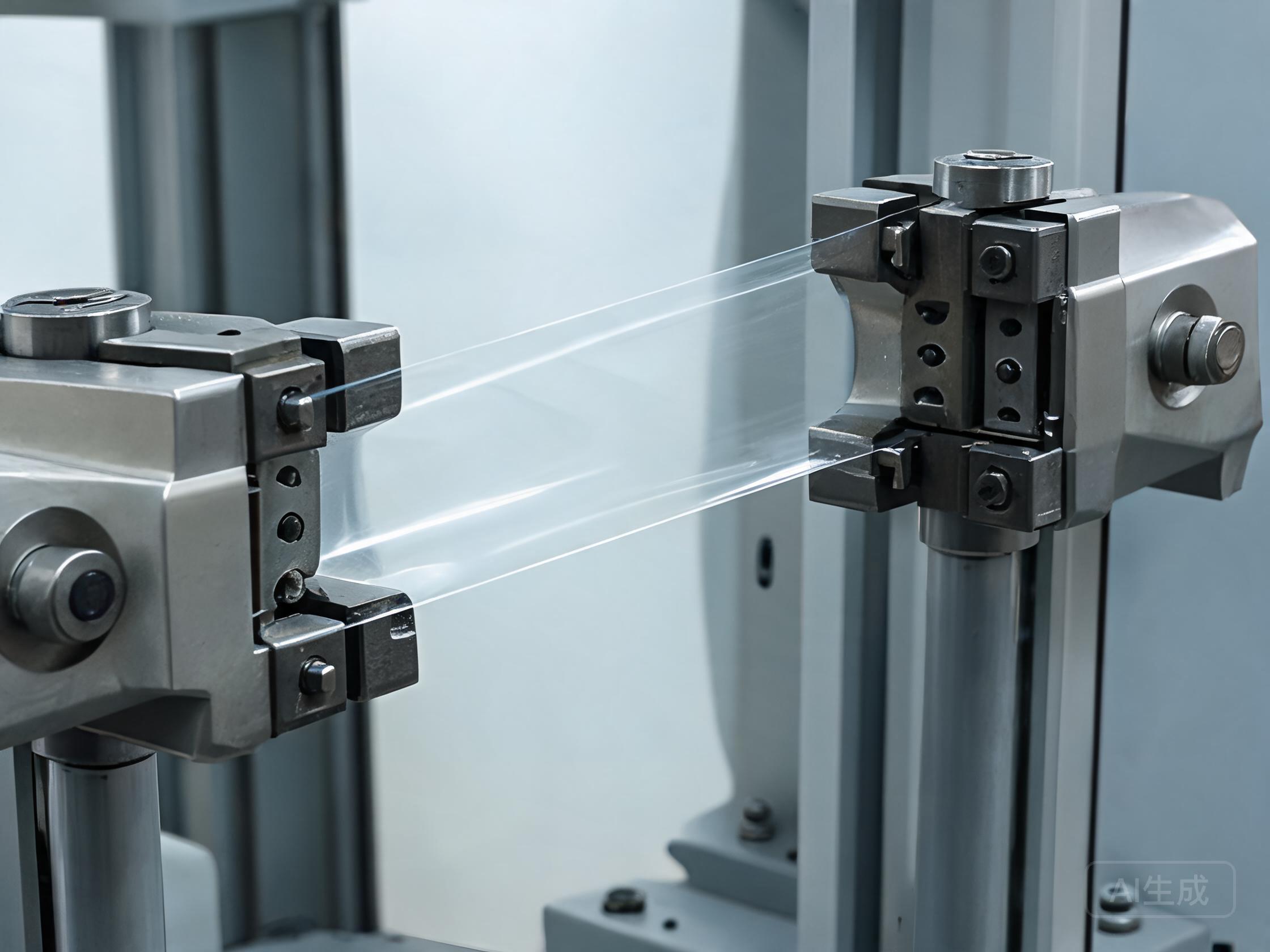
Before or alongside the measured tests, the report records no spot defects, linear defects, scratches, wrinkles, bubbles, blooming or crazing in the appearance inspection. The finished-film tensile strength is 43.3 MPa, and elongation at break is 262%.
A practical tensile workflow includes specimen cutting, dimensional measurement, conditioning, alignment in the grips, controlled pulling at the method-specified speed, and recording the maximum stress and extension at break. Alignment matters: a skewed strip, damaged edge or slipping grip can distort the result. The report should therefore be read together with its method, specimen geometry and laboratory records when a buyer needs a full audit trail.
Scratch thermal recovery and gloss
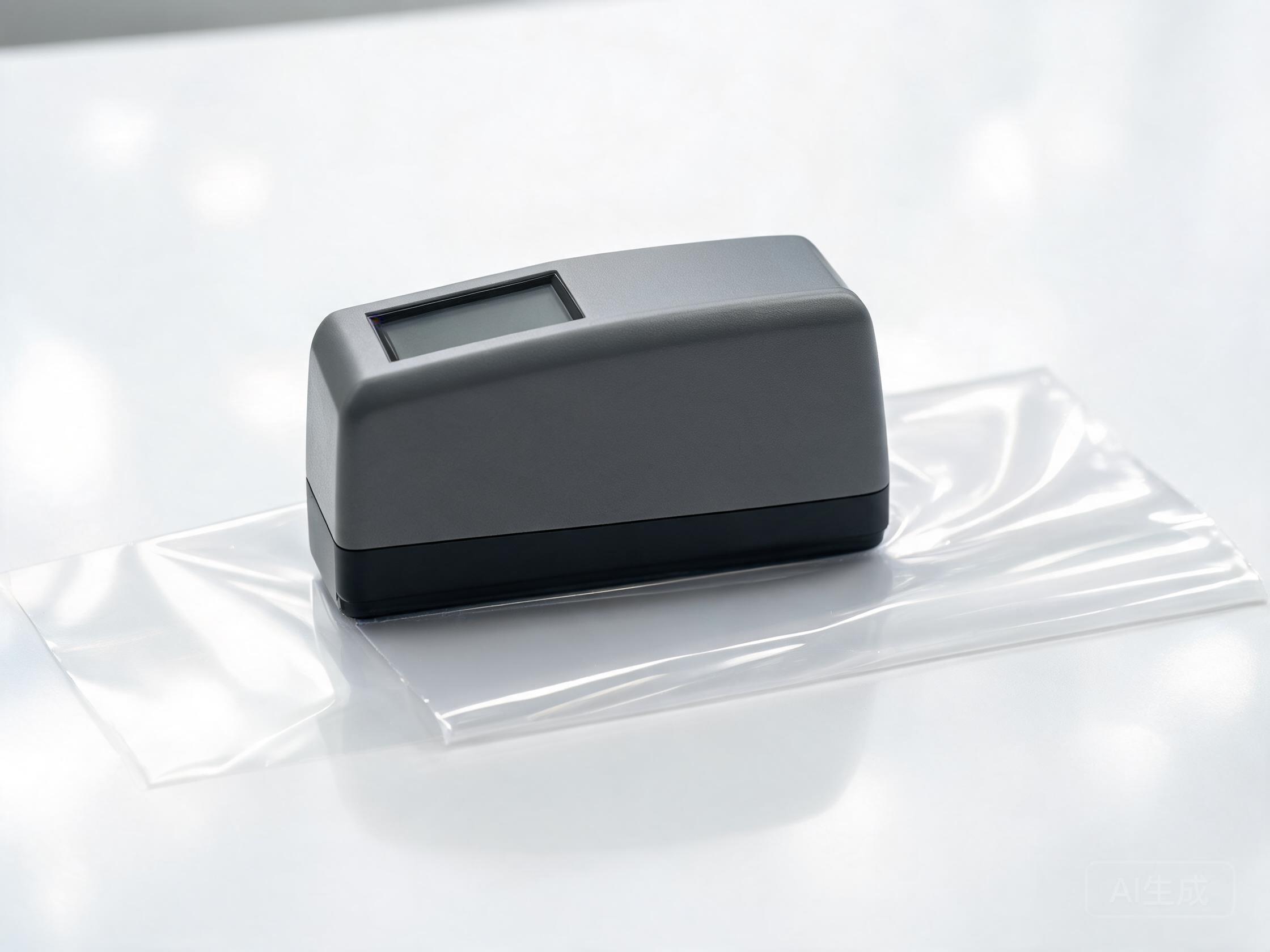
The reported scratch thermal recovery is 19.9%, and gloss is 150.8 GU. Scratch recovery is a defined response under a defined scratch and heating procedure. It is not automatically equivalent to the product-page phrase “scratch repair 100%,” which may describe a different internal test definition or a product-level target.
Gloss is normally measured by placing a calibrated gloss meter against a clean, smooth surface at the prescribed geometry, taking readings at controlled points and reporting the agreed average or representative value. Surface cleaning, instrument calibration, film curvature and measurement direction can all matter. The third-party gloss result is therefore useful as a finished-sample reference, not as a universal value for every PPF construction.
Does the report resemble SHIELD SPIRIT data?
Mechanical and optical comparison
| Metric | Independent report | Published PCT range | Reading |
|---|---|---|---|
| Tensile strength | 43.3 MPa | 19.7–22.96 MPa | Same metric, but not the same confirmed construction or method basis |
| Elongation at break | 262% | 479.20–558.85% | Directionally relevant, not numerically equivalent |
| Gloss | 150.8 GU | ≥116.3–145.33 GU | Broadly compatible with a high-gloss finished-film reference |
| Scratch thermal recovery | 19.9% | Product pages state scratch repair targets | Do not equate unlike definitions |
At first glance, the tensile and elongation numbers are not a neat one-to-one match with the PCT table. That does not automatically indicate exaggeration. The tested model is not identified in the report as PCT-75, PCT-85, PCT-95 or PCT-120, and the report does not provide every construction and specimen detail needed for a strict equivalence claim.
The gloss result of 150.8 GU is close in direction to the published PCT gloss range and sits above the listed minimums. The appearance, solvent-resistance and no-yellowing observations also support a credible quality picture for the submitted roll. The responsible conclusion is that the independent results are compatible with the general performance direction of SHIELD SPIRIT finished-film data, while not proving that every published number is interchangeable.
Why this supports honest self-testing
Factory self-testing and independent testing answer related but different questions. Internal testing tells SHIELD SPIRIT whether a product or lot remains within its development and control expectations. A third-party test gives a customer an external measurement of a selected sample under a stated method. When the results are broadly coherent, the independent report becomes supporting evidence that the internal data is grounded in measurable film behavior rather than a marketing story.
That is the standard we prefer: disclose what was measured, show the conditions, compare like with like, and state what remains unknown. Our PPF material test data guide explains why a number without its method is incomplete, while the third-party testing guide covers how buyers should read laboratory scope and limitations.
What the results mean for buyers and installers
Translate measurements into decisions
- Mechanical strength and elongation help assess handling and deformation tolerance, but installation behavior also depends on thickness, temperature, adhesive response and installer technique.
- Gloss and appearance results help assess the visual starting point, but vehicle paint color, panel geometry, lighting and maintenance still affect what an owner sees.
- Solvent resistance is useful for realistic contamination scenarios, but it should not be used as permission to apply unapproved chemicals.
- UV and xenon results are accelerated evidence. They help compare response under controlled exposure, but they do not reproduce every climate, washing pattern or storage condition.
- Scratch recovery is conditional. Ask what tool, load, temperature, recovery time and calculation were used before comparing percentages.
A practical evidence checklist
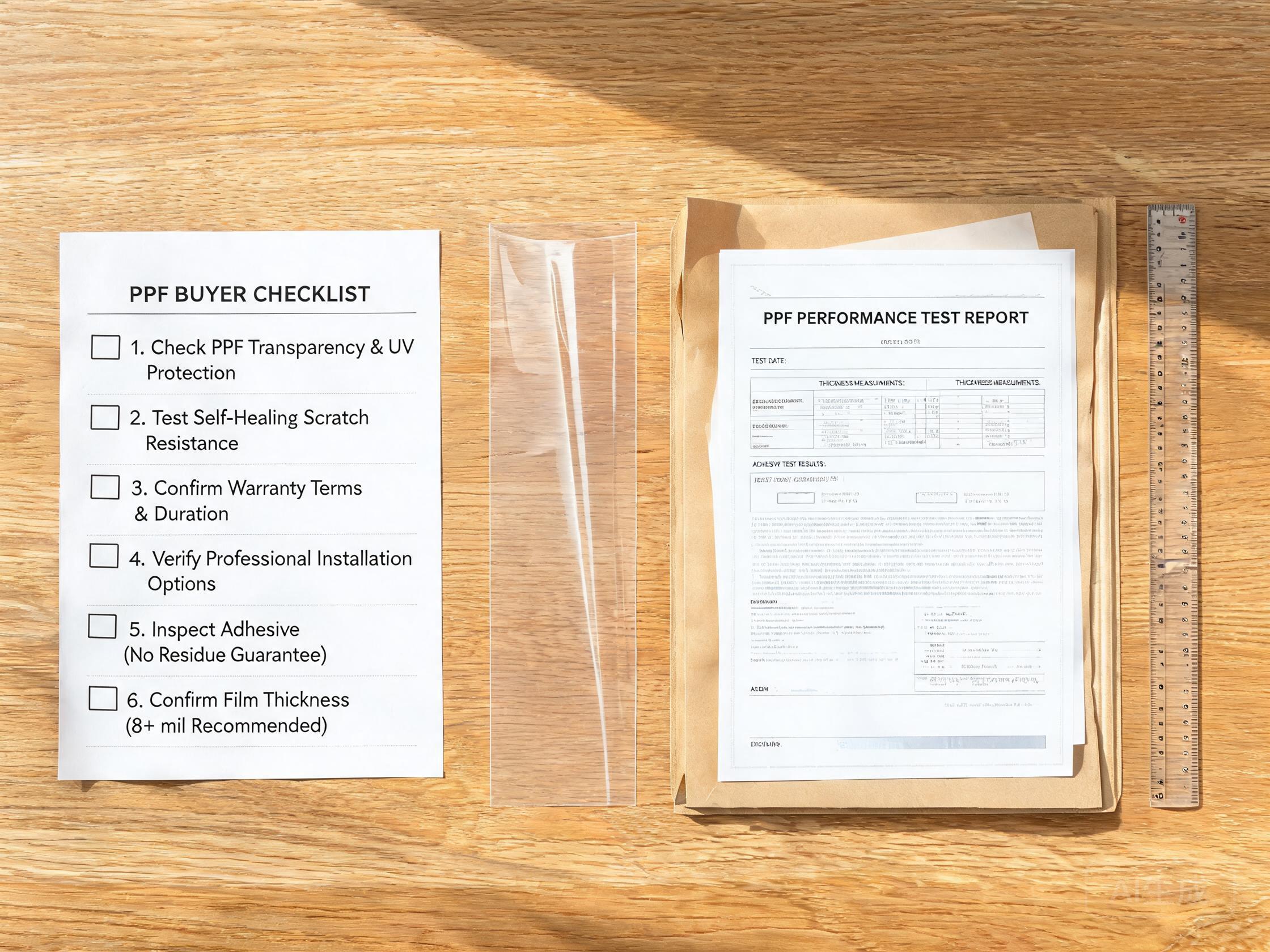
Before approving a film, request the exact model, finished-film construction, report number, sample identity, laboratory scope, test standards, exposure conditions, specimen geometry, acceptance criteria and warranty boundary. Then check whether the commercial product you will receive is traceable to the tested construction and lot.
For a broader quality-control framework, see our PPF quality testing guide . The goal is not to collect impressive numbers. It is to establish whether the number belongs to the same product, the same finished structure and a method that matters to the intended use.
Conclusion: evidence, not overclaiming
The independent report does not prove that SHIELD SPIRIT’s entire PCU or TPU portfolio performs identically to one submitted roll. It does provide useful, bounded evidence: 43.3 MPa tensile strength, 262% elongation at break, 19.9% scratch thermal recovery, 150.8 GU gloss, no observed yellowing after the stated fluorescent-UV exposure, and passing observations for the listed solvent contacts and appearance checks.
Compared carefully with published PCT data, the picture is closer to reasonable compatibility than to a simple finding of fabricated claims. The match is strongest in the direction of high gloss, clean appearance and resistance under the stated exposures; it is not a license to merge unlike tensile, elongation, yellowing or scratch-repair definitions.
That distinction is central to how SHIELD SPIRIT approaches PPF. We use self-testing for control, independent testing for additional objectivity, and transparent limitations so customers can judge the evidence for themselves. Making PPF is serious work; credible data should be treated with the same seriousness.
FAQ
Does this report certify all SHIELD SPIRIT PPF?
No. It applies to the submitted roll and the conditions stated in report LH260707160101E.
Does ΔE 0.36 equal a five-year yellowing limit?
No. ΔE and yellowing percentage are different measures with different definitions and cannot be treated as interchangeable.
Does 240 hours of UV prove a five-year warranty?
No. Accelerated exposure is supporting durability evidence, not a direct conversion into a field-life promise.
Why publish factory data if customers may question it?
Because internal data is necessary for development and quality control. Independent testing complements it by giving buyers a separate measurement to review.






[…] a likely care or exposure issue, or an unresolved case that needs inspection or testing. A prior third-party PPF testing guide explains why supplier data and field evidence should be compared rather than treated as […]