











China PPF OEM vs ODM: Which Partnership Fits Your Brand?
A film sample can install beautifully while the supply agreement leaves your brand exposed. If the next shipment changes, who approved the change, who pays for the complaint, and can you buy the same specification again? Those questions belong in the China PPF OEM vs ODM decision before anyone approves the box design.
For an overseas brand, wholesaler or installation business, the choice concerns how much product development and control you can actually manage. A familiar manufacturing label does not settle that. Suppliers use OEM and ODM differently, so the scope written into your agreement matters more than the acronym in a sales email.
China PPF OEM vs ODM in a Real Order
OEM usually starts with a buyer-defined brief
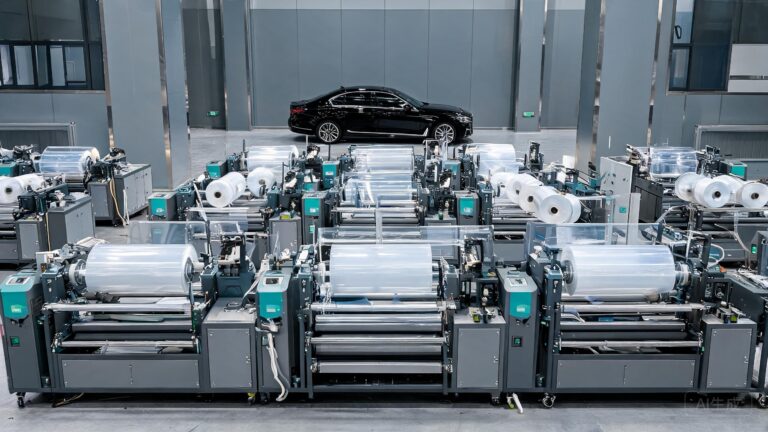
In an OEM arrangement, the buyer generally specifies the product requirements and the manufacturer produces against them. That can include the film construction, approved grade, finish, roll format and packaging. The buyer need not operate a laboratory, but someone on its side must understand what the specification says and how acceptance will be checked.
Some PPF factory offers call a catalogue film in a customer-branded carton “OEM.” That may be a workable commercial arrangement. It simply gives you a different degree of control from manufacturing a film to a detailed buyer-owned specification. Ask the supplier to describe what changes, what stays standard and what is documented.
ODM usually brings supplier-led product development
Under ODM, the manufacturer contributes an existing design or develops a solution around the buyer’s requirements. A brand might explain its installer needs, target finish and sales market, then work with the supplier to select or adapt a film. The supplier carries more of the technical design work, while the buyer still has to approve the result.
A catalogue choice and a development project are different jobs
Selecting an existing construction should not be treated as though it automatically gives you an exclusive formulation. Likewise, a request for a different topcoat or adhesive behavior may involve technical evaluation rather than a simple packaging change. Separate the two in the quotation, approval schedule and ownership terms.

Choose according to the work your team can own
A partnership fails when responsibilities are assigned to people who cannot carry them out. A small importer may have excellent customer relationships and limited technical resources. An established distributor may have experienced installers, documented complaint data and a clear specification it wants to preserve. Their sensible starting points will differ.
| Buying situation | Likely starting point | Question to settle |
|---|---|---|
| You already have a documented product specification | OEM discussion | Can the factory reproduce and verify it? |
| You know the application but need help choosing construction | ODM discussion | Who develops and approves the solution? |
| You need a proven catalogue option under your brand | Private-label discussion | Which product is supplied, and what is customized? |
| You need a technical change for a defined market | Scoped OEM or ODM project | What evidence and development milestones are required? |
For a first brand launch, restraint can be useful
An existing film with a clearly identified grade can reduce the number of decisions you must make before launch. It still needs installation trials, specification approval and workable reorder terms. Limiting the first range also gives your team a better chance to distinguish a product issue from training, storage or application problems.
Use installer feedback before expanding the range
Ask participating shops to record positioning, stretch, edge behavior, appearance and removal observations under comparable conditions. A report of “easy to install” is too loose to guide a development request. A description of where the installer struggled, which panel was involved and how the film was handled gives the supplier something useful to investigate.
For an established brand, preserve the buying reasons
If shops already choose your wholesale PPF for a specific installation feel or finish, a change can create trouble even when a replacement looks acceptable on paper. Define the characteristics that matter to those shops. Then ask whether the PPF manufacturer can hold them consistently, and how a proposed change will reach your team for approval.

Translate the brand promise into a film specification
“Premium quality” gives neither party a reliable acceptance standard. Finished PPF is a system involving the substrate, topcoat, adhesive, stabilizers and liner. A material name alone cannot describe how that system will behave in installation, outdoor exposure or removal.
Compare identifiable products before debating materials
SHIELD SPIRIT offers PCU PPF and TPU PPF in an OEM/ODM context. Its PCU PPF range can be one starting point for a product discussion, but a buyer should still request the exact grade, construction details and supporting documents for the proposed order. The label does not substitute for finished-film evaluation.
The same approach applies when reviewing the TPU PPF range for a different position in your brand portfolio. Compare specific products against the conditions your installers and customers face. Do not infer universal durability or climate suitability from the substrate family.
Define what the thickness measurement includes
A thickness number can refer to the usable film system or a measurement that includes a protective or release layer. Agree on the included layers, units, tolerance and method. Otherwise, two quotations that appear comparable may describe different measurements, leaving your sales team to explain a difference it never intended to buy.
Make sample approval a contractual reference
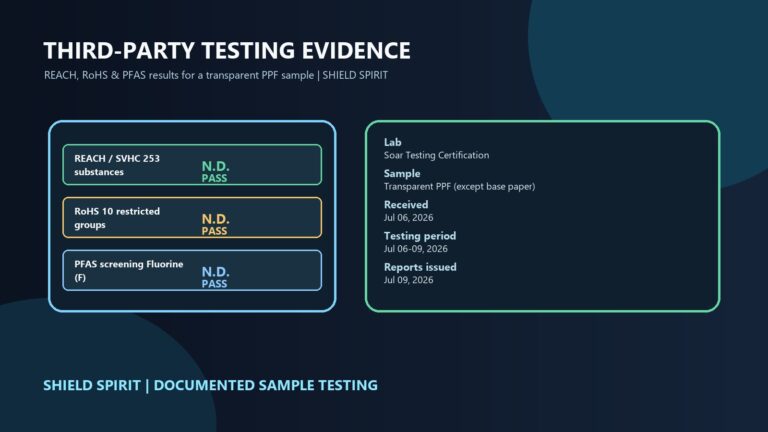
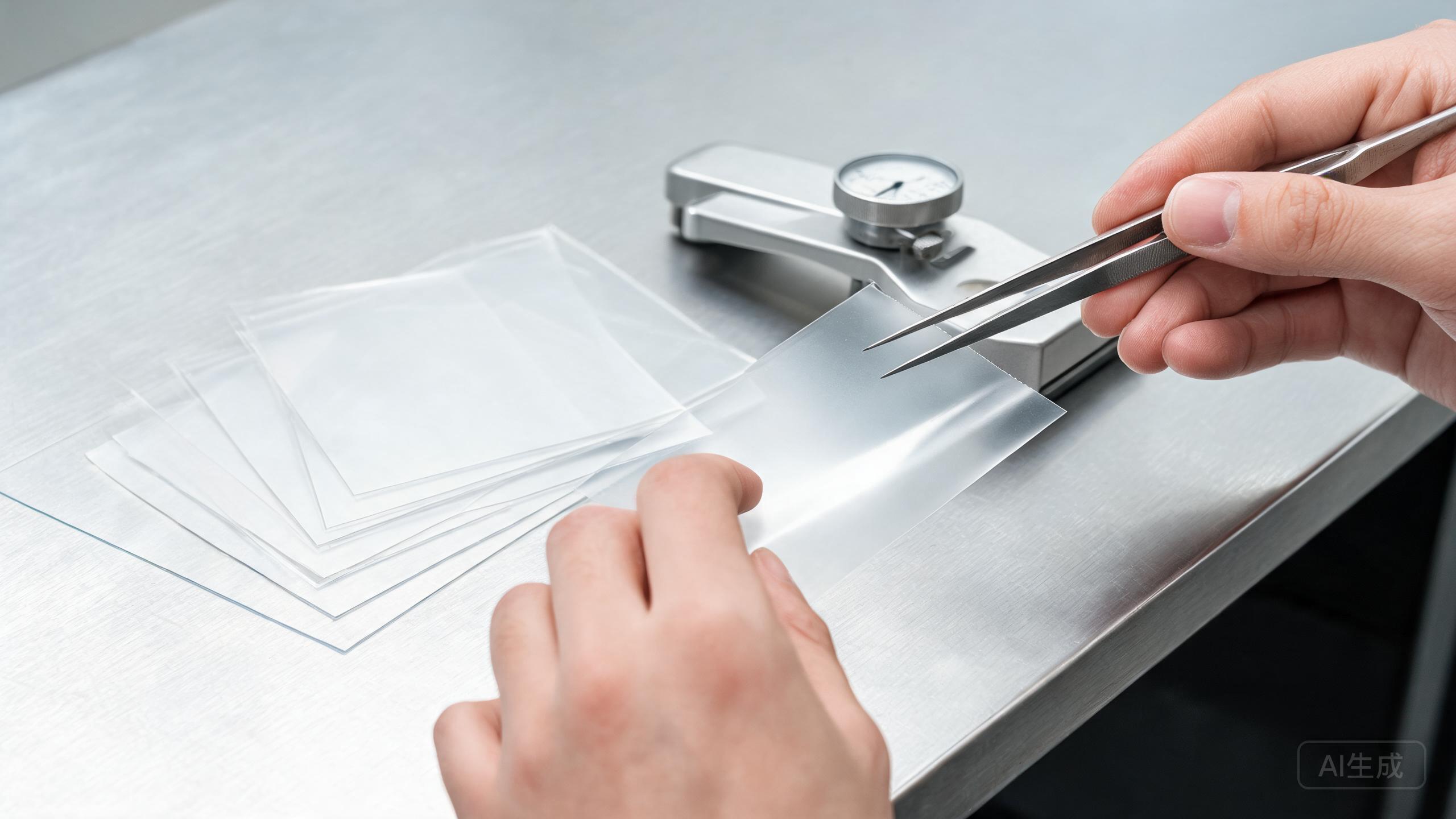
Retain an identified sample and connect it to a dated specification. Record any agreed exceptions before payment rather than relying on a message saying the sample is “approved.” The published sample approval guide explains the practical link between trial film and a bulk order. Your agreement should also state what happens if the production batch does not meet that reference.
Agree who owns development and who can approve changes
Product ownership can become contentious once a brand starts selling well. Separate your trademarks, packaging artwork, technical specification, development records and any supplier-owned formulation. Paying for customization does not automatically transfer every underlying right.
Ask specific questions about exclusivity
Would an exclusive arrangement cover the same film, the same packaging, a named territory, a customer group or a distribution channel? How long would it last, and what purchase obligations would apply? An exclusivity statement without those boundaries may offer little protection while creating obligations your brand cannot sustain.
Plan for a supplier change without assuming easy transfer
A buyer-owned specification may still be difficult for another factory to reproduce. Proprietary formulation details may remain unavailable, and a different production route can alter performance. Agree which records and reference samples you can retain. Any move to another supplier should trigger fresh evaluation, even when the commercial description remains the same.
Require notice for product changes
A change to a substrate grade, coating, adhesive, liner or production process can affect the finished film. Ask which changes require written buyer approval and which require requalification. The agreement should identify a responsible contact and stop an unapproved revision from being substituted simply because the original material is unavailable.

Compare the financial commitment behind each model
An ODM quotation can look economical if you count only the roll price. A custom OEM proposal can look expensive before you understand which development work it includes. Request separate lines for film, packaging, evaluation samples, development work and any recurring charges. Compare the same scope and delivery basis.
Match order size to a realistic launch
Custom packaging and a modified construction may have different minimum quantities. Confirm both, along with any unused packaging stock you would be expected to buy. The MOQ planning guide is useful when deciding whether a launch quantity fits expected demand, storage capacity and reorder timing.
Identify the event that starts the lead time
Production may depend on sample approval, artwork release, deposit receipt or material availability. Ask which event starts the quoted lead time and what happens if a prerequisite is delayed. For a launch involving shops and distributors, a vague delivery window can be more disruptive than a clearly explained longer schedule.
Keep service responsibilities visible
A car owner will usually bring a problem to the installer or brand, not the overseas factory. Agree how complaints are investigated, what evidence is needed and which remedies apply. Product replacement, freight, removal and installation labor are separate costs; a warranty headline does not tell you which of them are covered.

Start the partnership with a bounded trial
A useful first project has a defined product, a manageable quantity and a clear decision at the end. Agree what would justify proceeding, what would require adjustment and what would stop the order. Include a production-batch review so the relationship is evaluated beyond the sales sample.
Keep the film identity connected to shipment records and complaints. The batch traceability guide shows why roll-level identification matters when branded cartons reach several shops. Private labeling should not remove the supplier’s underlying batch reference.
When approaching SHIELD SPIRIT or another candidate, send a short brief describing your market, installer profile, expected order pattern and the decisions you need help with. Ask for a proposed OEM/ODM scope, sample route and supporting documents. That gives both parties a practical basis for discussion without committing you to an untested product.

FAQ
Is OEM always more customizable than ODM?
No. Customization depends on the agreed scope and the manufacturer’s technical capabilities. An ODM project may involve development, while an offer described as OEM may only change the carton. Request a written list of product and packaging changes.
Can a private-label PPF order be called OEM?
Suppliers sometimes use the term that way. Clarify whether you are buying an existing film under your brand or a product manufactured against your specification. That distinction affects approval, ownership and future changes.
Does ODM give my brand an exclusive film?
Only if exclusivity is explicitly agreed. Define the product, territory, channel, duration and purchase conditions. Ask whether the supplier can sell the underlying construction to other buyers with different branding.
Which model suits a small installation business?
A clearly identified existing film may be a manageable starting point when technical resources and demand are limited. Evaluate it with your installers, then decide whether a product development project would solve a demonstrated need.
Should I choose the partnership before choosing the film?
Develop both decisions together. Your required product may determine the development work, and your team’s ability to approve that work may limit the sensible options. Keep the commercial label secondary to the responsibilities you can document.

The Big Picture
Your partnership model shapes how information travels from the factory to the installer and back again. As the brand grows, the value of retained samples, clear ownership and controlled revisions becomes easier to see. Those arrangements support the product promise long after the first carton has been opened.
Bottom Line
Choose OEM when you can define and govern the specification; consider ODM when supplier-led development answers a clear need. For either route, settle approval, change control and remedies before the first bulk order. A written scope and a bounded trial are sensible next steps.