











Best PPF for Hot and Humid Climates: A Car Owner’s Guide
Best PPF for Hot and Humid Climates: A Car Owner's Guide
The shiniest PPF on installation day is not necessarily the best film for your climate. A car that lives in severe heat, high humidity, strong sunlight or frequent contamination needs evidence that the film can retain useful strength after those stresses. That is what a car owner should ask about before choosing a roll.
This guide turns supplied laboratory comparison data into plain English. It does not name a supplier or a specific grade. It explains how to use heat, humidity and chemical-exposure charts as buying questions, then how to connect those questions to the finished PPF system on your vehicle.
Start with your parking and driving reality
If your vehicle sits in a hot open lot, heat aging matters. If you live where heat and humidity arrive together, moisture-related aging matters too. If road contamination, bug remains, bird droppings or strong cleaning products are part of normal ownership, you should also understand how the material behaved in the stated chemical tests. This is why climate-specific PPF selection should come before a brand name or a scratch-demo video.
Hot and humid: the chart that matters most
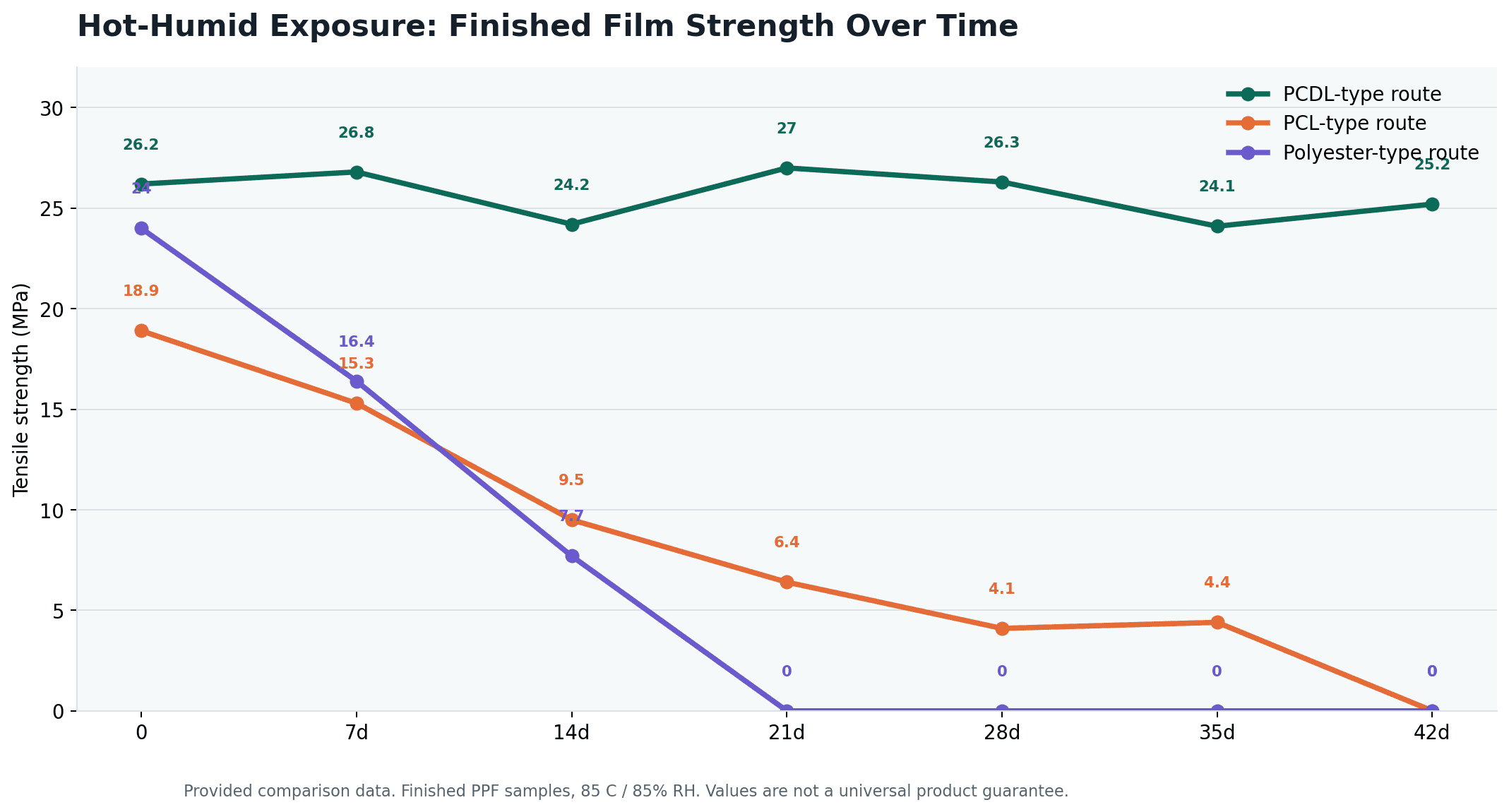
In the supplied 85 C / 85% RH comparison, the finished PPF made with the PCDL-type route kept tensile strength near its starting range through 42 days. The PCL-type and polyester-type comparisons lost strength sooner under those stated conditions. For an owner, the memorable meaning is simple: in a hot, wet environment, ask how much usable strength the finished film keeps, not just how good the raw resin sounds.
Heat: look beyond the word "heat-resistant"
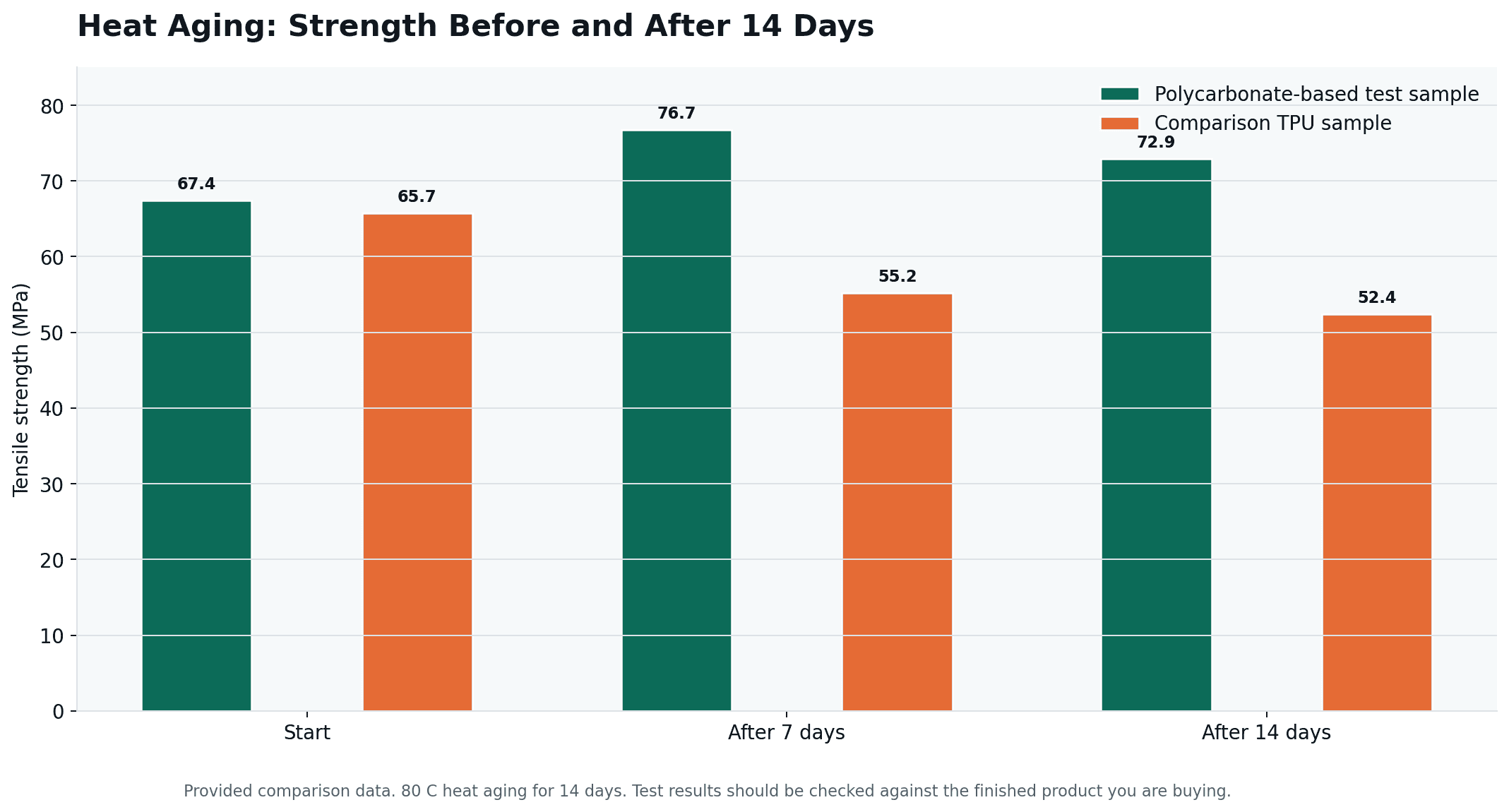
The supplied 80 C heat-aging comparison showed the polycarbonate-based test sample retaining higher tensile strength than the comparison TPU sample after 14 days. That supports a useful consumer direction, not an unconditional promise: a polycarbonate TPU platform can be worth considering where long hot parking and elevated surface temperatures are routine. Confirm that the exact product you buy has a matching construction, test record and warranty.
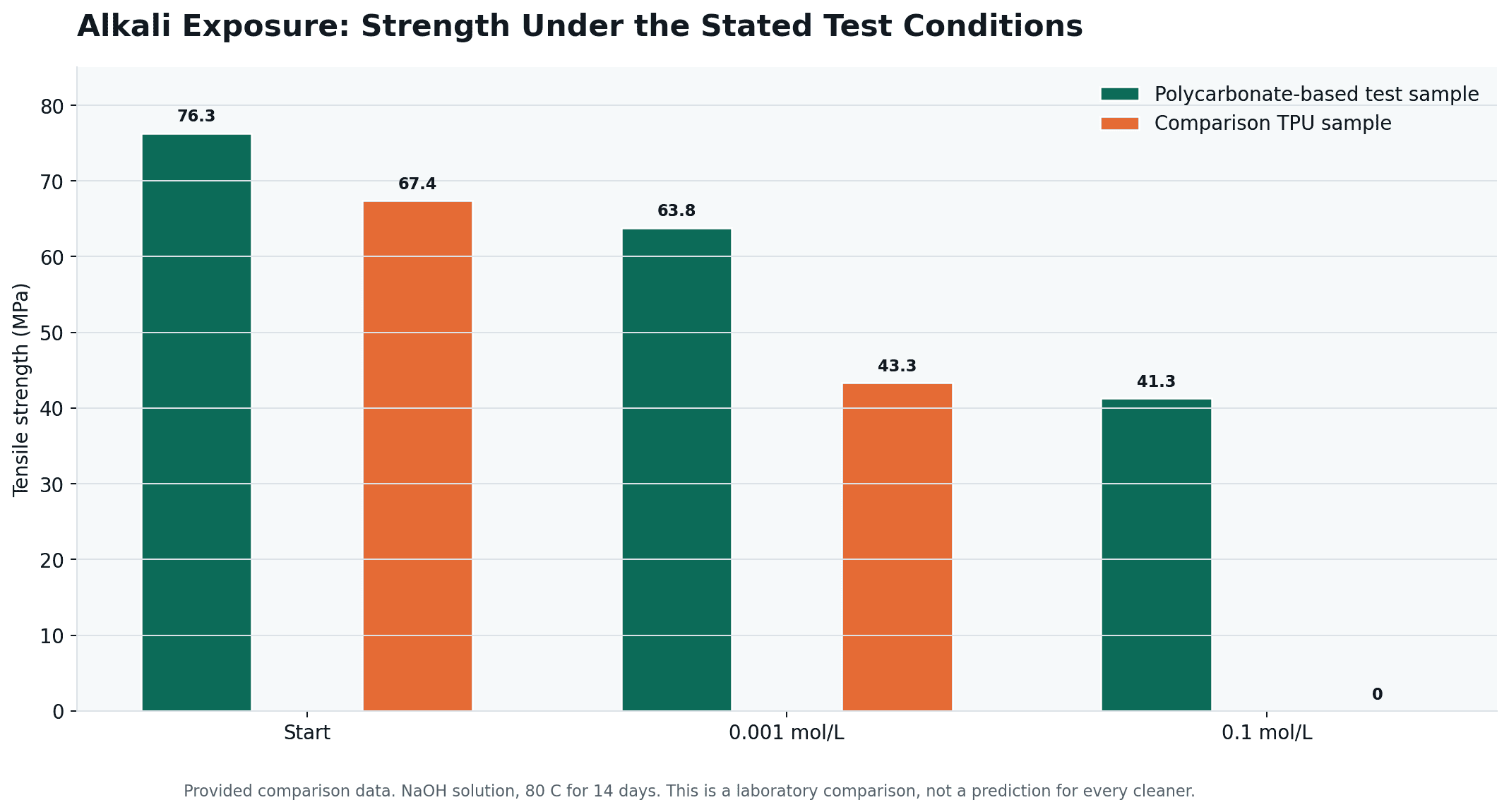
Acid and alkali: what these charts can and cannot tell you
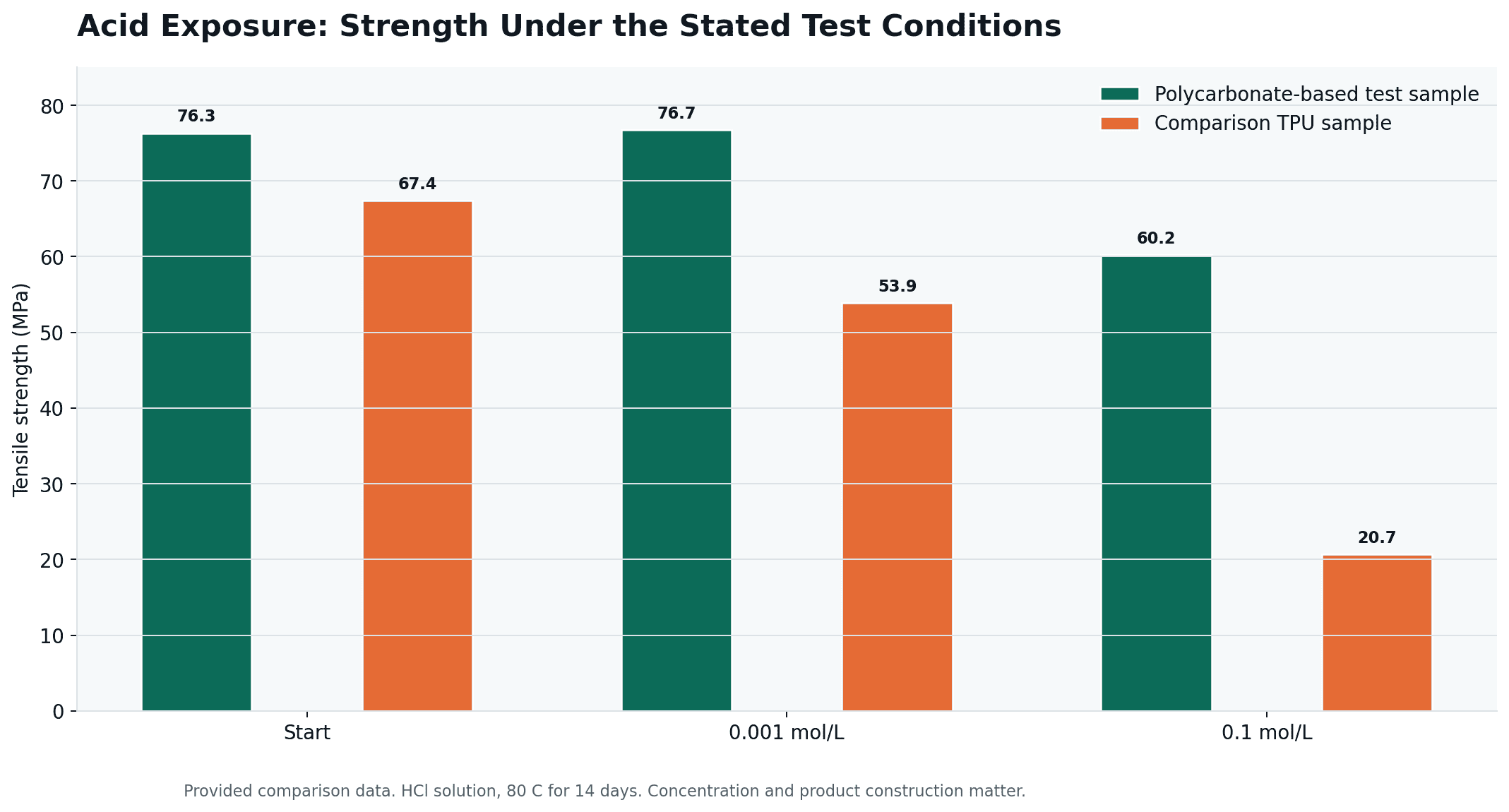
Laboratory acid and alkali exposure is not the same as everyday car washing. It is a stress screen. In the provided tests, the polycarbonate-based sample held more strength than the comparison sample as concentration increased. A sensible owner takeaway is to clean contaminants early, avoid unapproved harsh chemicals, and ask how the chosen film was tested rather than assuming any PPF is chemically identical.
PCU in plain language
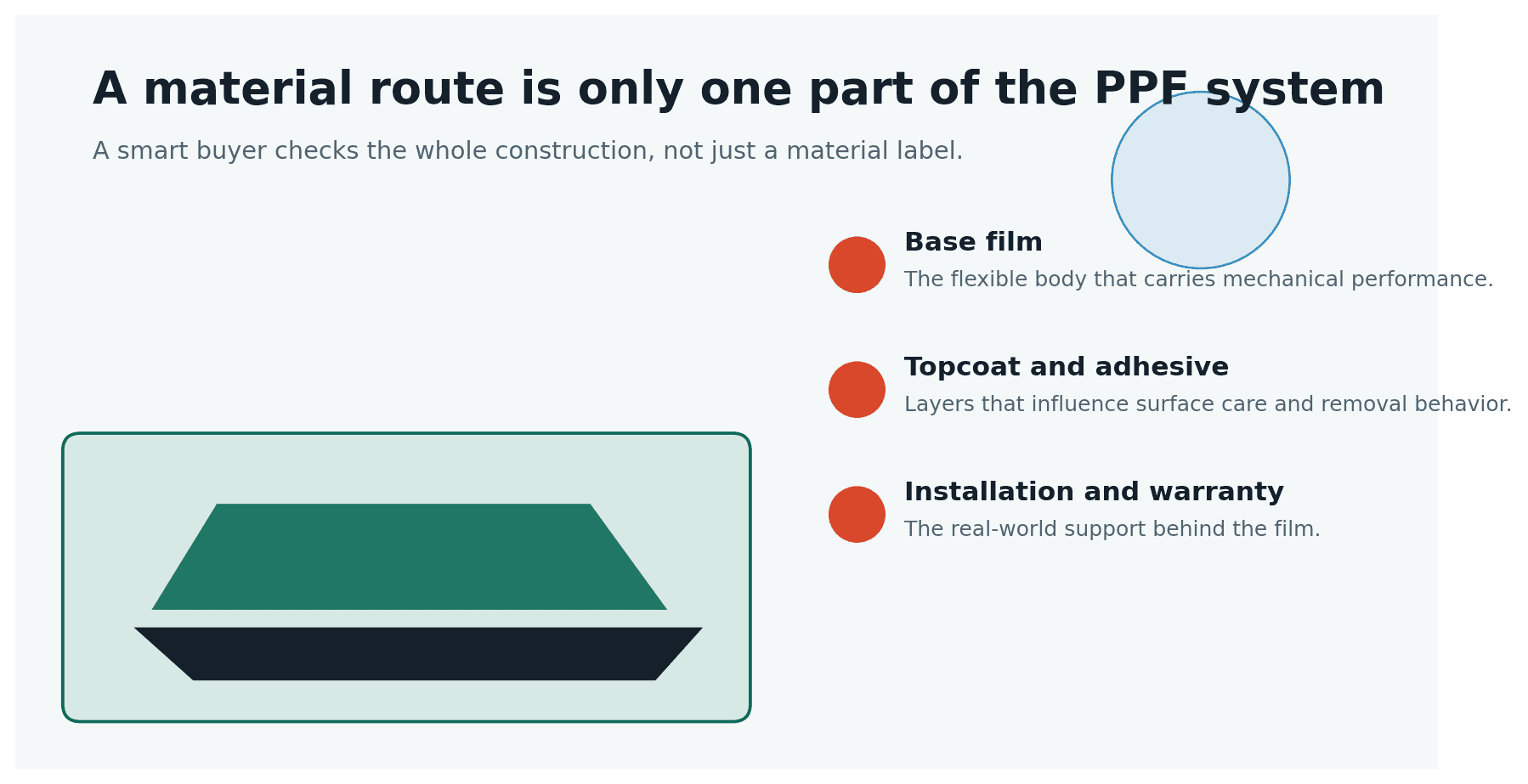
PCU means Polycarbonate TPU. Think of it as a material-platform direction that may support a durable finished film when it is paired with the right topcoat, adhesive, stabilizers and manufacturing control. It is not a magic word and it does not make every product identical. Review the actual PCU PPF product information, including the stated warranty and care instructions, before buying.
A three-question climate checklist
Take this checklist to the installer: Was the test performed on base film or finished PPF? What exact temperature, humidity, duration and concentration were used? What does the warranty cover in my climate? Those questions turn a generic material claim into a buying decision you can verify.
FAQ
Does this mean every polycarbonate TPU PPF will last longer?
No. The supplied data compares defined samples under stated laboratory conditions. A finished PPF also depends on topcoat, adhesive, thickness, stabilizers, installation and maintenance. Ask for documentation for the exact product and batch.
Should I buy the thickest PPF for a hot climate?
Thickness can help with impact protection, but it does not replace weathering evidence or installation quality. Match thickness, material system and warranty to your vehicle use.
For a realistic expectation of long-term appearance, also read the honest answer on PCU PPF and yellowing.