








Het aanbrengen van lakbeschermingsfolie: een complete handleiding vanuit onze werkplaats
Paint protection film (PPF) has become a popular choice for car owners who want to preserve their vehicle’s factory finish. But how exactly is this invisible shield applied? What makes a professional installation different from an amateur job? And once it is on, how do you keep it performing for years?
This guide takes you inside our workshop, where we recently completed a full PPF installation on an electric SUV. We will walk through each stage of the process, explain why certain steps matter, and share the decision-making framework we give every customer when they are deciding whether PPF makes sense for their vehicle.
What Is Paint Protection Film?
Paint protection film is a transparent thermoplastic urethane (TPU) or polycarbonate (PC) layer that bonds to your vehicle’s original paint. Once applied, it acts as a sacrificial barrier that absorbs impacts, resists chemical stains, and prevents UV degradation.
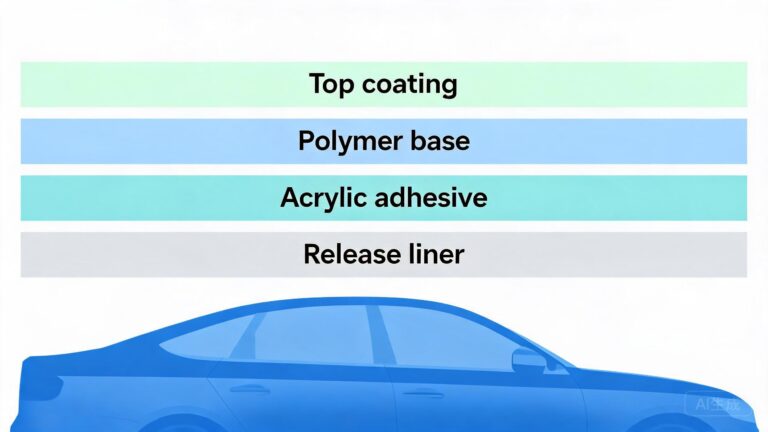
The film itself is engineered in multiple layers:
- Top coat – a self-healing surface that can recover from light scratches when exposed to heat
- Clear polyurethane or polycarbonate body – the structural layer that absorbs energy from stones, debris, and minor collisions
- Adhesive layer – a pressure-sensitive system designed to bond firmly to paint without leaving residue when removed
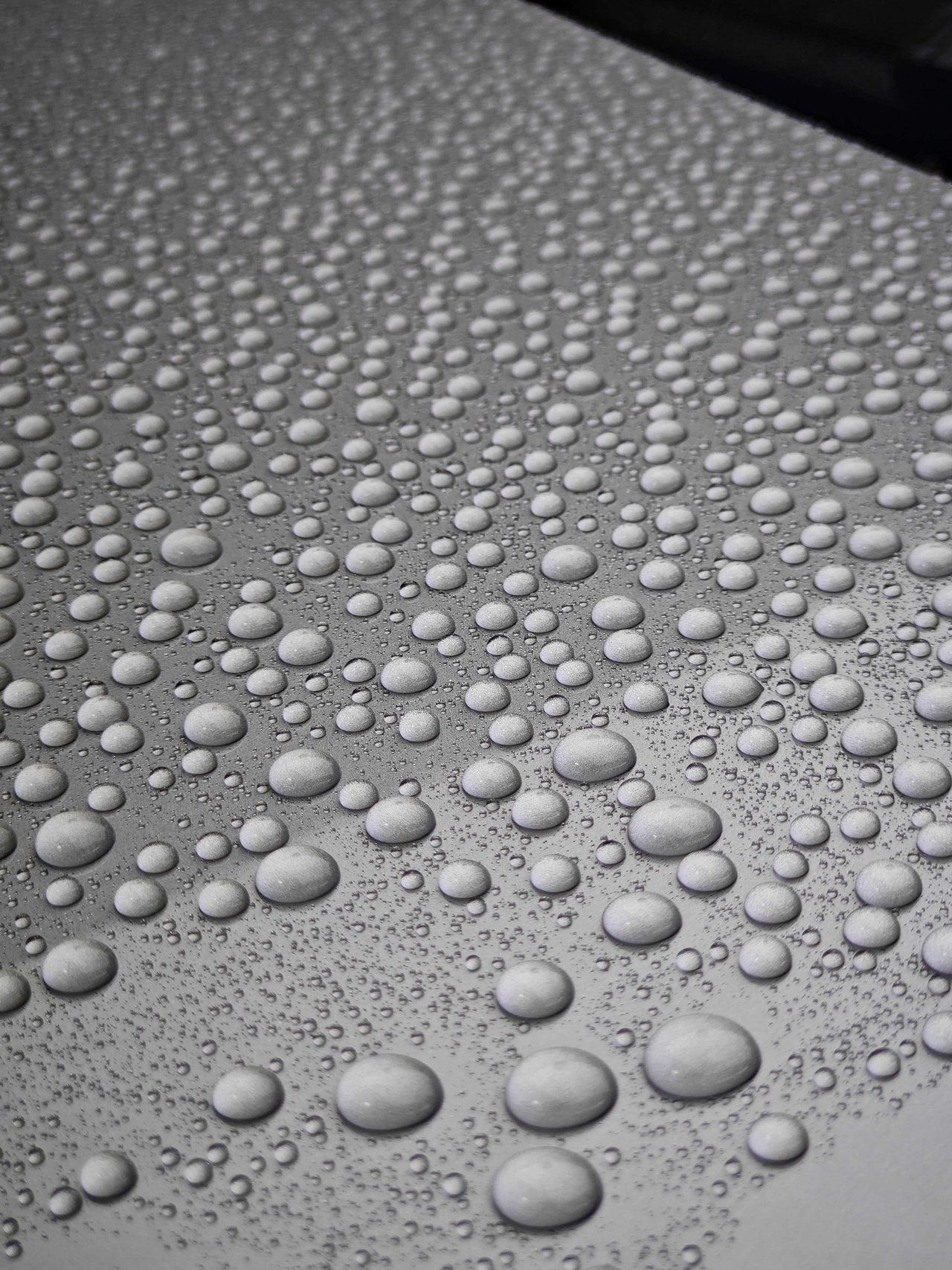
Modern PPF products also feature anti-stain coatings and hydrophobic treatments, which cause water and contaminants to bead off rather than settle into the surface.
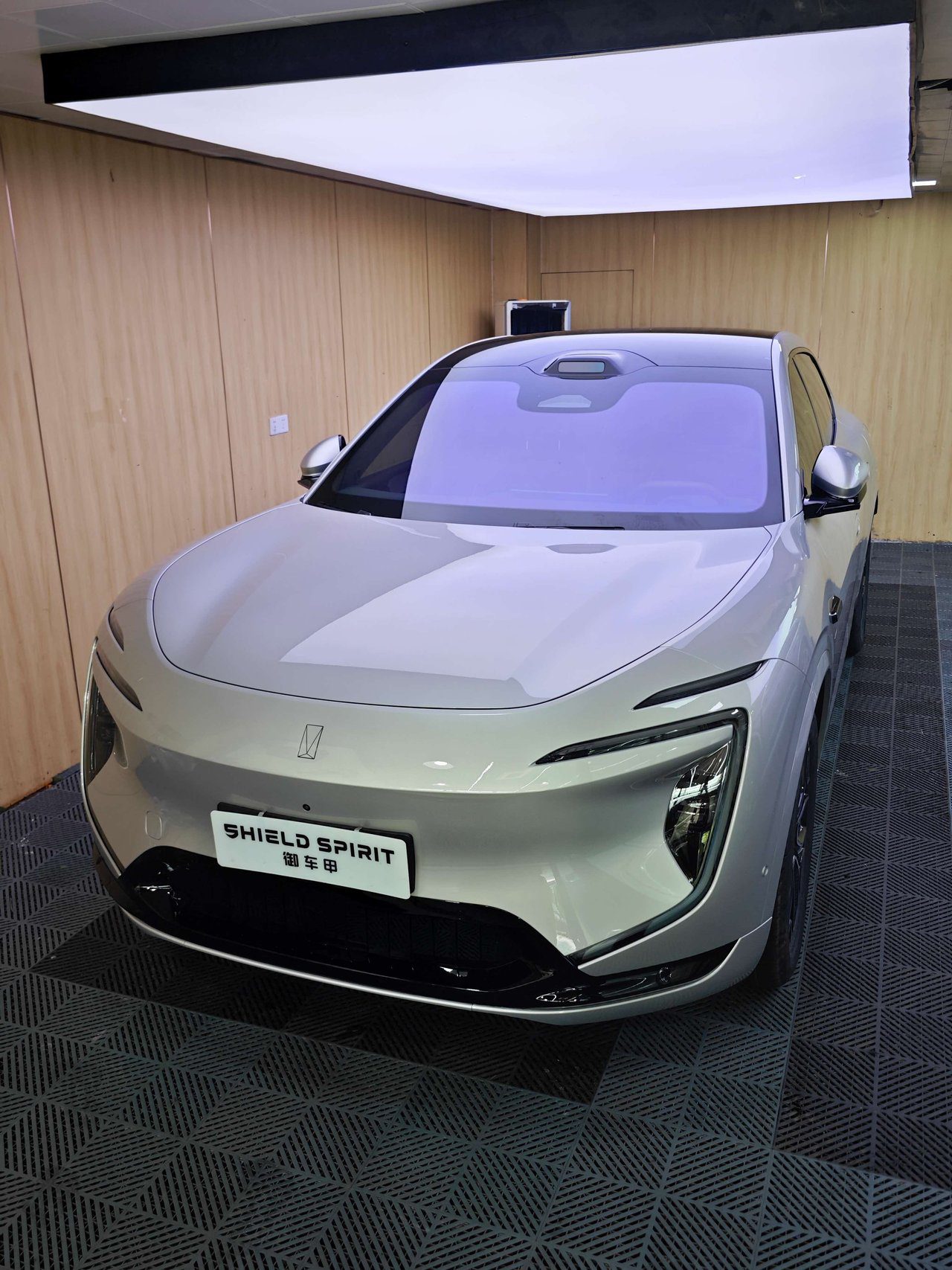
SHIELD SPIRIT’s Latest-Generation PC Substrate Film
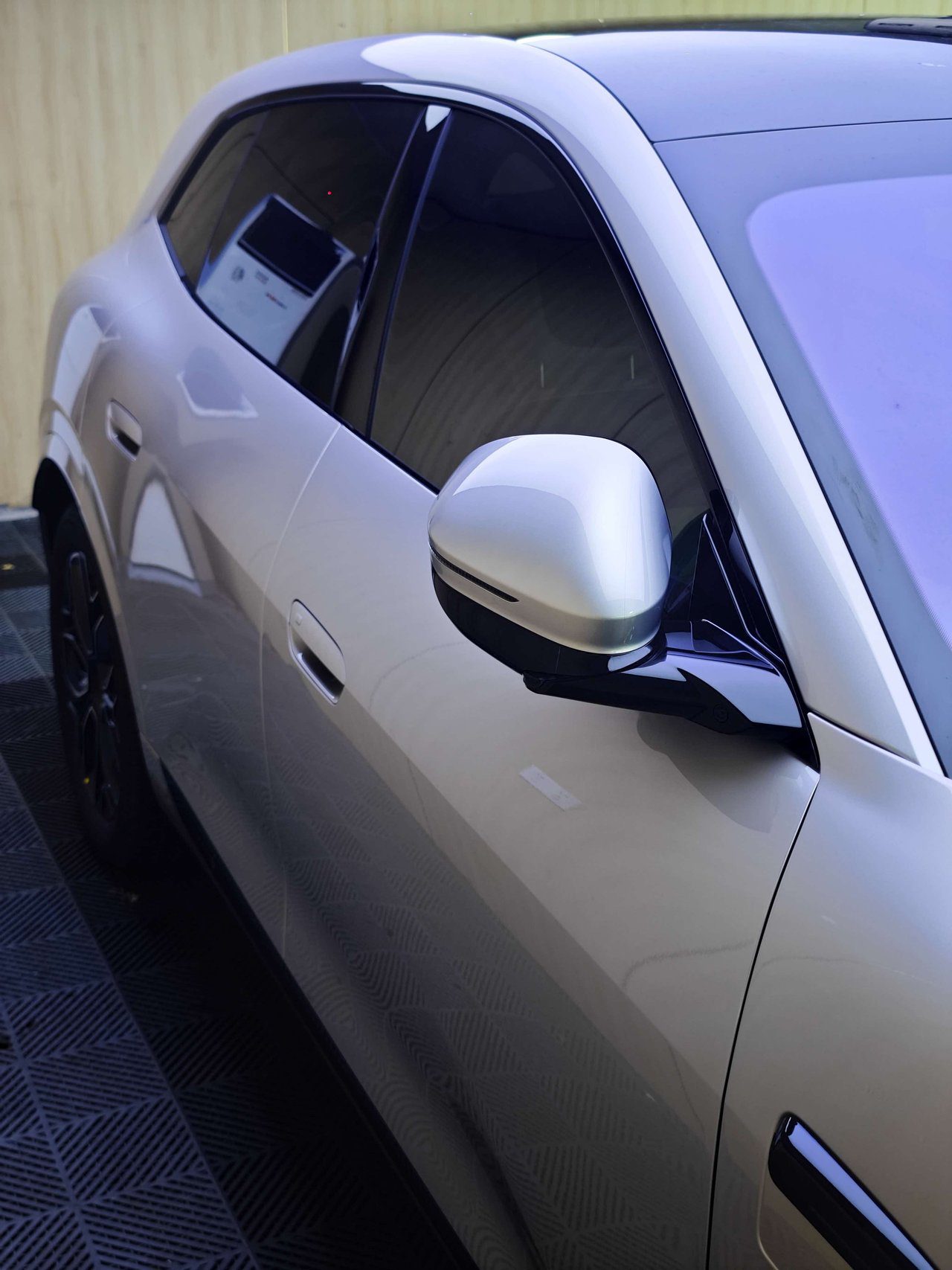
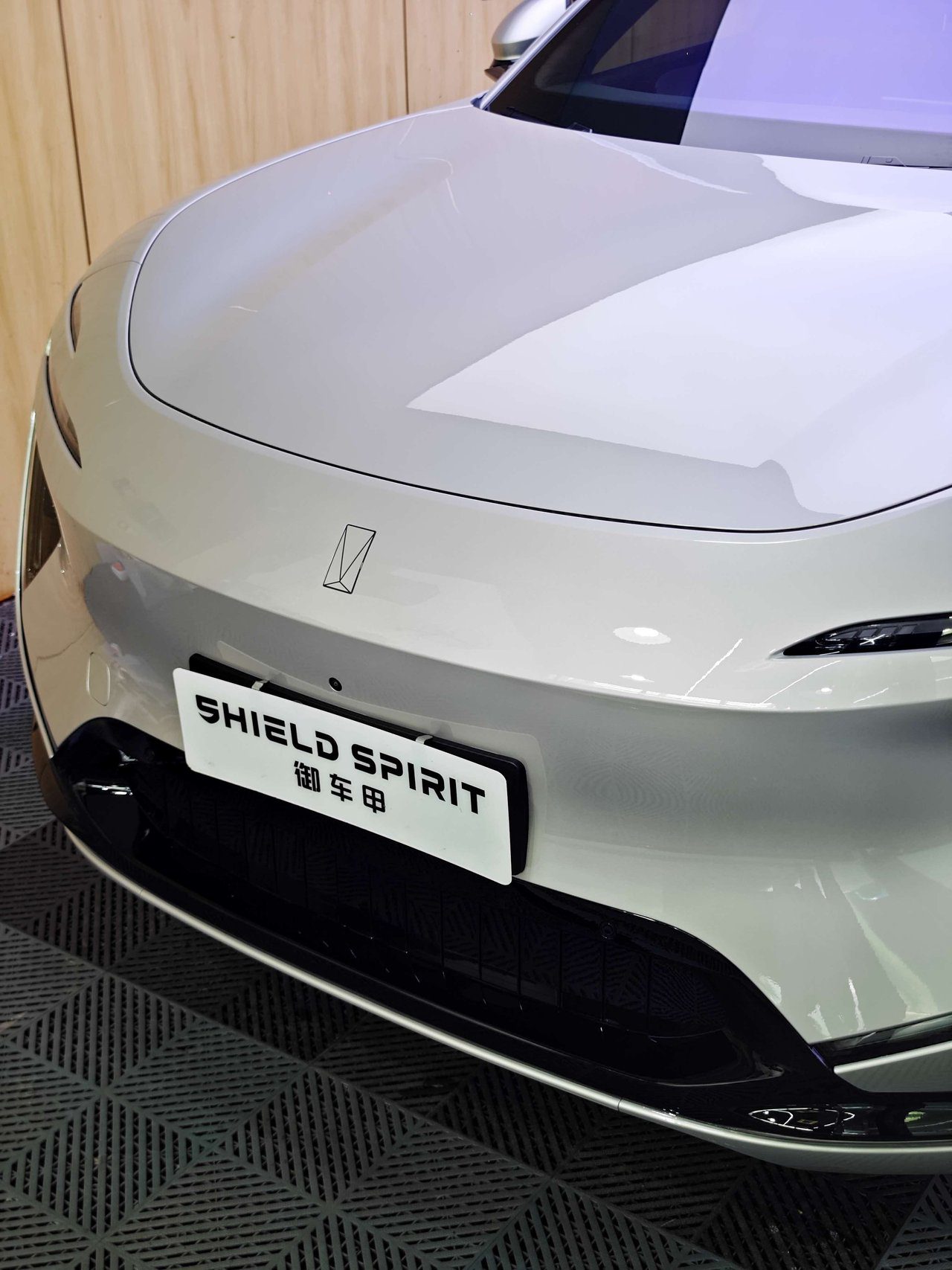
The vehicle featured in this guide was protected using SHIELD SPIRIT’s new-generation polycarbonate (PC) substrate paint protection film. This material represents a step forward from traditional TPU-based films in several key areas.
Performance Advantages of PC Substrate PPF
- Enhanced optical clarity – overall brightness is increased by 30–40% compared to standard films, delivering a high-gloss, wet-look finish straight out of the box
- Superior stain resistance – the anti-stain and gloss-enhancing top coat prevents contaminants from bonding to the surface
- Outstanding hydrophobic performance – water beads up and rolls off immediately, taking dirt and grime with it
- Effortless maintenance – stains barely stick, so daily cleaning becomes faster and less labour-intensive
- Long-term paint preservation – the film locks in your factory finish, protecting it from oxidation, yellowing, and environmental damage for years
You can see these properties demonstrated in the short video above, which was filmed during the installation process. The hydrophobic test in particular shows how effectively water is repelled, a clear indicator of both stain resistance and ease of care.
Inside the Installation Bay: Environment and Preparation
Professional PPF installation begins long before any film touches the car. The first requirement is a dust-controlled environment. Even a single speck of debris trapped under the film will show as a permanent bubble, and larger particles can create stress points that lead to peeling or tearing over time.
Our installation bay features:
- Positive air pressure and filtration to keep airborne dust at minimum levels
- Temperature control between roughly 18–24 °C (65–75 °F), which keeps the film pliable and the adhesive working correctly
- Bright, even lighting so technicians can spot imperfections and ensure precise alignment
- Non-shedding floor mats that trap particulates before they circulate
Before the vehicle enters the bay, it undergoes a multi-stage cleaning process:
- Washing – removal of surface dirt, road salt, and loose contaminants
- Clay bar treatment – elimination of bonded particles like tar, tree sap, and industrial fallout
- Degreasing and paint decontamination – stripping of waxes, sealants, and silicone residues that would interfere with adhesion
- Isopropyl alcohol wipe-down – final surface preparation to ensure a chemically clean bond
Any existing paint defects — scratches, chips, or previous touch-ups — are documented and, if necessary, corrected before film application. Once the film is on, what is underneath stays underneath.
Pattern Cutting and Film Preparation
Modern PPF installation relies on precision-cut patterns tailored to each vehicle model. These patterns are generated from CAD data and cut using computer-controlled plotters, ensuring that every panel is covered with minimal seams and no excess material that would need trimming on the paint.
For complex or less common vehicles, technicians may supplement machine-cut patterns with hand trimming. This is done on release liner or, when necessary, directly on the vehicle using extremely light pressure and knifeless tape systems that avoid any contact between blade and paint.
Each film section is inspected under bright light before application. We check for:
- Edge quality – clean cuts with no fraying or jagged edges
- Surface contamination – dust, fingerprints, or adhesive transfer
- Optical defects – inclusions, hazing, or distortion in the film itself
Any piece that does not meet standard is discarded. It is easier to replace a pre-cut section than to fix a defect after installation.
Wet Application and Initial Positioning
PPF is applied using the wet method. A slip solution — typically a mixture of distilled water and a small amount of application fluid or baby shampoo — is sprayed liberally onto both the paint surface and the adhesive side of the film.
This liquid layer serves several purposes:
- Lubrication – the film can slide across the paint, allowing technicians to adjust position before the adhesive grabs
- Contamination suspension – any remaining microscopic particles float in the solution rather than pressing into the adhesive
- Bubble prevention – the fluid fills gaps and pushes air out from under the film as it is squeegeed
Technicians position the film carefully, aligning it to panel edges, character lines, and mounting points. Once placement is confirmed, the squeegeeing process begins.
Squeegeeing: Removing Water and Air
This is the most labour-intensive and skill-dependent stage. Using soft, felt-edged squeegees, technicians work from the centre of each panel outward, pushing the slip solution and any trapped air toward the edges.
The goal is to achieve uniform adhesive contact across the entire surface. Too little pressure leaves water pockets that will cloud the film or cause it to lift. Too much pressure can stretch the film, create stress marks, or even tear it on sharp body lines.
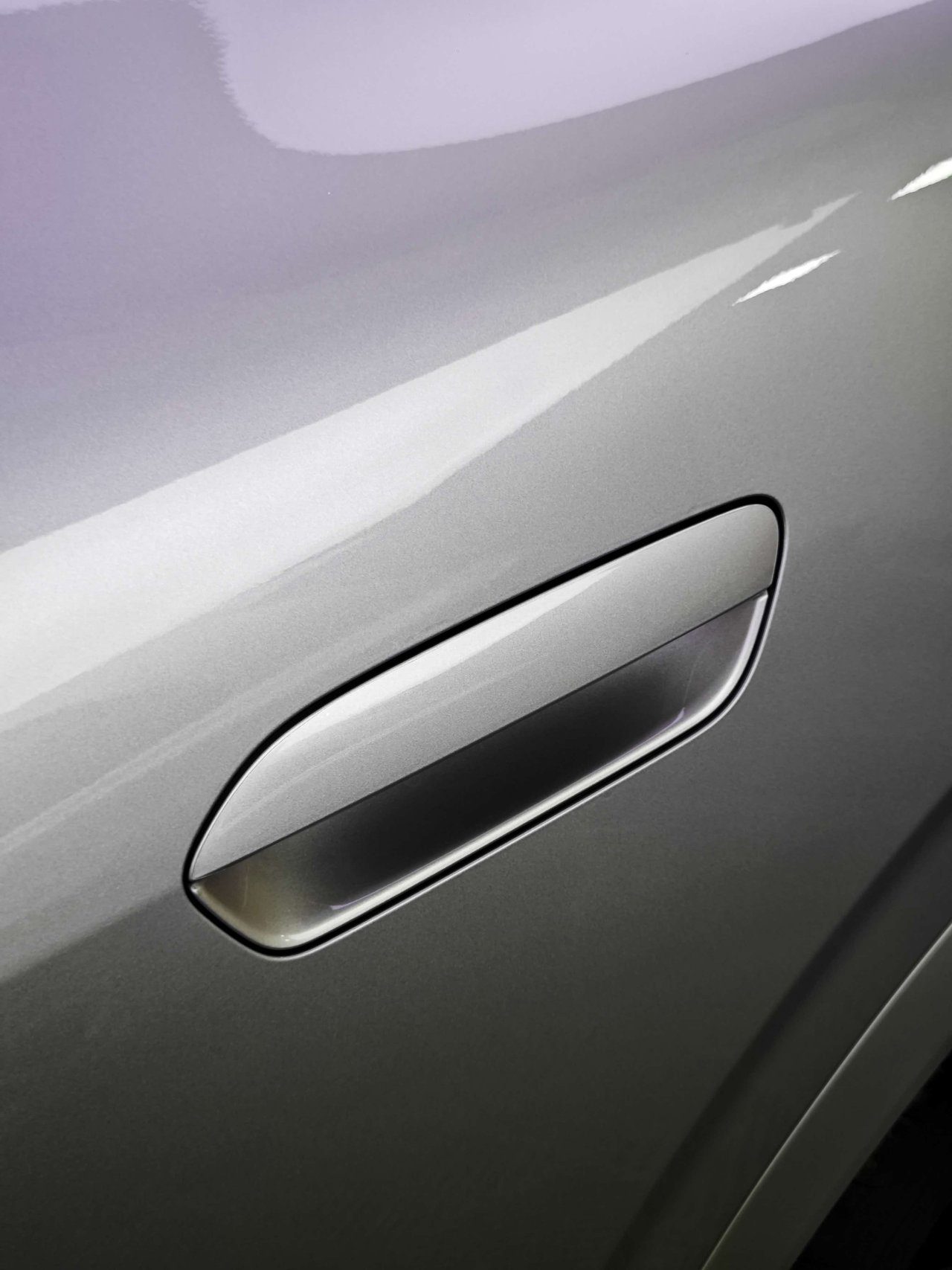
For flat or gently curved panels, this process is relatively straightforward. For complex areas — door handles, mirror bases, bumper vents, and aerodynamic spoilers — it requires patience, smaller tools, and often multiple attempts to work the film into tight recesses without trapping bubbles.
Heat Shaping and Edge Wrapping
Once the bulk of the film is down, technicians use controlled heat to mould it around curves, into grooves, and over raised edges. A heat gun or infrared panel warms the film to its working temperature, making it pliable enough to stretch and conform without leaving memory wrinkles.
Heat shaping is especially critical for:
- Compound curves – areas where the panel curves in two directions at once, such as fender flares and bumper corners
- Deep recesses – door handle pockets, badge cavities, and sensor cutouts
- Edge wrapping – folding the film over panel edges and into door jambs to hide the cut line and prevent lifting
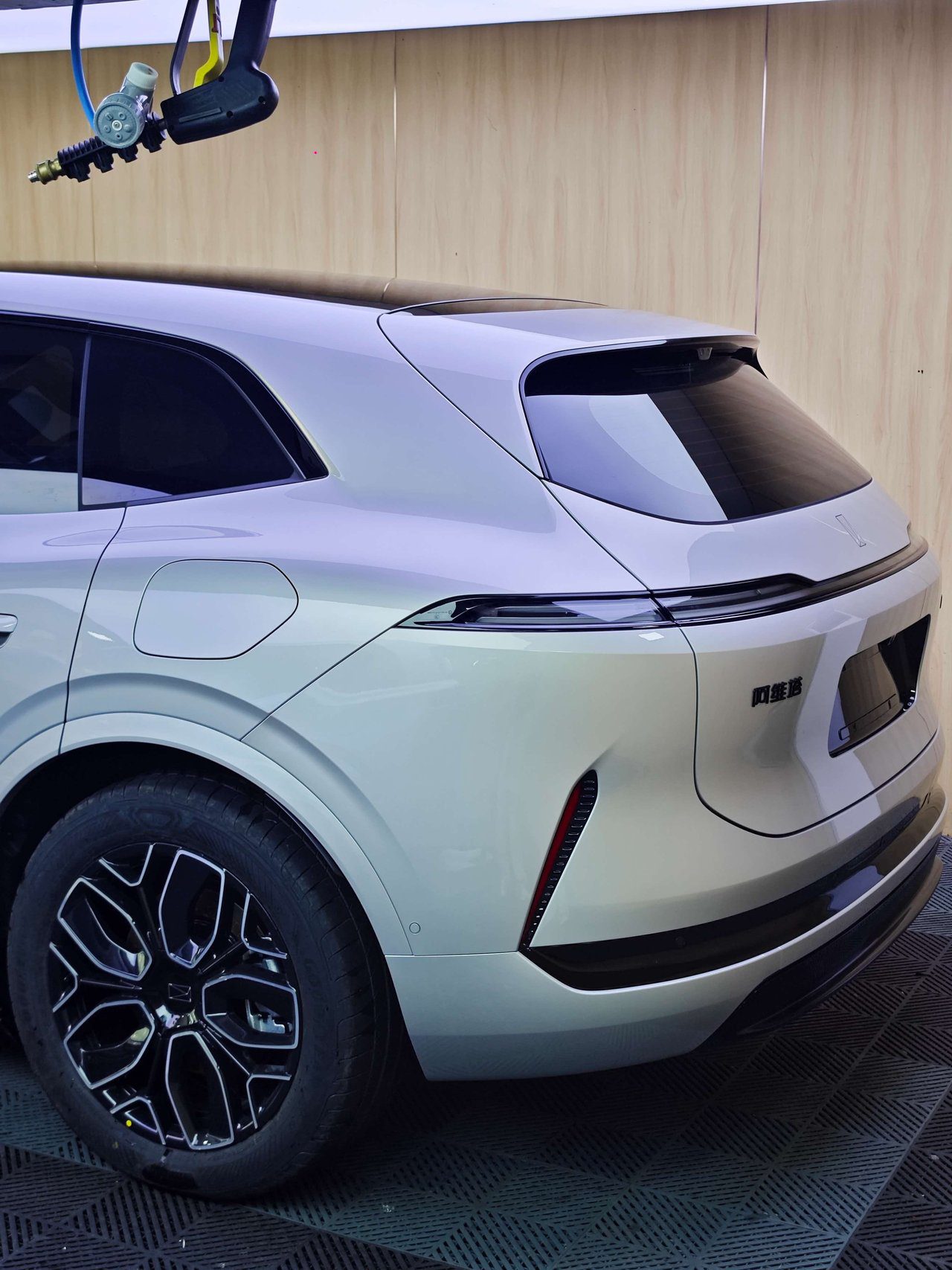
Edge wrapping is a hallmark of professional work. Rather than leaving the film terminating at a visible seam on the face of the panel, technicians tuck it around the edge and seal it on the backside. This creates a clean, seamless appearance and dramatically improves durability.
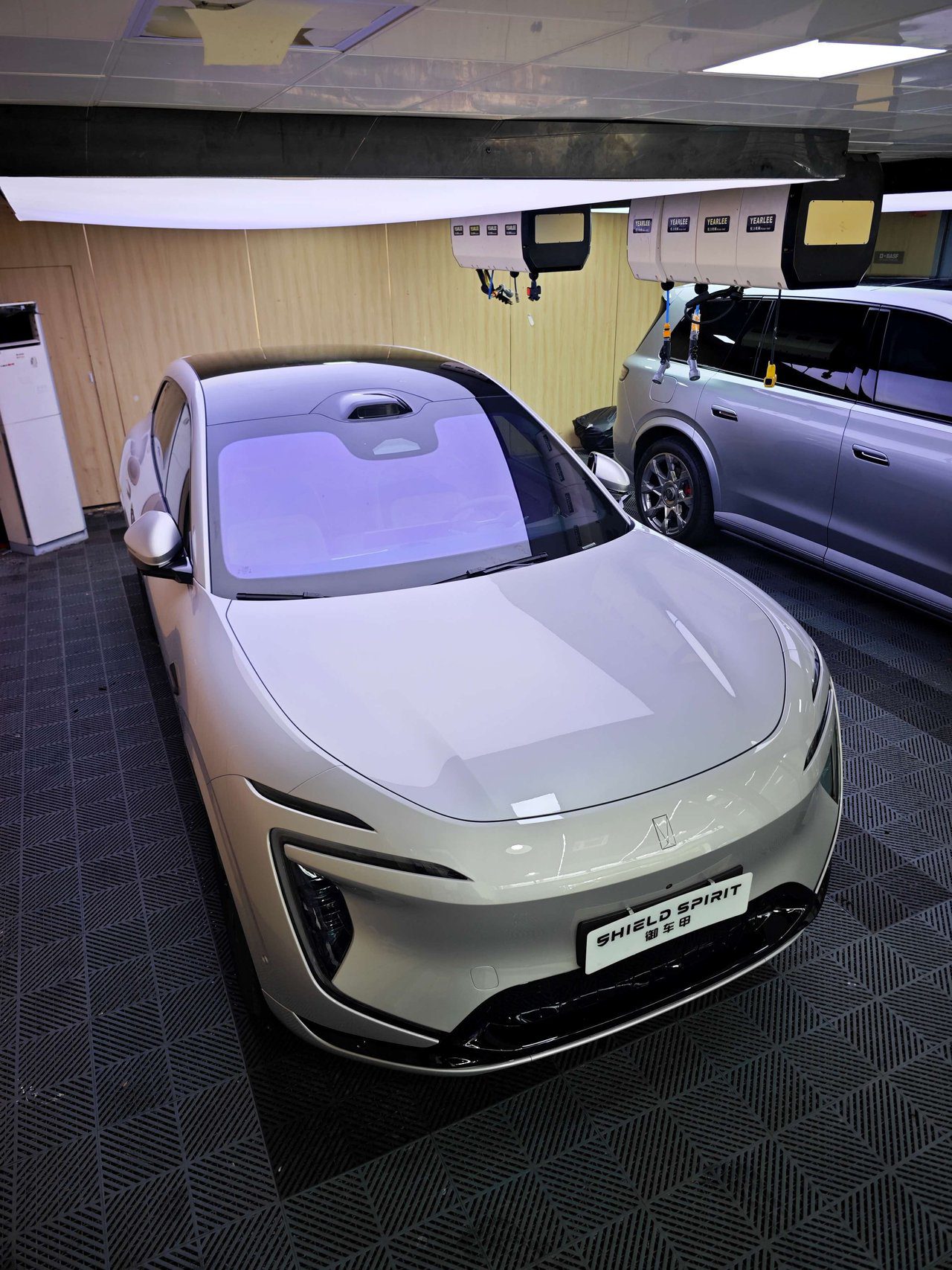
Detail Work and Final Inspection
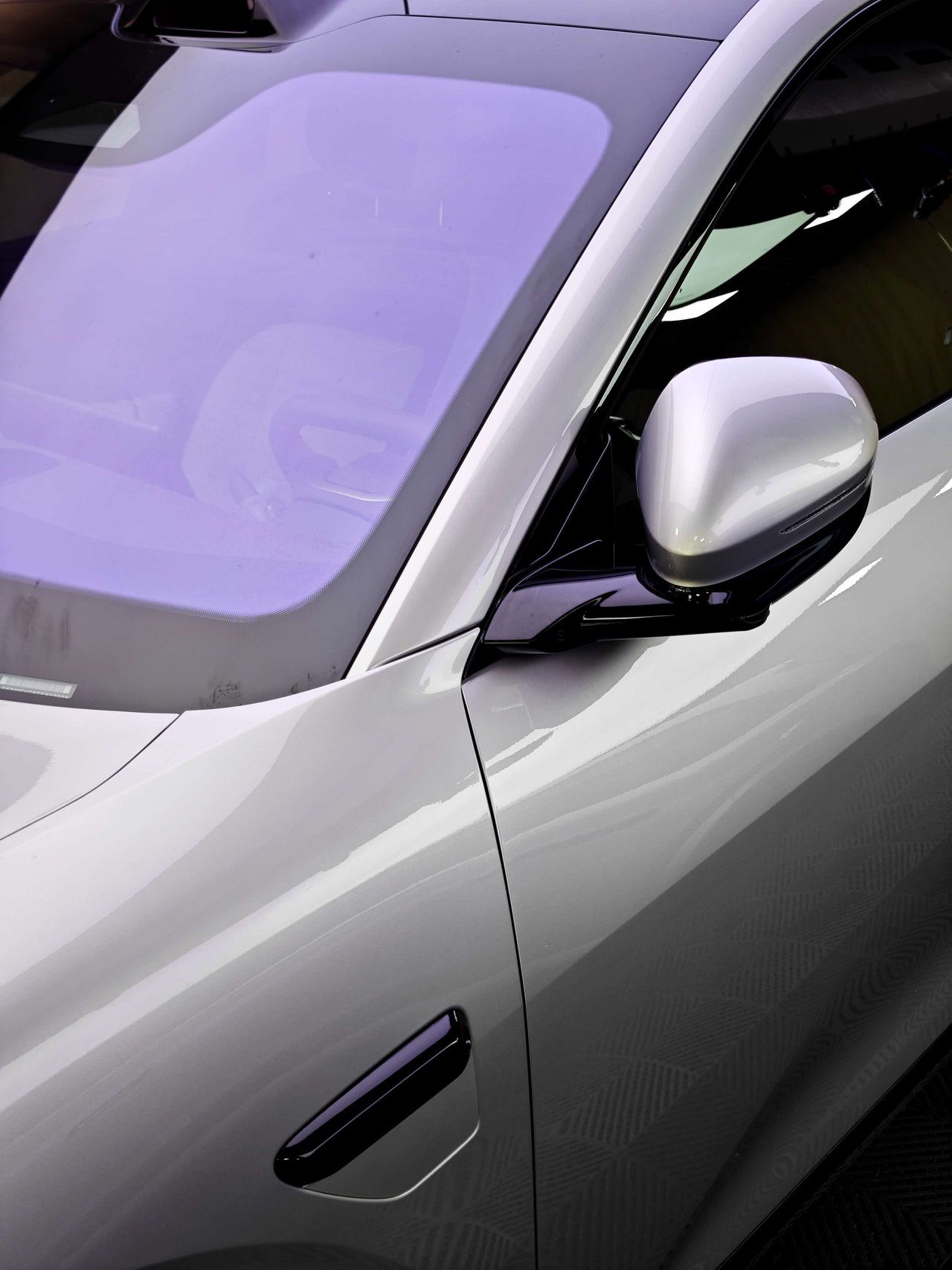
After the main panels are down, technicians move to detail areas: mirrors, door handles, emblems, grilles, and trim pieces. Many of these components are removed, wrapped separately, and reinstalled to ensure complete coverage and crisp edges.
The final inspection checks for:
- Bubbles and lifting – any areas where the film has not adhered are reworked immediately
- Contamination – visible particles are either removed by lifting the film slightly and extracting them, or the section is replaced
- Edge sealing – all wrap points are heated and pressed to ensure a permanent bond
- Optical clarity – the film should be virtually invisible; any hazing, distortion, or discolouration is unacceptable
Once the vehicle passes inspection, it remains in the controlled environment for a settling period, typically 24–48 hours, to allow the adhesive to cure fully before the car is returned to the customer or exposed to the elements.
Post-Installation Care: The First Week
The first seven days after installation are critical. The adhesive is still building its bond strength, and premature stress can cause lifting or edge failure.
During this period, follow these rules:
- No washing – avoid car washes, pressure washers, and even hand washing for at least one week
- Keep the vehicle dry – park under cover if rain is forecast
- Avoid direct sun exposure for prolonged periods during the first 48 hours, especially if the ambient temperature is high
- Do not apply wax, sealant, or ceramic coating until the curing period is complete
- Drive gently – avoid high-speed driving or situations that would subject the film to heavy airflow stress
These restrictions might seem strict, but they are based on adhesive chemistry. Rushing the process increases the risk of failure and voids most manufacturer warranties.
Long-Term Maintenance: Keeping Your Film Performing
Once cured, high-quality PPF is surprisingly low-maintenance. The hydrophobic top coat and stain-resistant properties mean that contaminants do not cling the way they would to bare paint, and regular washing becomes faster and less frequent.
Routine Cleaning
- Wash every 1–2 weeks, and immediately after exposure to bird droppings, tree sap, or insect residue
- Use pH-neutral car shampoo – avoid alkaline degreasers, solvents, or abrasive polishes
- Prefer hand washing or touchless systems – rotating brush car washes can mar the film surface over time
- Dry with soft microfibre towels – rough cloths or squeegees can leave scratches
- Pressure washing is safe at moderate settings (below roughly 1200 PSI / 80 bar) if you keep the nozzle at least 30 cm (12 inches) away from edges
Activating Self-Healing
One of PPF’s most impressive features is its ability to erase light scratches and swirl marks. The self-healing top coat relaxes under heat, allowing the polymer chains to realign and close up surface damage.
To activate this property:
- Sunlight – park the vehicle in direct sun for 30–60 minutes; light scratches often disappear on their own
- Warm water – pour water heated to roughly 60–80 °C (140–180 °F) over the affected area
- Professional heat treatment – visit an installer for controlled application of heat to deeper marks
Self-healing does have limits. Deep gouges that penetrate through the top coat, or damage that reaches the adhesive layer, cannot be repaired and will require film replacement on that section.
Contaminant Removal
- Bird droppings and tree sap – remove within 24 hours using warm water and gentle agitation; do not let them bake on in the sun
- Tar and road grime – use a dedicated tar remover safe for PPF; avoid petroleum-based solvents that can degrade the film
- Water spots – wipe down the vehicle after rain or washing to prevent mineral deposits
Optional Enhancements
- Ceramic coating over PPF – adds an additional hydrophobic layer, increases gloss, and makes cleaning even easier
- Regular inspections – check edges and high-stress areas every six months; early detection of lifting allows for resealing before it spreads
When Should You Install PPF? The Three-Yes Rule
Not every vehicle benefits equally from paint protection film. Installation costs typically range from $800 to $3,000+ depending on coverage, and the decision should be based on how you use the car and how long you plan to keep it.
We recommend PPF if you answer yes to at least three of these conditions:
1. You Are Protective of Your Vehicle’s Appearance
If minor scratches, stone chips, and swirl marks bother you, and you would rather prevent them than fix them later, PPF delivers measurable peace of mind. It is especially valuable for drivers who:
- Regularly drive on highways or rural roads where gravel and debris are common
- Park in areas with heavy tree cover, bird activity, or industrial fallout
- Want their car to look showroom-fresh for as long as possible
2. You Do Not Have Covered Parking
Vehicles parked outdoors face constant exposure to UV radiation, acid rain, pollen, and environmental contaminants. PPF acts as a barrier that prevents these elements from etching into the paint, reducing the rate of oxidation and colour fading.
3. The Vehicle Is Worth Over $30,000 (or Equivalent in Your Market)
For premium and luxury vehicles, PPF makes economic sense. A single panel respray can cost $500–$1,500 depending on the shop and the paint system. If PPF prevents even two repaints over the life of your ownership, it has already paid for itself.
More importantly, preserved original paint increases resale value. Buyers pay a premium for vehicles with no respray history, and PPF-protected cars consistently command higher prices in the used market.
4. You Plan to Keep the Vehicle for 5+ Years
PPF is a long-term investment. If you trade in or sell your car every 2–3 years, the cost-to-benefit ratio is less favourable unless you are in a market where PPF protection is explicitly valued by buyers (as it increasingly is in premium segments).
5. You Are Willing to Invest in Quality Film
Cheap PPF is worse than no PPF. Low-quality films yellow within 1–2 years, peel prematurely, leave adhesive residue, and can even damage the paint when removed. If budget constraints push you toward bargain-brand film, it is better to skip PPF entirely and allocate that money toward regular paint correction and ceramic coating instead.
When You Should NOT Install PPF
There are scenarios where PPF does not make sense, and we are transparent with customers about this.
The Vehicle Is Under $20,000
For economy and budget vehicles, the cost of quality PPF installation often exceeds 10–15% of the vehicle’s value. At that point, you are better off accepting minor paint wear as normal, and addressing any significant damage with spot repainting or vinyl wraps.
The Paint Has Already Been Resprayed Multiple Times
PPF bonds to whatever surface it is applied to. If your car has been repainted with aftermarket or budget paint systems, there is a significant risk that the paint will come off with the film when it is removed. Factory paint is engineered to withstand this; cheap resprays are not.
If your vehicle has extensive respray history, we will either decline the installation or require a signed waiver acknowledging the paint-removal risk.
You Are Shopping for the Cheapest Option
We have seen too many cases where customers chose the lowest quote, only to return months later with yellowed, peeling, or bubbling film that now needs removal and reinstallation. Quality film from reputable brands costs more for a reason: better materials, better adhesives, and better warranties.
If price is the primary driver of your decision, hold off on PPF until you can afford a product you will be happy with in three years.
Coloured PPF: Protection Meets Personalisation
Transparent PPF is the most popular choice, but coloured and textured films are growing rapidly. These products offer the same protective properties as clear film, while also changing the appearance of your vehicle.
Common options include:
- Gloss colour films – vivid, paint-like finishes in virtually any colour
- Matte and satin films – flat or semi-gloss surfaces that give a modern, understated look
- Metallic and chrome films – reflective finishes for bold, attention-grabbing aesthetics
- Colour-shifting and gradient films – finishes that change hue depending on viewing angle and light
Coloured PPF is particularly appealing for drivers who want a custom look but do not want the permanence and legal complexity of a full respray. Because the film is removable, you can return the vehicle to its original colour when it is time to sell, or simply change the colour again if your taste evolves.
From a protection standpoint, coloured PPF performs identically to clear film. It still guards against rock chips, scratches, UV damage, and chemical staining. The only difference is that any damage to the film itself is more visible on a coloured surface than on a transparent one, so regular inspection and maintenance become slightly more important.
What to Expect: Timeline and Process
A full-body PPF installation on a mid-size vehicle typically requires 3–5 days of shop time, though this varies depending on the complexity of the vehicle, the coverage area, and whether any paint correction is needed beforehand.
Typical timeline:
- Day 1: Vehicle intake, pre-installation inspection, paint decontamination, and masking
- Days 2–4: Film application, heat shaping, edge wrapping, and detail work
- Day 5: Final inspection, curing period, and customer handover with care instructions
Partial installations (front bumper, bonnet, fenders, mirrors) can often be completed in 1–2 days.
Final Thoughts: Is PPF Worth It?
Paint protection film is not a necessity, but for the right vehicle and the right owner, it is one of the best investments you can make. It preserves factory paint, reduces maintenance effort, protects resale value, and delivers years of visual clarity that would otherwise be impossible to maintain.
The key is to approach the decision thoughtfully. Understand what the film can and cannot do, choose a quality product from a reputable installer, and commit to basic maintenance practices that will keep it performing at its best.
If you are still unsure whether PPF makes sense for your vehicle, reach out with your car model, usage pattern, and budget. We will give you an honest assessment and help you decide whether installation, a different protection strategy, or simply accepting normal wear and tear is the right choice for your situation.
Questions? Share Your Experience
Have you had PPF installed on your vehicle? How is it holding up in your climate? Are you considering it for a new car but still weighing the cost? Leave a comment below — we read and respond to every one, and your real-world feedback helps other drivers make better decisions.