










Inzicht in testrapporten van derde partijen over lakbeschermingsfolie: een complete gids
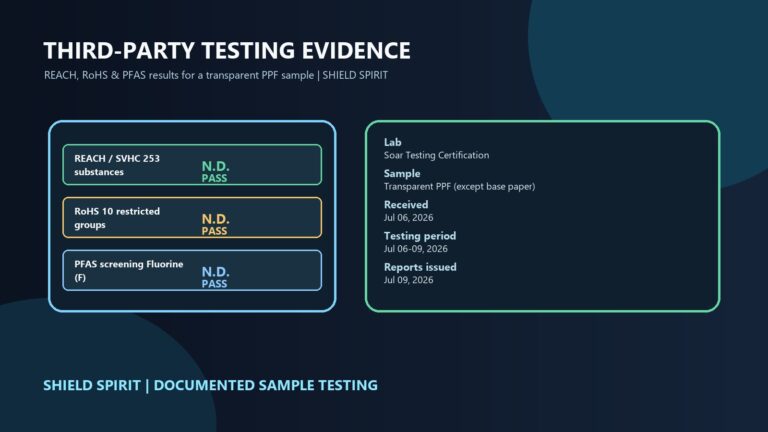
When you invest in paint protection film for your vehicle, you are trusting that the product is safe, durable, and free from harmful substances. But how can you be sure? This is where third-party testing reports become your best friend. In this guide, we walk you through everything you need to know about PPF quality certification, using SHIELD SPIRIT’s recent test report as a real-world example.
What Is Third-Party Testing and Why Does It Matter?
Imagine buying a car without any safety certifications, or taking medication that has not been tested by independent labs. The same principle applies to paint protection film. Third-party testing means an independent laboratory—one with no financial stake in whether your product passes or fails—examines the film according to strict scientific standards.
Unlike manufacturer self-testing, third-party testing gives an unbiased and credible assessment. It is like having a neutral referee in a sports game—someone whose only job is to ensure accurate and fair results.
Why Not Just Trust the Manufacturer?
Manufacturers have every incentive to present their products in the best light. While most are honest, independent verification adds a crucial layer of consumer protection. Third-party test reports serve several purposes:
- Consumer confidence: you know exactly what you are putting on your five-figure vehicle
- Regulatory compliance: proof the product meets national and international safety standards
- Liability protection: certified results protect both buyers and sellers if something goes wrong
- Market differentiation: quality manufacturers use certification to stand out from questionable competitors
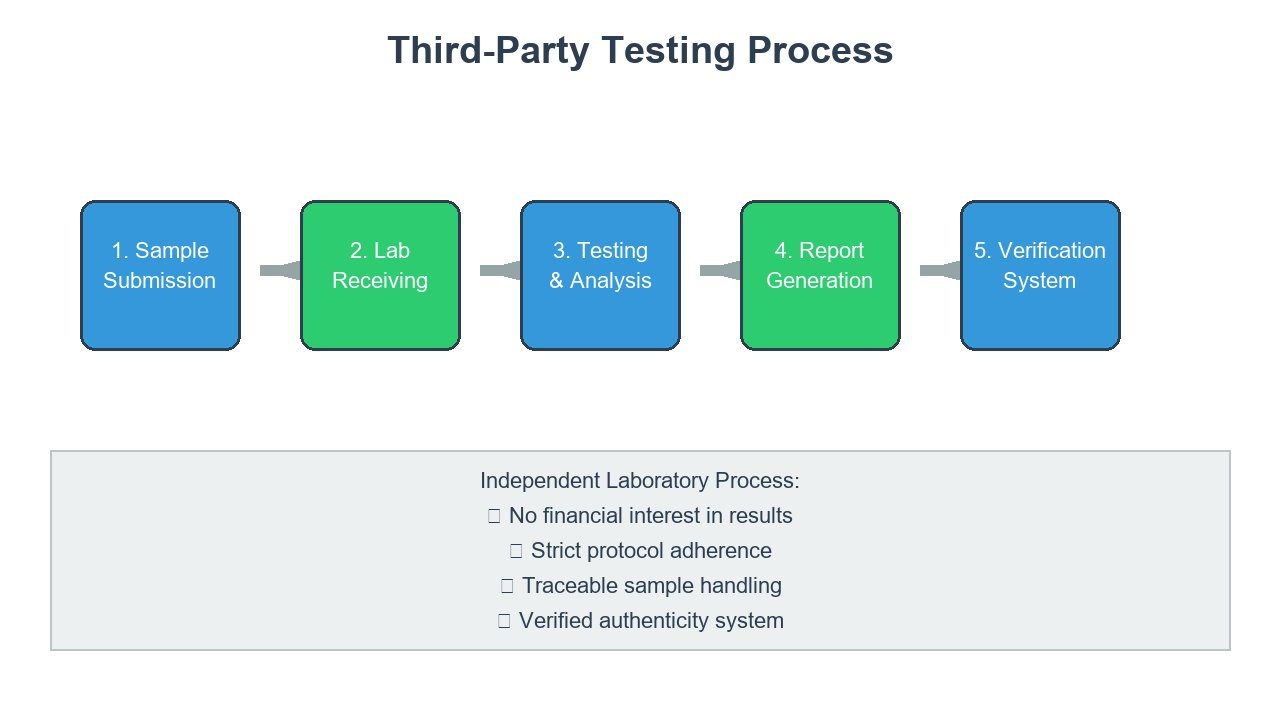
Meet the Testing Agency: Zhejiang Lvlv Testing Technology
SHIELD SPIRIT chose Zhejiang Lvlv Testing Technology Service Co., Ltd. for its film certification. But who are they, and why was this lab selected over hundreds of other options?
About the Testing Agency
- Official name: Zhejiang Lvlv Testing Technology Service Co., Ltd.
- Established: 2016
- Location: Cangnan County, Wenzhou, Zhejiang Province, China
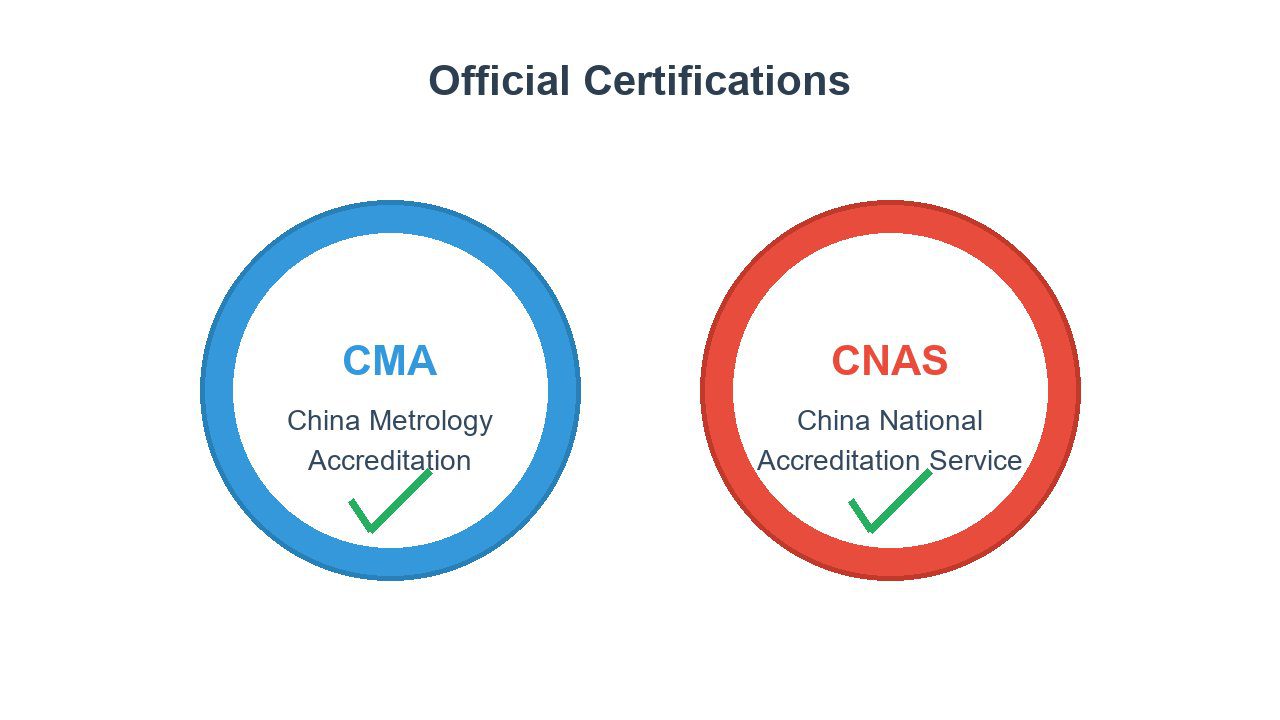
- Key certification: CMA (China Metrology Accreditation) makes reports legally valid in China; CNAS gives international recognition of testing competence
- Specialization: textiles, leather, plastics, electronics, cosmetics and food-contact materials
Official website: www.lvlvjiance.com
Why Choose This Testing Agency?
SHIELD SPIRIT did not pick a lab at random. Here is why Zhejiang Lvlv made sense:
- Dual certification power: CMA and CNAS mean results are recognized both in China and internationally, which matters for a brand with global ambitions
- Polymer specialization: PPF is essentially a specialized plastic film; Lvlv’s plastics and automotive experience makes it well qualified to test protection films
- Geographic advantage: located in Zhejiang—a manufacturing hub—the lab understands production realities and offers faster turnaround
- Province-level accreditation: province-certified institutions undergo regular audits and strict quality control
- Reasonable cost: a comprehensive element test like this typically costs $300–$800 USD, which is competitive for CMA/CNAS certified testing
Real-world analogy: choosing a testing lab is like choosing a mechanic. You want the right certifications, specific experience with your type of vehicle, a convenient location and reasonable prices—not necessarily the biggest name or the cheapest option.
The Test Report Breakdown: SHIELD SPIRIT’s Case Study
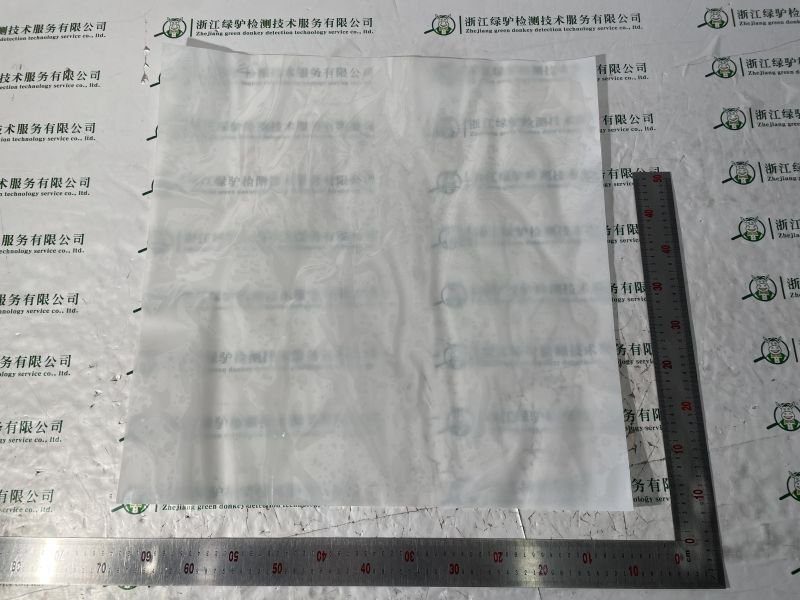
Let us examine SHIELD SPIRIT’s actual test report (Report Number: ZJLL26067626) to understand what each section means and why it matters.
Basic Report Information
| Item | Detail |
|---|---|
| Report number | ZJLL26067626 (unique identifier for tracking and verification) |
| Test date | June 29 – July 1, 2026 |
| Report issue date | July 1, 2026 |
| Product tested | PPF Paint Protection Film (Automotive Invisible Film) |
| Testing standard | GB 6675.4-2014 |
Understanding the Testing Standard: GB 6675.4-2014
Here is where it gets interesting. GB 6675.4-2014 is actually China’s national safety standard for toy safety—specifically element migration. You might think, “Why use a toy standard for car film?” Excellent question. The reasoning:
- Human-contact focus: toy standards are incredibly strict because children put toys in their mouths. While you will not lick your car’s paint protection film, your hands touch it when washing, and these standards ensure nothing harmful migrates to skin
- Broad element screening: toy standards check a wide range of heavy metals that could harm human health
- Conservative limits: toy limits are lower than many industrial product standards, giving an extra safety margin
- International recognition: GB 6675.4-2014 aligns with international toy safety standards such as EN 71-3 in Europe
Think of it this way: if a material is safe for a toddler’s toy that might end up in its mouth, it is certainly safe for your vehicle’s exterior. SHIELD SPIRIT intentionally used a stricter standard than required.
The Four Heavy Metals: Why These Specific Elements?
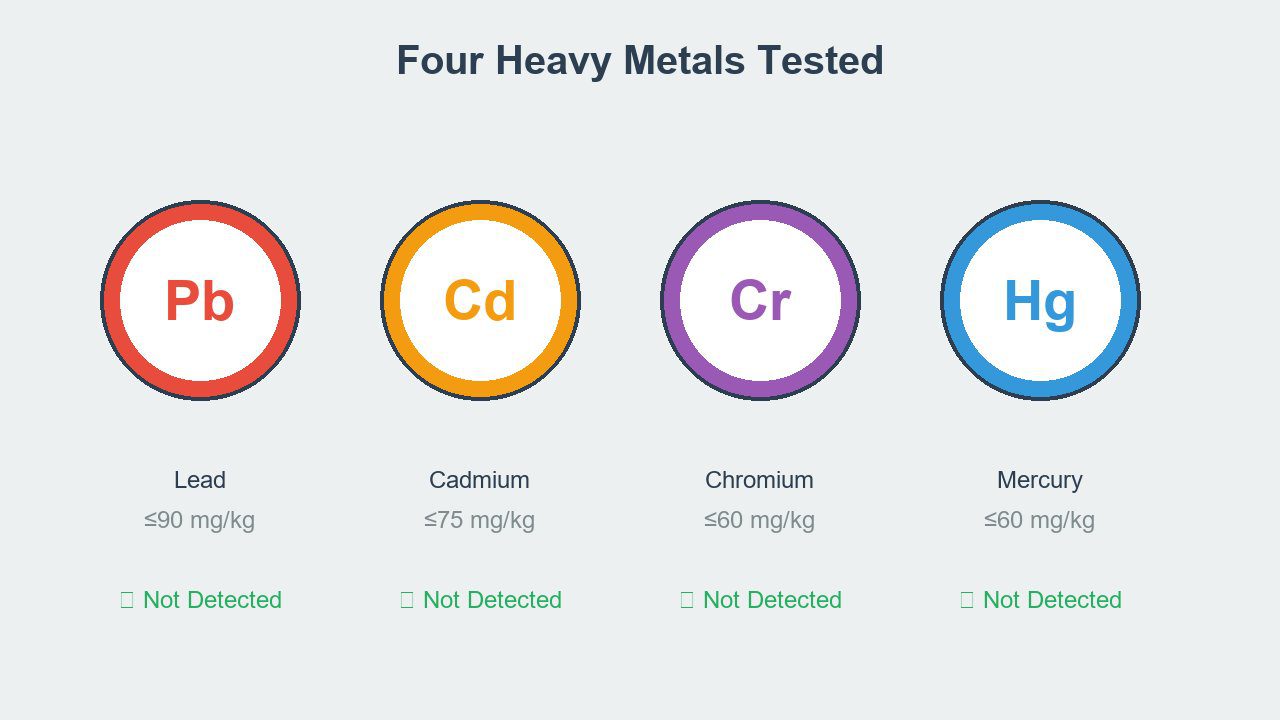
The report examined four specific heavy metals: Lead (Pb), Cadmium (Cd), Chromium (Cr) and Mercury (Hg). Let us understand why these four matter and what the results mean.
Lead (Pb) – Detection Limit ≤ 90 mg/kg
Why it is tested: lead is a neurotoxin that accumulates in the body over time. Historically used in paints and plastics as a stabilizer. Real-world concern: it can migrate from plastic through touch or degradation; children are especially vulnerable. SHIELD SPIRIT result: Not detected (未检出).
Example: in 2007 millions of toys were recalled because of lead paint. Car owners and detailers handle film regularly, so a lead-free film protects people over years of contact.
Cadmium (Cd) – Detection Limit ≤ 75 mg/kg
Why it is tested: cadmium is a known carcinogen that damages kidneys and bones, sometimes used as a plastic stabilizer or colorant. Real-world concern: it bioaccumulates—your body cannot easily clear it. SHIELD SPIRIT result: Not detected.
Chromium (Cr) – Detection Limit ≤ 60 mg/kg
Why it is tested: certain forms, especially hexavalent chromium (Cr-VI), are highly toxic and carcinogenic. Real-world concern: Cr-VI can appear as a contaminant from manufacturing equipment. SHIELD SPIRIT result: Not detected.
Mercury (Hg) – Detection Limit ≤ 60 mg/kg
Why it is tested: mercury is a neurotoxin that affects the brain and nervous system. Real-world concern: even low levels are concerning. SHIELD SPIRIT result: Not detected.
| Element | Health risk | Standard limit | SHIELD SPIRIT result |
|---|---|---|---|
| Lead (Pb) | Neurotoxin, developmental harm | ≤90 mg/kg | Not detected |
| Cadmium (Cd) | Carcinogen, kidney/bone damage | ≤75 mg/kg | Not detected |
| Chromium (Cr) | Carcinogen (Cr-VI form) | ≤60 mg/kg | Not detected |
| Mercury (Hg) | Neurotoxin, brain damage | ≤60 mg/kg | Not detected |
Important note: “Not detected” (未检出) is even better than “below the limit.” It means the lab’s sensitive equipment could not find these elements at all. Think of it as a blood test showing zero cholesterol versus just “acceptable” levels.
How the Testing Works: ICP-OES Method
The report mentions ICP-OES as the detection method. Let us demystify this term.
What Is ICP-OES?
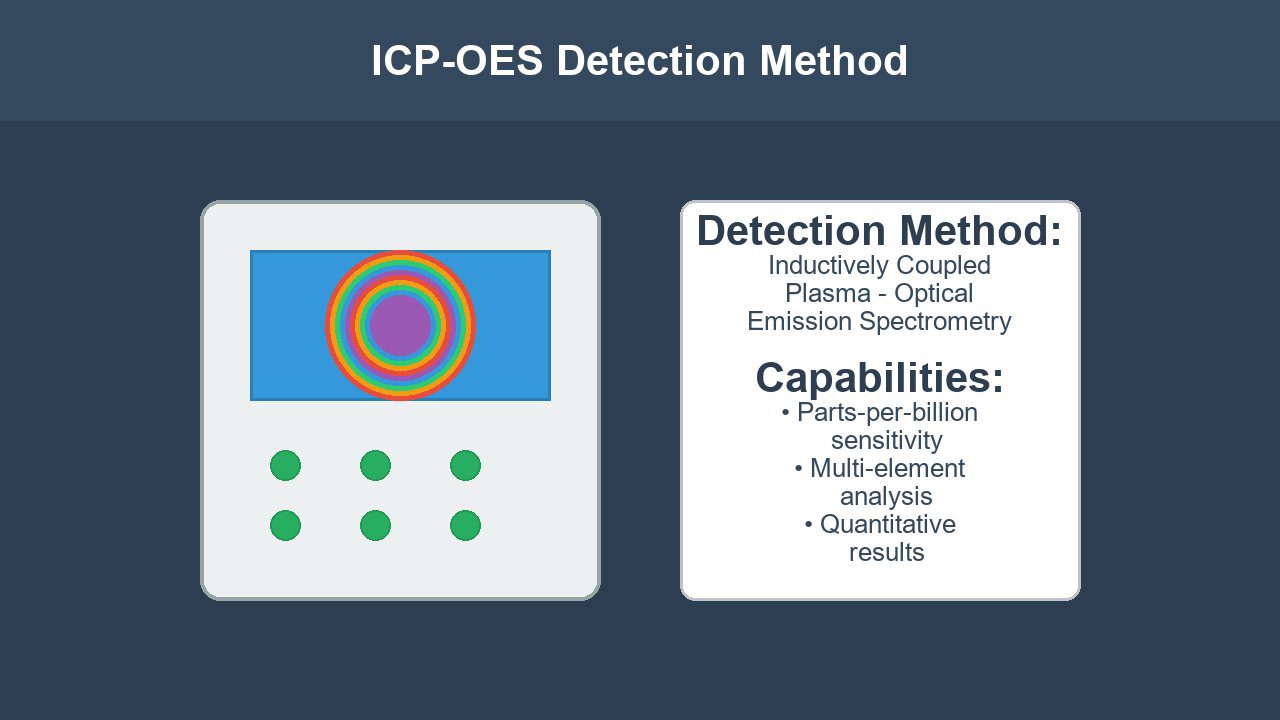
ICP-OES stands for Inductively Coupled Plasma – Optical Emission Spectrometry. In plain English:
- Sample preparation: a small piece of the film is dissolved in acid to create a liquid containing any elements present
- Plasma creation: the liquid is sprayed into an extremely hot plasma (about 10,000°C, hotter than the sun’s surface)
- Light emission: hot elements emit light at their own unique wavelengths—each element has a signature “fingerprint” of colors
- Detection: sensitive detectors measure these wavelengths to identify which elements are present and in what quantity
Analogy: a prism splits white light into a rainbow, and each color is a wavelength. ICP-OES works like a super-powered prism: when elements are super-heated, lead emits different wavelengths than mercury, so the machine identifies and quantifies each element separately. Test samples are usually run against known standards and reference materials.
Why This Method?
- Extremely sensitive: can detect elements at parts-per-billion levels
- Multi-element: tests many elements in one run
- Accurate and reliable: an industry-standard method recognized worldwide
- Objective: results are quantitative measurements, not human interpretation
Who Needs These Reports and How to Read Them
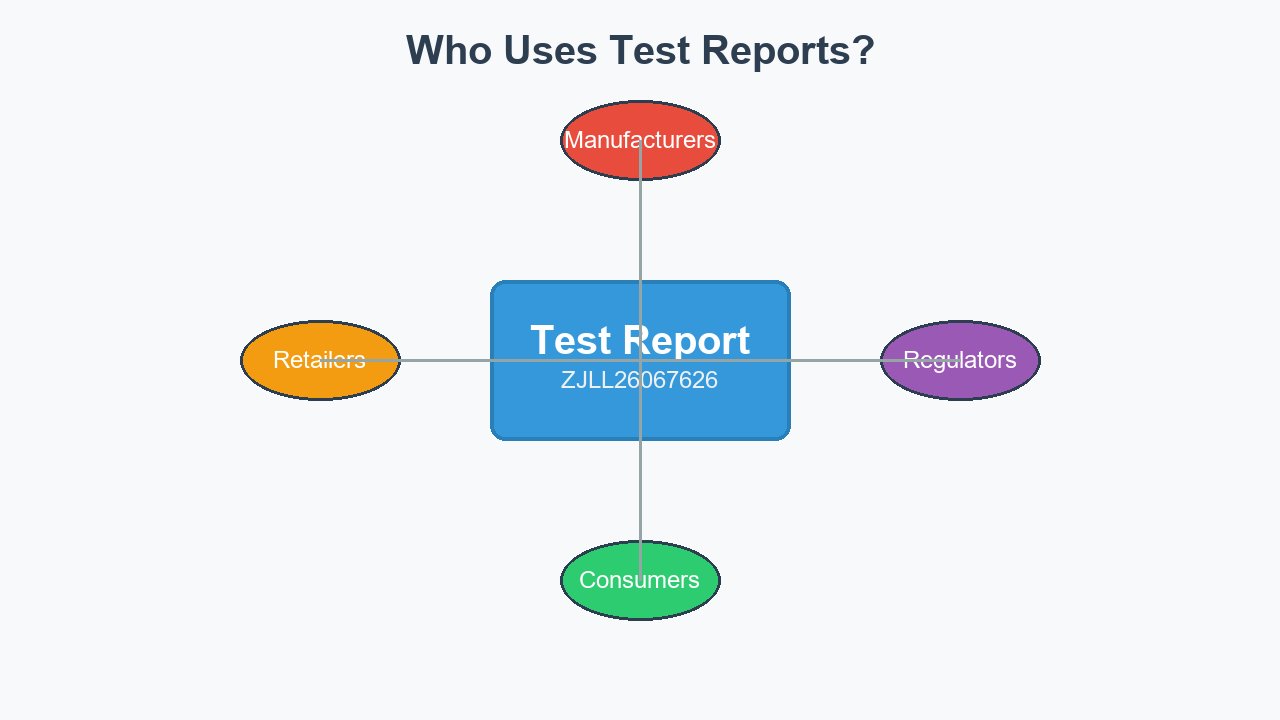
Third-party reports are not just paperwork—they are tools used by different stakeholders in the PPF industry. Here is who benefits and what they look for.
Manufacturers (Like SHIELD SPIRIT)
Why: to prove product safety to retailers and distributors, meet import/export requirements, differentiate from lower-quality competitors, and protect against liability. What they look for: pass/fail status, compliance with standards, official stamps and signatures.
Retailers and Installers
Why: to verify they sell safe products, protect their business from liability, market certified products as premium, and comply with regulations. What they look for: agency credentials (CMA/CNAS), recent test dates (within 1–2 years), comprehensive screening.
End Consumers (Vehicle Owners)
Why: confidence the product will not harm health, assurance of quality for a significant investment, and verification that marketing claims are backed by science. What they look for: simple pass/fail, “not detected” results, recognizable certification marks.
Real-world scenario: Sarah is choosing PPF for her new Tesla Model Y. Brand A has no test reports, only marketing claims. Brand B (SHIELD SPIRIT) shares a CMA/CNAS certified report showing all heavy metals not detected. Even if Brand A is cheaper, Sarah picks Brand B because she has two young children who climb on the car—the certified safety report gives her peace of mind.
Regulatory Authorities
Why: to monitor market compliance, investigate complaints, enforce import/export rules and protect public health. What they look for: proper procedures, accredited lab credentials, sample traceability, national-standard compliance.
Verification: Ensuring Your Report Is Authentic
Given how important reports are, fraud exists. Unscrupulous sellers sometimes fake certifications. Here is how to tell a real report from a fake one.
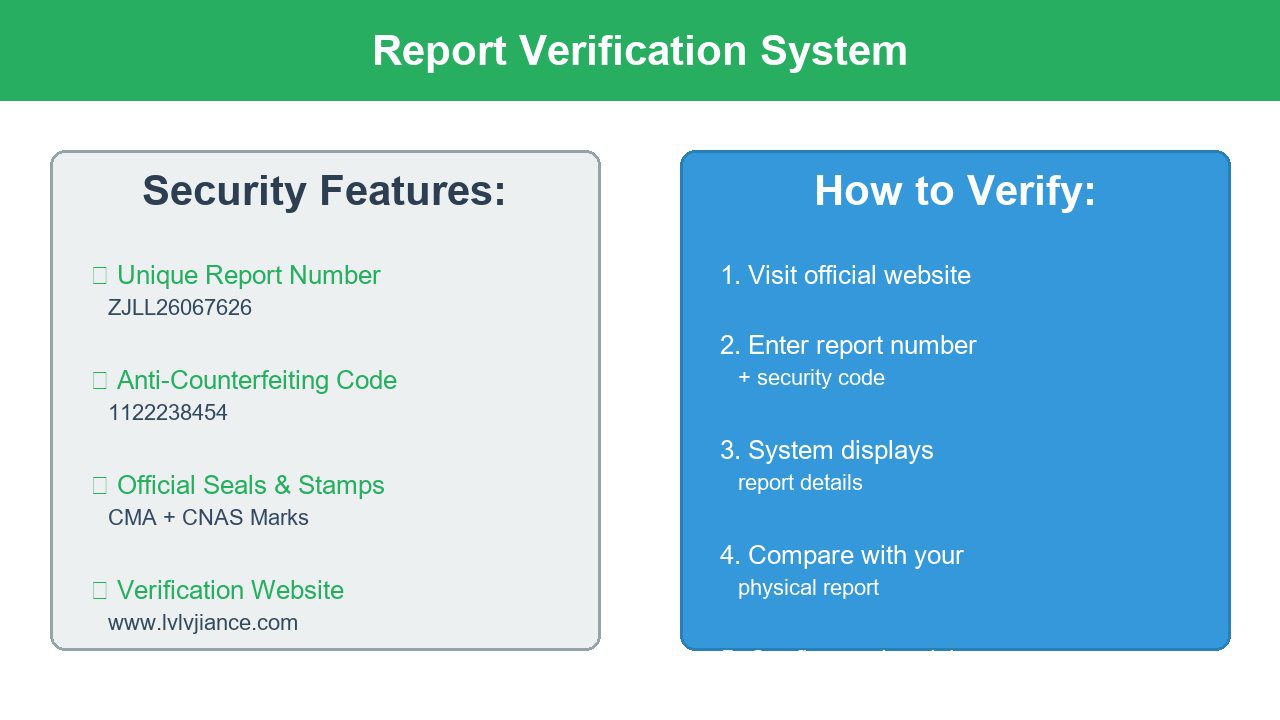
Anti-Counterfeiting Features on the Report
- Unique report number: ZJLL26067626, logged in the agency’s database
- Anti-counterfeiting code: 1122238454, unique to this report
- Official verification website: www.lvlvjiance.com—enter the number and code to verify authenticity
- Official seals and stamps: CMA and CNAS marks, the laboratory seal and authorized signatures
- Detailed technical information: methods, equipment, detection limits—fake reports often lack this detail
How to Verify a Report, Step by Step
- Visit the testing agency’s official website (check the URL carefully—scammers create similar-looking fake sites)
- Look for a report verification or query section
- Enter the report number and anti-counterfeiting code
- Confirm the displayed details match your physical report: date, client, product, results
- If verification fails or information differs, contact the agency directly
Red Flags That Suggest a Fake Report
- No anti-counterfeiting code or verification system
- The agency has no website or physical address
- No CMA or CNAS marks
- Unreasonably old test dates (more than 3 years)
- Vague methods or missing technical details
- Perfect results on every single parameter
- Vague language like “passed all tests” without specific data
Pro tip: legitimate manufacturers gladly share original reports and help you verify. If a seller refuses or gets defensive when you ask to verify, treat that as a major red flag.
The Cost of Testing: An Investment in Safety
Third-party testing is not free, which helps explain why certified products sometimes cost a little more.
- Basic element screening (4–8 elements): $300–$500 USD
- Comprehensive testing (10+ elements): $500–$800 USD
- Full material safety assessment: $1,000–$2,500 USD (includes VOC, tensile and UV tests)
- Rush processing: add 30–50% for expedited results
Who Pays, and How Often?
The manufacturer (here SHIELD SPIRIT) pays upfront. Spread across thousands of units, this adds roughly $0.50–$2.00 per unit—less than 0.1% of a typical $2,000–$5,000 installation. Responsible brands re-test on new launches, annually, after formula changes, and by batch sampling.
Reading Test Parameters: A Practical Guide
Here is how to read the key parameters on any test report, using SHIELD SPIRIT’s report as an example.
Parameter 1: Test Standard
What you will see: “GB 6675.4-2014”. What it means: the testing protocol used; GB standards are Chinese national standards, and others include EN (European), ASTM (American) and ISO. What to check: confirm it is a recognized standard relevant to the product.
Parameter 2: Detection Method
What you will see: “ICP-OES”. What it means: the scientific process used. What to check: the method should fit the test; ICP-OES, ICP-MS and AAS are legitimate for heavy metals.
Parameter 3: Detection Limit
What you will see: “≤ 90 mg/kg”. What it means: the maximum allowed amount—like a speed limit for pollutants. What to check: results should sit well below these limits; “not detected” is best.
Parameter 4: Test Result
What you will see: “未检出” (not detected), “ND”, or a specific number. What it means: the actual measurement in the sample. What to check: “not detected” is ideal; numbers should sit well below limits.
Parameter 5: Conclusion
What you will see: “pass” or compliance wording. What it means: the lab’s official determination. What to check: a clear pass/fail; vague language like “acceptable results” is a red flag.
| Parameter | SHIELD SPIRIT example | What it tells you |
|---|---|---|
| Test standard | GB 6675.4-2014 | Uses a strict toy safety standard (high safety bar) |
| Detection method | ICP-OES | Gold-standard technique for element analysis |
| Lead detection limit | ≤ 90 mg/kg | The maximum allowed is already very low |
| Lead test result | 未检出 (Not detected) | Even better than meeting the limit—zero detected |
| Conclusion | Compliant with standard | Official pass certification |
Common Questions About PPF Testing Reports
How recent should a report be?
A: ideally within 1–2 years. Reports do not “expire,” but old results may not reflect current production, especially if suppliers or processes changed.
Is every roll tested?
A: no, that would be impractical. Manufacturers test representative samples; proper control means regular sampling and re-testing after any production change.
Can I trust a manufacturer’s own lab?
A: in-house testing is useful, but third-party testing is more credible because the lab has no financial interest in the outcome. Look for independent accredited labs.
What else should quality PPF be tested for?
A: beyond heavy metals, quality PPF testing includes tensile strength and elongation, UV resistance and yellowing, adhesion, self-healing, chemical resistance and VOC emissions.
Putting It All Together: Making Informed Decisions
Now that you understand third-party reports, you can make informed decisions about the PPF you choose. Here is your action checklist:
- Ask for test reports before buying; legitimate brands provide them readily
- Verify the agency holds CMA and/or CNAS accreditation
- Check the date—reports should be within 2–3 years
- Look for “not detected” on lead, cadmium, chromium and mercury
- Verify authenticity on the agency’s official system
- Know what is not tested—reports cover specific parameters
- Compare reports across brands, including limits and methods
- View the full picture—also weigh warranty, installer expertise and reviews
SHIELD SPIRIT’s commitment to third-party testing through accredited labs reflects transparency and consumer safety. When a manufacturer invests in rigorous testing and shares results, it puts its reputation on the line—the kind of accountability you want when protecting your vehicle.
Next time you compare PPF options, do not just ask about thickness or warranty—ask to see the test reports. You will immediately spot which manufacturers take quality seriously.