PPF Stain Resistance vs Stretchability: The Trade-Off
Why a PPF Cannot Be the Most Stretchy and the Most Stain-Resistant at the Same Time
The easiest PPF to stretch is not automatically the best PPF to own. A film can feel wonderfully forgiving in an installer's hands and still leave the vehicle owner dealing with bird droppings, bug residue, road film and difficult cleaning later. In paint protection film, extreme stretch and long-term surface cleanliness are a real material trade-off, not two marketing boxes that can always be checked together.
This is a plain-English look at why that happens, what a 390% elongation request really means, and why SHIELD SPIRIT puts stain resistance ahead of chasing the highest stretch number.
Start With the Right Question
: Who Is the Number For?
There are two people looking at the same roll of PPF, but they care about different things.
The installer wants a film that can pull around mirrors, bumpers and deep curves with less effort. Good stretch can reduce fighting on a complicated panel. That matters.
The vehicle owner usually does not ask how far the film stretched on a test machine. They ask a more practical question: "After years of sun, rain, mountain roads, beach trips, bugs, tree sap and parking outside, can I still clean my car without staring at stains?"
Both needs are legitimate. But they are not the same need, and one specification cannot be pushed to the limit without affecting the rest of the system.
The Simple Version of the Trade-Off
Think of PPF as a layered system: a clear topcoat, a TPU or PCU-based film body, adhesive, stabilizers and liner. It is not one material and it is not one number.
To make a film stretch very far, the polymer system generally needs more freedom to move. To make a surface resist staining, chemicals and embedded dirt, the top surface needs a tighter, more durable barrier. In material design, more mobility and more surface protection do not automatically rise together.
That does not mean a high-stain-resistance film cannot be installed well, or that a flexible film must stain. It means responsible formulation is about balance. When a supplier advertises one spectacular number, ask what they accepted elsewhere to get it.
What is being optimized?
Why it helps
What should still be checked
Very high elongation
Can make complex installation areas easier to pull and position
Stress whitening, optical clarity after stretching, recovery, surface durability and installer limits
High stain resistance
Helps make road grime, bugs, bird residue and other contamination easier to remove under stated care conditions
Product-specific test method, exposure time, maintenance guidance and warranty coverage
Balanced construction
Serves both installation and real-world ownership
How the complete film performs, not just a single headline value
What Happens When Stretch
Becomes the Main Goal?
We once received a request for a PPF with 390% elongation. The request is understandable: a high number sounds like a safer installation and less work at the shop. But a number on a tensile test is not a free upgrade.
Pull a clear elastomer far enough and its internal structure is being asked to do real work. Depending on the formulation, draw direction, panel geometry and installation method, excessive local strain can change how light passes through the film. The installer may see a faint whitish or hazy area. This is often described in the market as whitening.
It is the same common-sense lesson as stretching a clear rubber band too far: at some point, you are no longer simply fitting it. You are stressing it. A car owner does not want a film that looked easy on day one but shows stressed areas when the sun hits it.
Academic work on thermoplastic polyurethane shows that strain changes the material's internal morphology and that higher-strain behavior can involve stress-induced structural changes. That is why elongation cannot be judged as an isolated beauty contest. Read the material study.
Three Everyday Examples
Example 1: The bumper shortcut
A shop has a sharply sculpted bumper. A very soft film may let the installer pull one large piece hard into the recess. It can save time. But if that approach pushes the film beyond its comfortable working range, the stretched zone can lose some optical calmness. A good installer still needs sensible patterning, heat control and stretch discipline. Film stretch is a tool, not permission to over-pull every panel.
Example 2: The SUV that lives outside
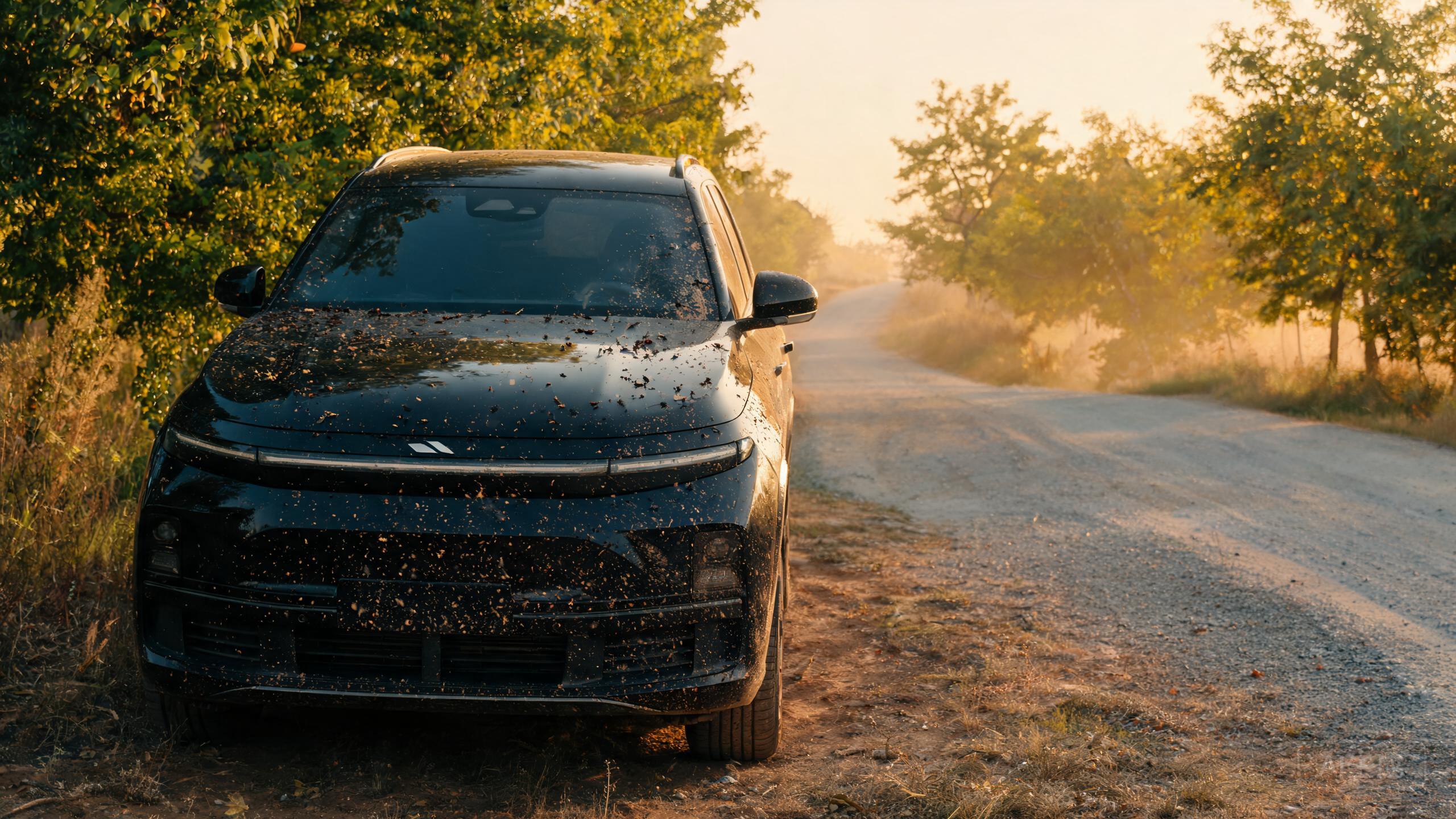
Now picture the owner's black SUV: daily sun, road splash, bird droppings after parking under trees, and insects after a highway trip. The value of the film is not just whether it made installation quicker. The value is whether contamination releases more easily with proper, timely washing and whether the surface remains visually satisfying over the ownership period.
Example 3: The "best of everything" quote
A dealer may ask for extreme stretch, maximum stain resistance, maximum gloss, fast self-healing, ultra-low adhesive risk and a bargain price. We understand why. Everyone wants the strongest specification sheet. But today, no factory can responsibly maximize every dimension without trade-offs. If a construction genuinely reaches very high levels across several difficult properties, its materials, process control and quality assurance cost can become far higher than a realistic market price.
Why We Put Stain Resistance First
At SHIELD SPIRIT, our product focus is high stain resistance rather than making the biggest possible stretch claim. That choice starts from the person who pays for the protection.
For most owners, PPF is a serious one-time investment. They want the car to look protected over years of use, including outdoor parking, strong sun, wet weather, messy roads and weekend trips. A high-performing protective surface is relevant every time they wash the car. The maximum elongation figure is mainly relevant during installation.
That does not dismiss installers. A film must remain practical to install, and installer technique still matters enormously. Our point is simpler: a product should not sacrifice the owner's long-term cleaning experience just to win a stretch-number comparison.
For customers seeking a documented long-term option, our PCU PPF range is offered with a 10-year warranty and product-specific published yellowing limits. Warranty scope, test conditions and care guidance should always be reviewed for the exact grade and market.
Materials and Technology
: What Actually Matters
Good PPF design is not one secret additive. It is controlled balance across the complete construction:
Topcoat chemistry: This is where stain release, hydrophobic behavior, gloss, chemical resistance and self-healing behavior are engineered. A denser protective network can improve certain resistance properties, but material designers must also preserve clarity and flexibility.
Film body: The TPU or PCU base needs enough elasticity for installation and real-world movement, without being treated as an invitation for unlimited stretching.
Adhesive: The adhesive must wet out cleanly, hold reliably and be compatible with installation and removal guidance. It is part of the performance system, not a background detail.
Stabilizers and process control: UV, heat, moisture and chemical exposure affect long-term appearance. Formulation alone is not enough; consistency from batch to batch also matters.
In polyurethane research, denser crosslinking can improve hardness, modulus and water resistance, while also increasing brittleness and even yellowing risk in some systems. That is the general engineering lesson: improving one property can create a new constraint elsewhere. See an example of the trade-off.
How Dealers and Buyers
Should Compare PPF
Do not choose a film because it wins one dramatic figure. Ask for the complete evidence package for the exact product:
What is the tested elongation, and under what standard, sample condition and test speed?
What is the recommended installation range and what handling guidance is given for high-curvature areas?
How is stain resistance tested? Which contaminants, dwell times, cleaning methods and pass criteria are used?
After stretching, does the film retain optical clarity under practical installation conditions?
What do the TDS, COA, batch traceability and warranty say for this exact grade?
What is the cost of the full construction, not just the promised headline?
A reliable supplier should be comfortable with those questions. Clear documentation is more useful than a perfect-sounding slogan.
The Bottom Line
More stretch is not always more value. It can make an installer's job easier, but it can also create risk when it becomes the only design target. For the vehicle owner, the everyday win is a protective surface designed to stay easier to clean and better looking through real use.
That is why our direction is clear: build a practical, installable film system, but prioritize high stain resistance for people who expect their PPF investment to work long after the install bay lights are switched off.
Preguntas frecuentes
Does high elongation mean a PPF is better?
No. It can help with installation on difficult shapes, but it does not by itself prove stain resistance, optical clarity, aging performance, adhesive behavior or long-term value.
Why can over-stretching cause a white or hazy look?
Large local strain can alter the internal structure of a clear elastomer and change how it scatters light. The outcome depends on the product, the amount and direction of strain, heat and installation method.
Can one film have both useful stretch and good stain resistance?
Yes. The goal is balanced, product-specific performance, not an unrealistic promise that every property is maximized at the same time.
How should I protect a PPF surface from stains?
Remove bird droppings, bug residue, tree sap and aggressive contamination promptly; use compatible wash products; and follow the supplier's care instructions for your exact film.
Seven Image Briefs for This Article
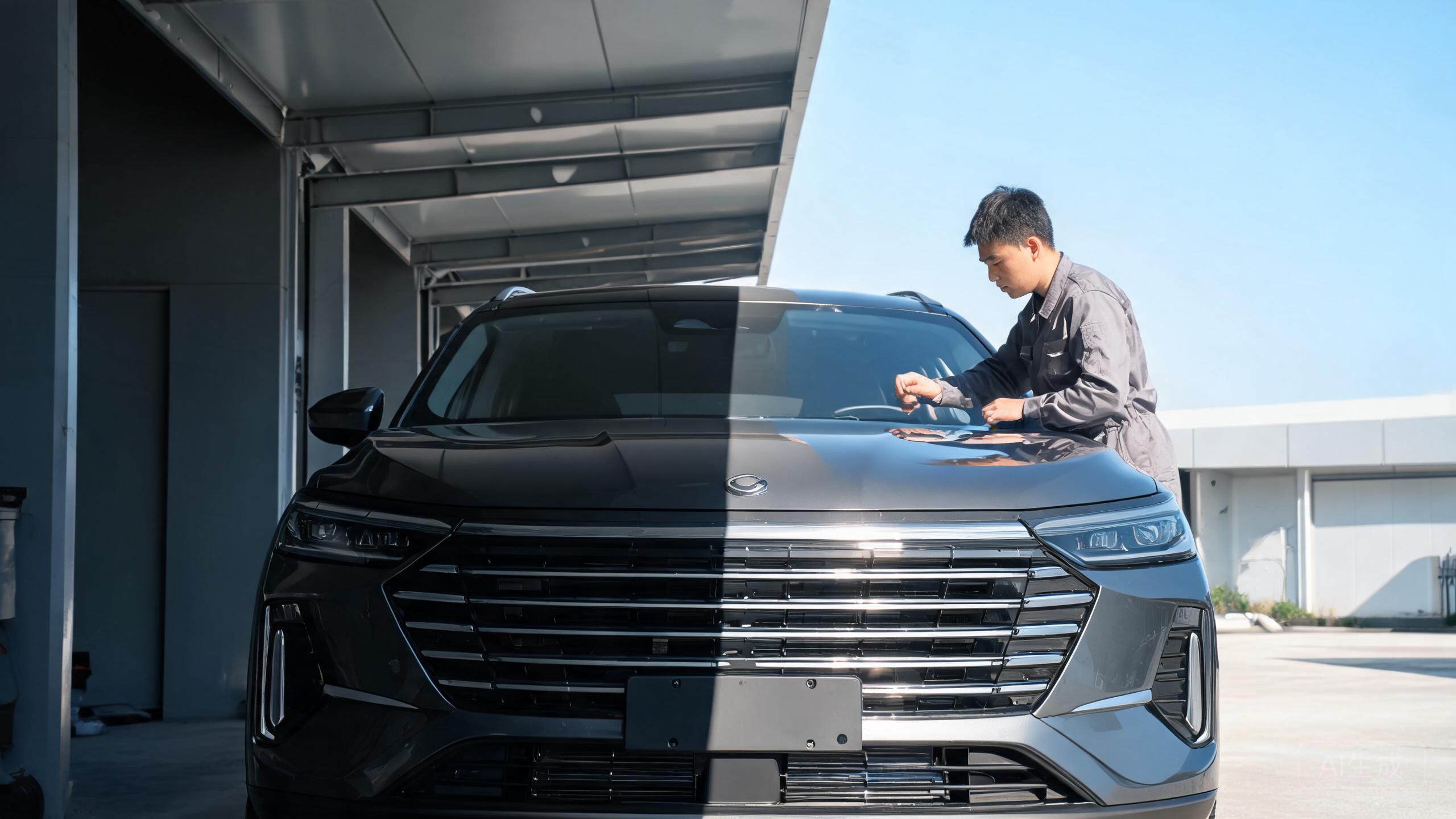
Hero image: A premium dark SUV parked half under a clean workshop canopy and half in harsh outdoor sunlight, one installer examining the glossy hood. Visual idea: the difference between installation convenience and years of ownership. Wide cinematic automotive photograph, no logos, no text.
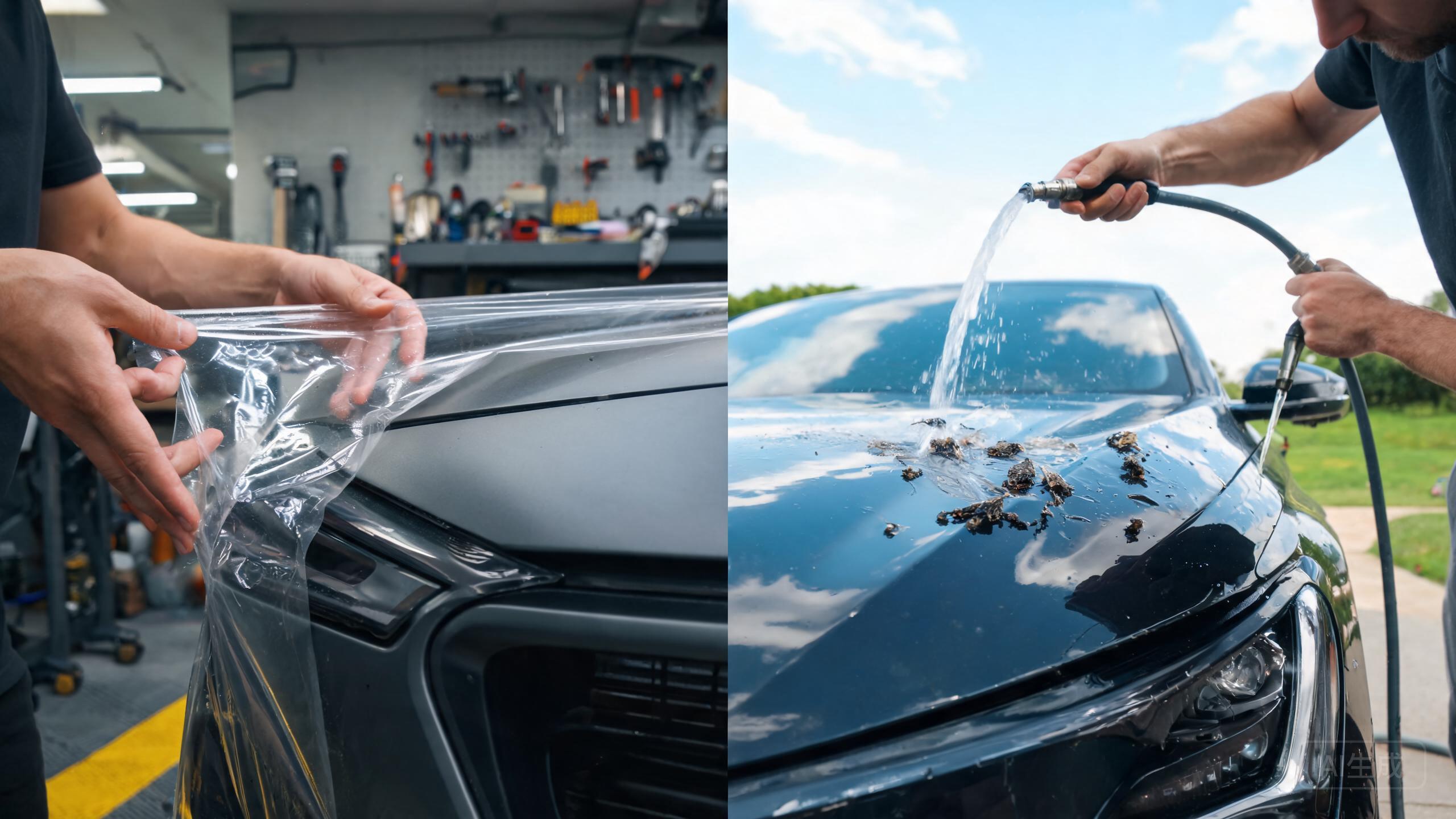
Two priorities: Split but natural scene: an installer stretching clear film around a bumper curve on one side, the same vehicle owner rinsing off bird residue on the other. Distinct actions, realistic hands and vehicle geometry, no infographic labels or text.
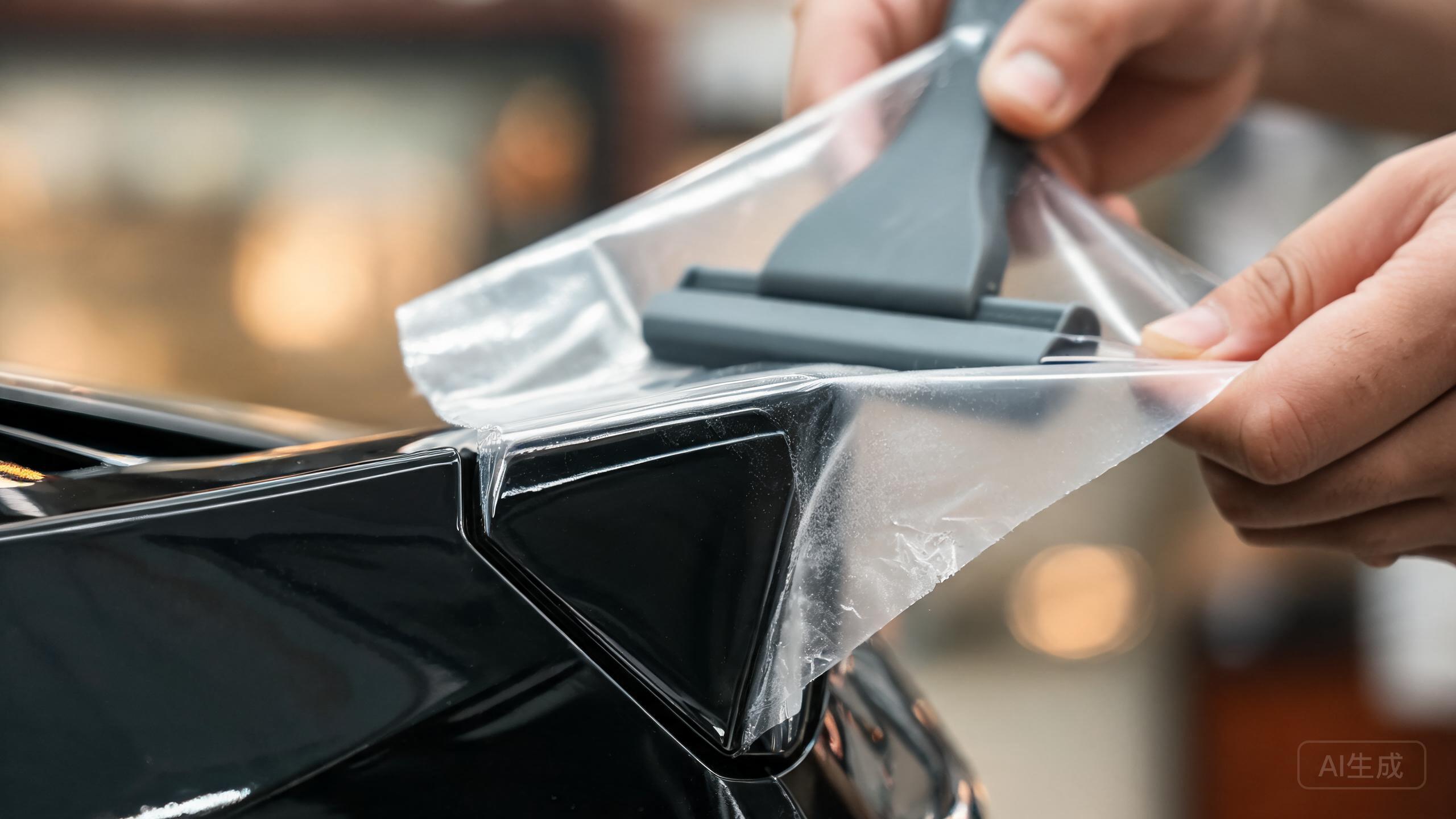
Stretch limit: Extreme close-up of clear PPF being carefully pulled over a sculpted bumper edge under soft workshop lighting, with a subtle whitish stress area visible only at the far stretched edge. Technical yet photographic, no logos or words.
Outdoor ownership: Black SUV after a long road trip parked near trees and dusty road, visible but tasteful insect and road-film residue on front bumper, golden late-afternoon sun. Real-life ownership scene, not dirty or damaged, no text.
Surface technology: High-end materials laboratory scene with a transparent film sample, water droplets beading on its surface, a gloved technician and out-of-focus test equipment. Macro depth of field, clean blue and silver palette, no readable labels.
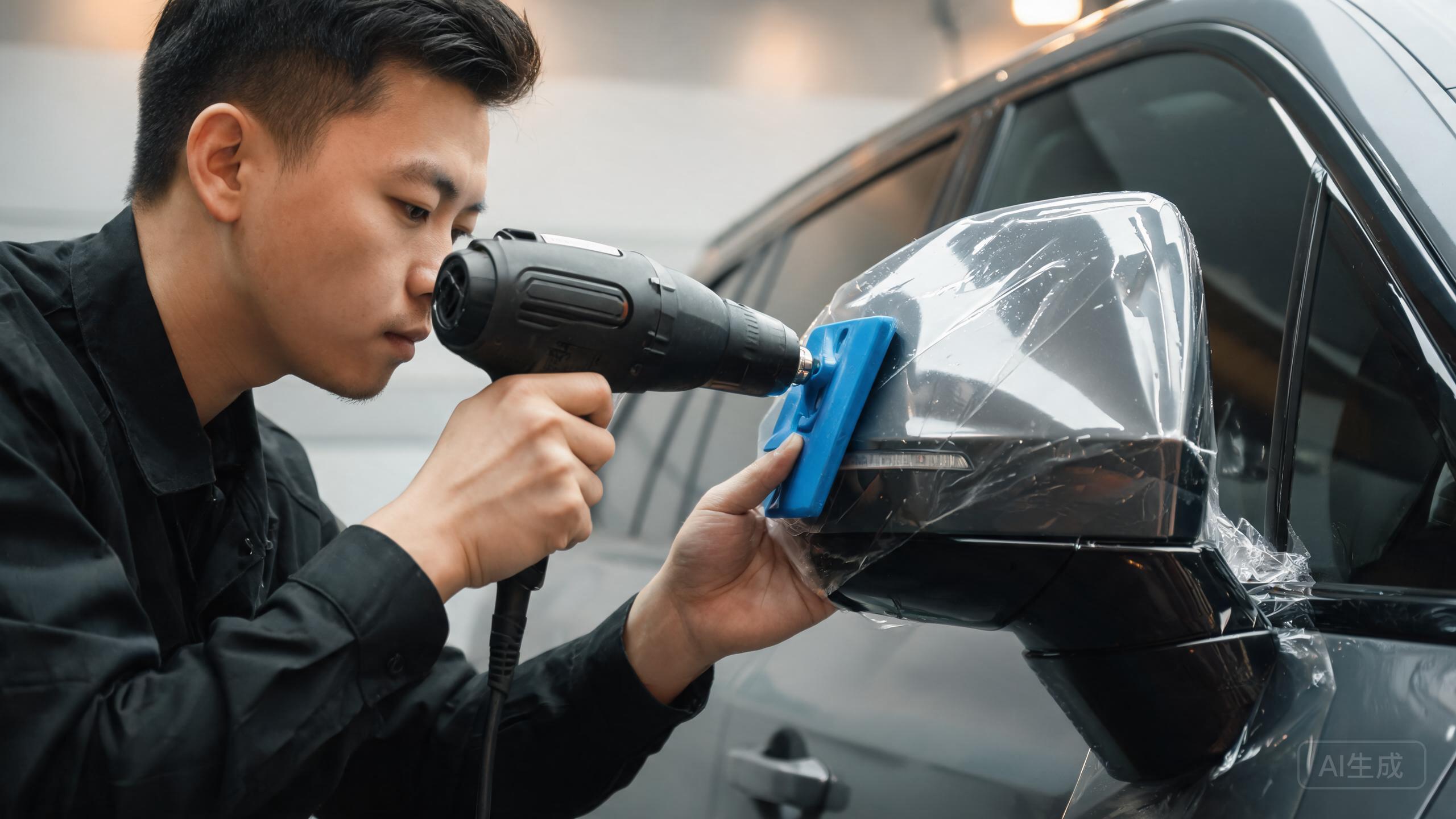
Balanced installation: Experienced installer using controlled heat and a squeegee on a complex SUV mirror or bumper, calm body posture, film laid smoothly without over-pulling. Documentary workshop photography, no brand marks, no text.
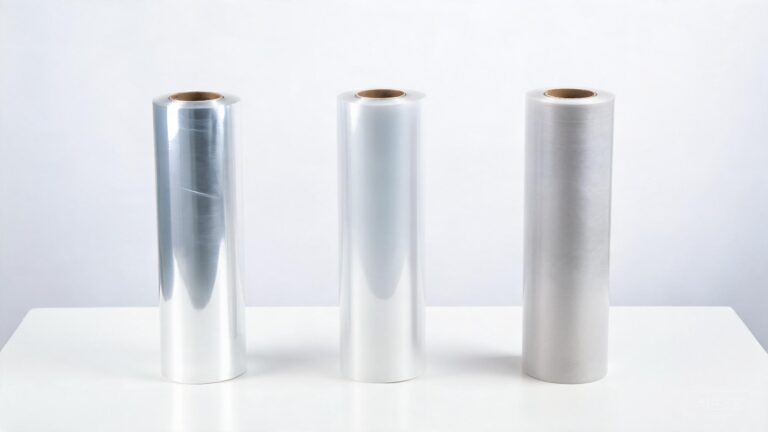
Buyer decision: Dealer and vehicle owner discussing several unbranded PPF film rolls and a blank technical sample sheet at a modern consultation table, a protected vehicle in the background. Honest, professional decision moment, no visible writing or logos.
Novedades del boletín informativo
Introduce tu dirección de correo electrónico a continuación y suscríbete a nuestras últimas entradas del blog.