










REACH and PPF: How to Read a Test Report
“REACH compliant” is often printed as if it were a magic quality label. It is not. A useful REACH report tells you what was tested, which substances were included, how low the laboratory could reliably report, and what the result actually means for the tested sample.
For Paint Protection Film (PPF) buyers, that distinction matters. A clear film sits on a valuable vehicle for years, so material transparency should be supported by evidence, not only by a sales promise. This guide explains a third-party REACH screening report for a transparent PPF sample and translates its technical language into practical buying advice from SHIELD SPIRIT.
What REACH means
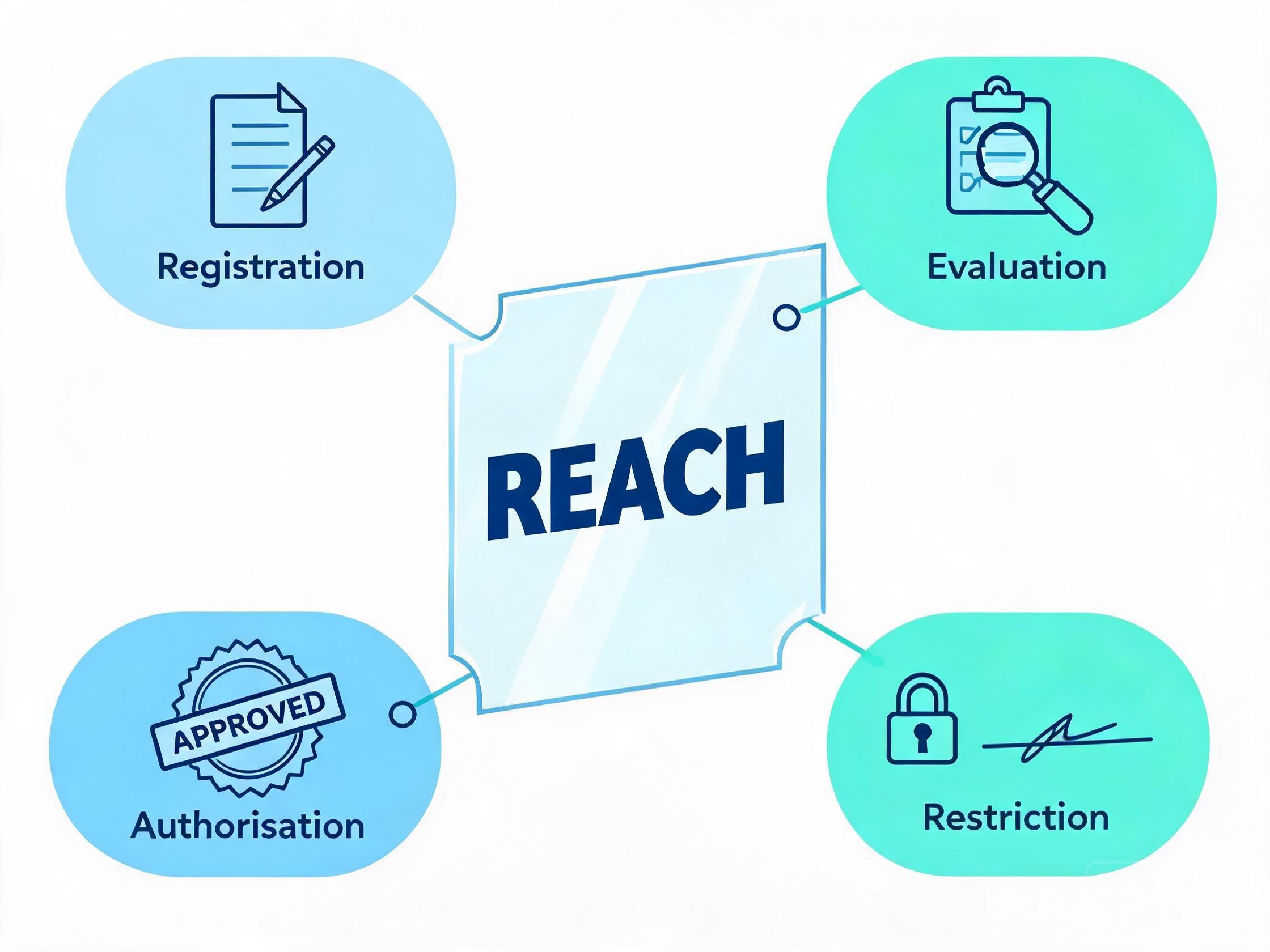
REACH is the European Union framework for the Registration, Evaluation, Authorisation and Restriction of Chemicals. Its purpose is to improve control of chemical substances, protect human health and the environment, and make businesses responsible for understanding and communicating the substances they place on the market.
The framework is established by Regulation (EC) No. 1907/2006. It is not a single “film certification” and it does not mean that a product contains no chemicals. PPF is a formulated multilayer material containing a substrate, topcoat, adhesive and carefully selected additives. REACH asks whether substances of concern are present, restricted, or subject to supply-chain duties within the applicable scope.
Who has responsibilities?
- Manufacturers and importers: understand the substances in their materials and meet applicable registration, restriction and communication duties.
- Distributors: pass relevant safety and supply-chain information to the next business customer.
- Installers: keep product identity and documentation traceable, especially when customers ask what material is being installed.
- Consumers: ask for product-specific evidence instead of accepting a vague “European standard” claim.
Why test the Candidate List?
REACH identifies Substances of Very High Concern, commonly called SVHCs. These substances may be linked to properties such as carcinogenicity, mutagenicity, reproductive toxicity, persistence, bioaccumulation or comparable environmental concern. The ECHA Candidate List is updated over time, so a report must state the list version or publication date it used.
The report discussed in this article screened 253 SVHC substances on the ECHA Candidate List published on or before February 4, 2026. Testing a broad list is important because a PPF is not just one polymer. Different layers and additives can introduce different chemical families, and the finished article is what customers ultimately buy and install.
If you want to see how one testing partnership can cover several regulatory programs, our detailed third-party PPF testing results bring REACH, RoHS and PFAS findings together in a single overview.
What the groups represent
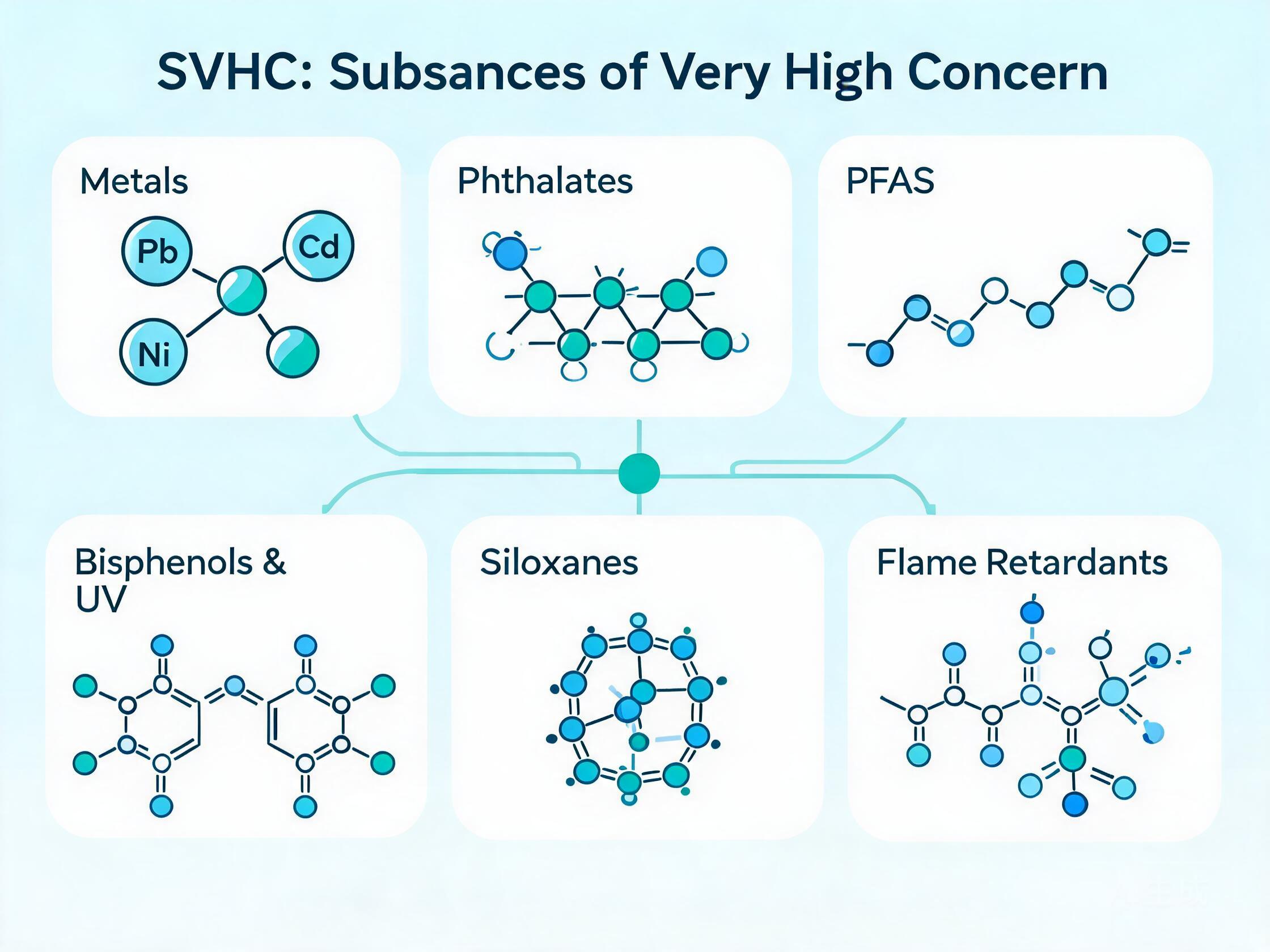
| Group or example | Why it is checked | Where a buyer may encounter it |
|---|---|---|
| Lead, cadmium and arsenic compounds | Elements and compounds associated with serious health and environmental concerns. | Pigments, stabilizers, contamination or legacy formulations. |
| Phthalates such as DBP, DEHP and BBP | Plasticizers that can affect flexible polymers and are closely regulated in many applications. | Flexible polymer layers, adhesive systems or plastic components. |
| Perfluorinated substances and PFAS-related compounds | Persistent substances that receive increasing regulatory attention. | Specialty surface treatments, processing aids or contamination. |
| Bisphenols and UV stabilizers | Functional additives can improve durability, but specific substances may be listed as SVHCs. | Topcoats, stabilizer packages and polymer-related formulations. |
| Siloxanes D4, D5 and D6 | Volatile cyclic siloxanes are monitored because of environmental and regulatory concerns. | Silicone-related materials, processing or contamination. |
| Flame retardants, PAHs, dyes and preservatives | Some members of these broad families have hazardous or persistent properties. | Colorants, additives, packaging contact or processing materials. |
This grouping is an educational summary, not a substitute for the full 253-substance table. “Chemical” is also not a synonym for “dangerous”: water, oxygen and the polymer itself are chemicals. The useful question is which substance, at what concentration, in which product and under which rule.
Reading the report result
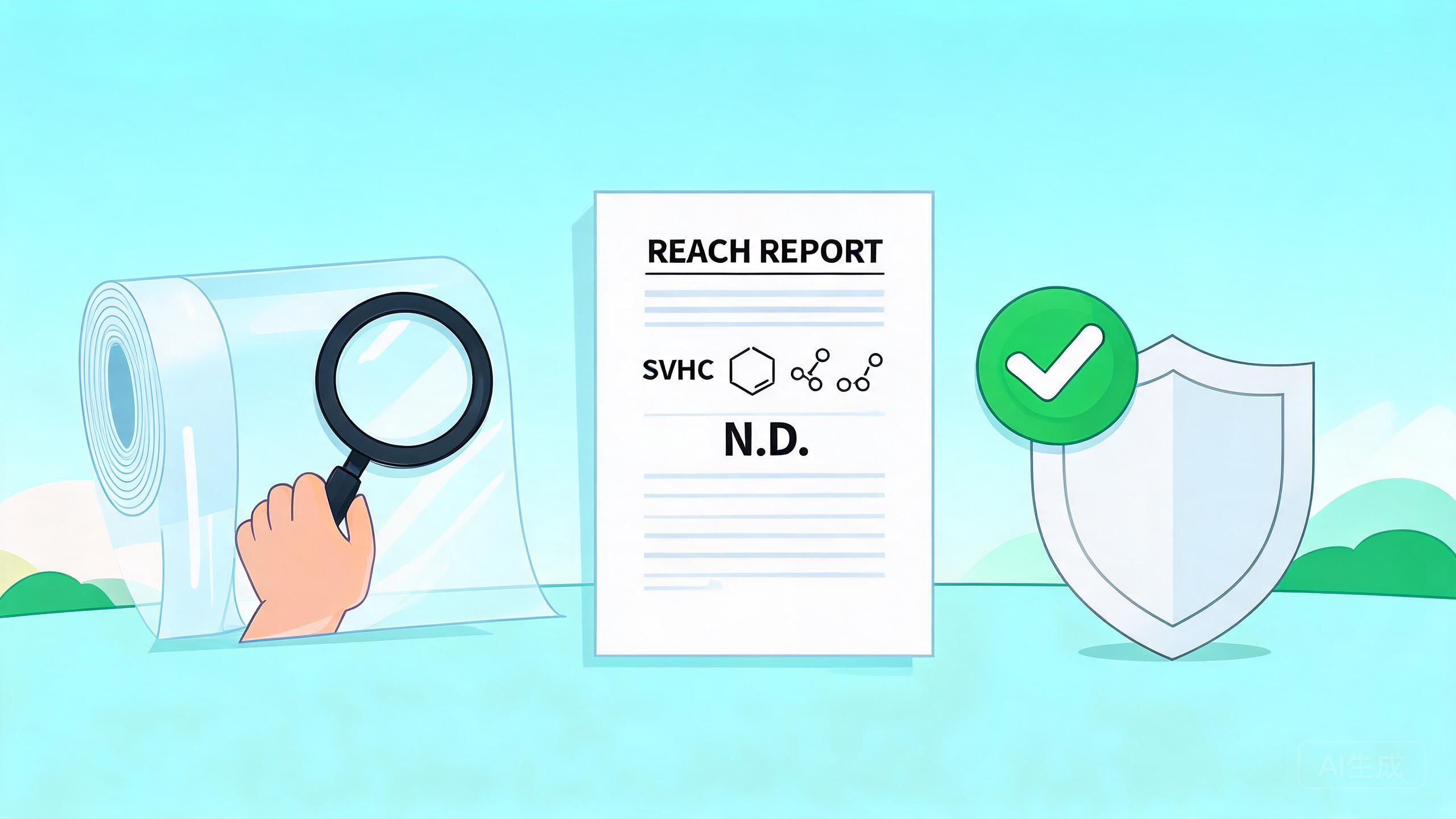
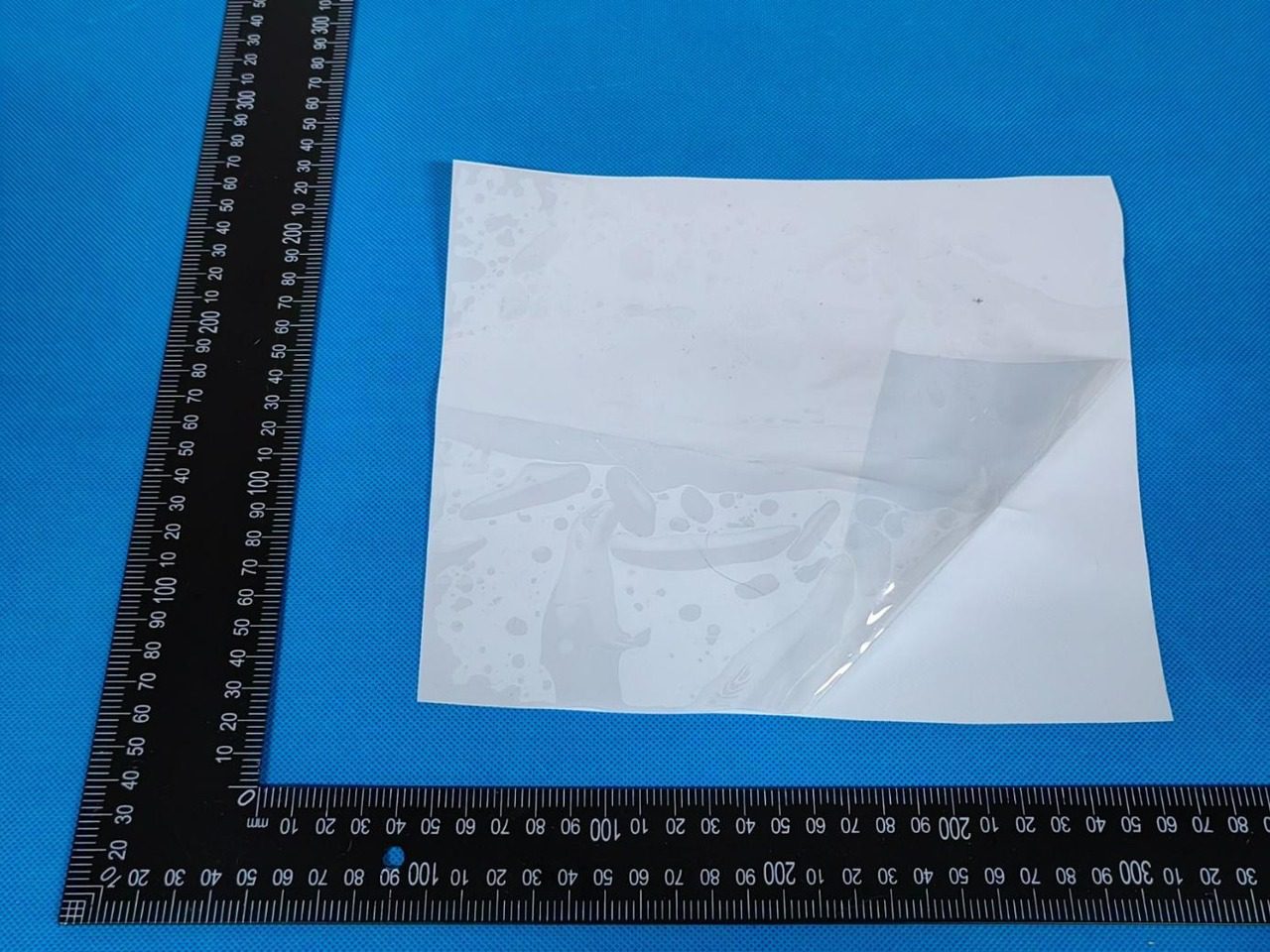
The report identifies the sample as PPF Paint Protection Film (Invisible Car Wrap Film), described as a transparent film excluding the release liner or paper component. The laboratory received the sample on July 6, 2026, tested it from July 6 to 9, 2026, and issued report S260706063001-1 on July 9, 2026.
| Report wording | Plain-English meaning |
|---|---|
| 253 specified SVHCs | The stated screening scope covered the Candidate List substances published by the stated cut-off date. |
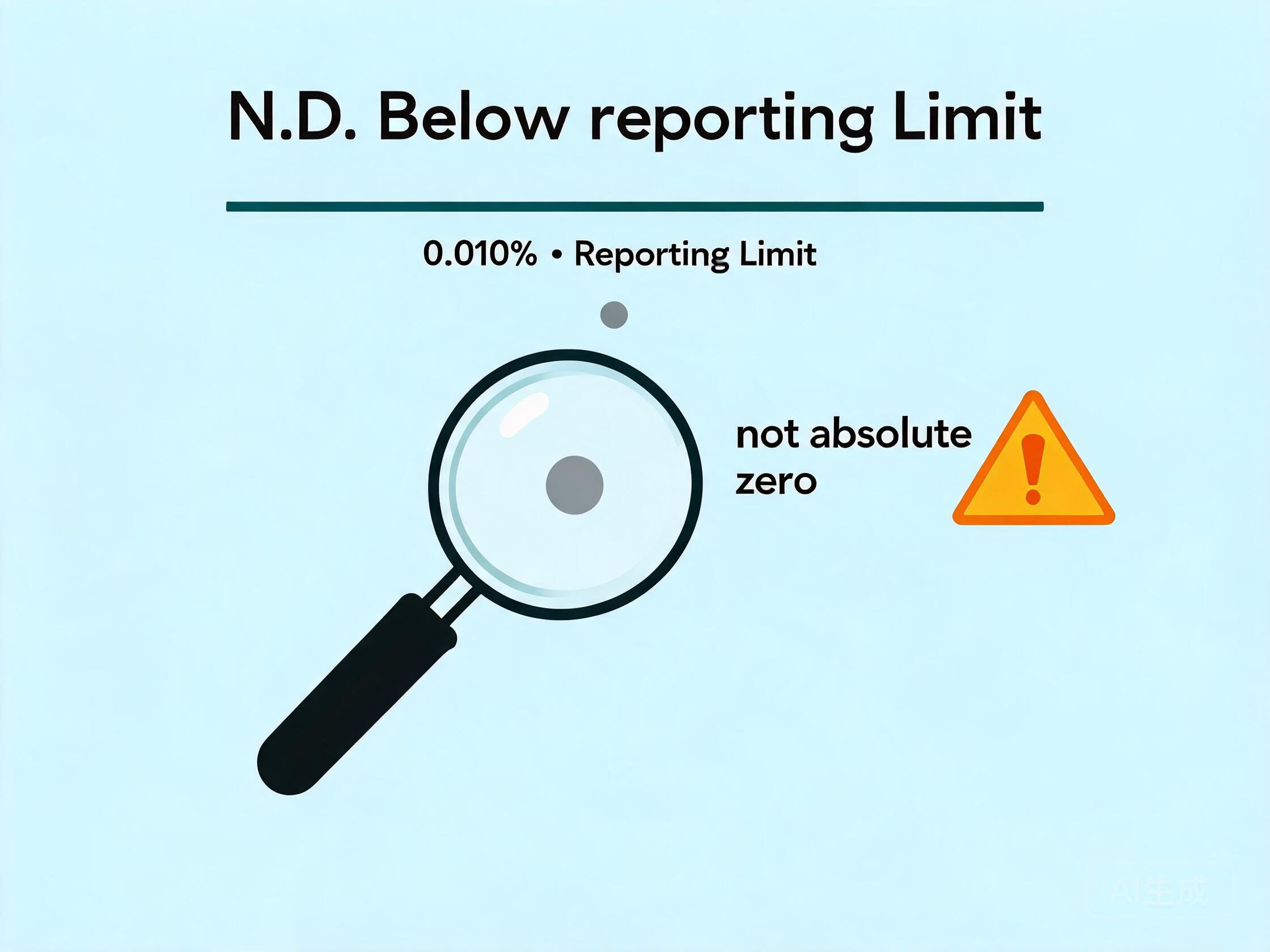
| N.D. | Not Detected above the laboratory’s report limit. It does not prove absolute zero. |
| Report limit: 0.010% | The detailed reporting limit stated in the report. Results below this level may be reported as N.D. |
| Less than 0.1% (w/w) | The summary conclusion places the specified SVHC concentration below 0.1 percent by weight in the tested sample. |
N.D. is not the same as zero
If a result says N.D., the responsible reading is “not detected above the stated reporting limit.” A substance could be absent, or it could be present at a concentration below the method’s reporting capability. The laboratory’s reporting limit is an analytical boundary, not a claim that every molecule has been eliminated.
Reporting limit versus 0.1%
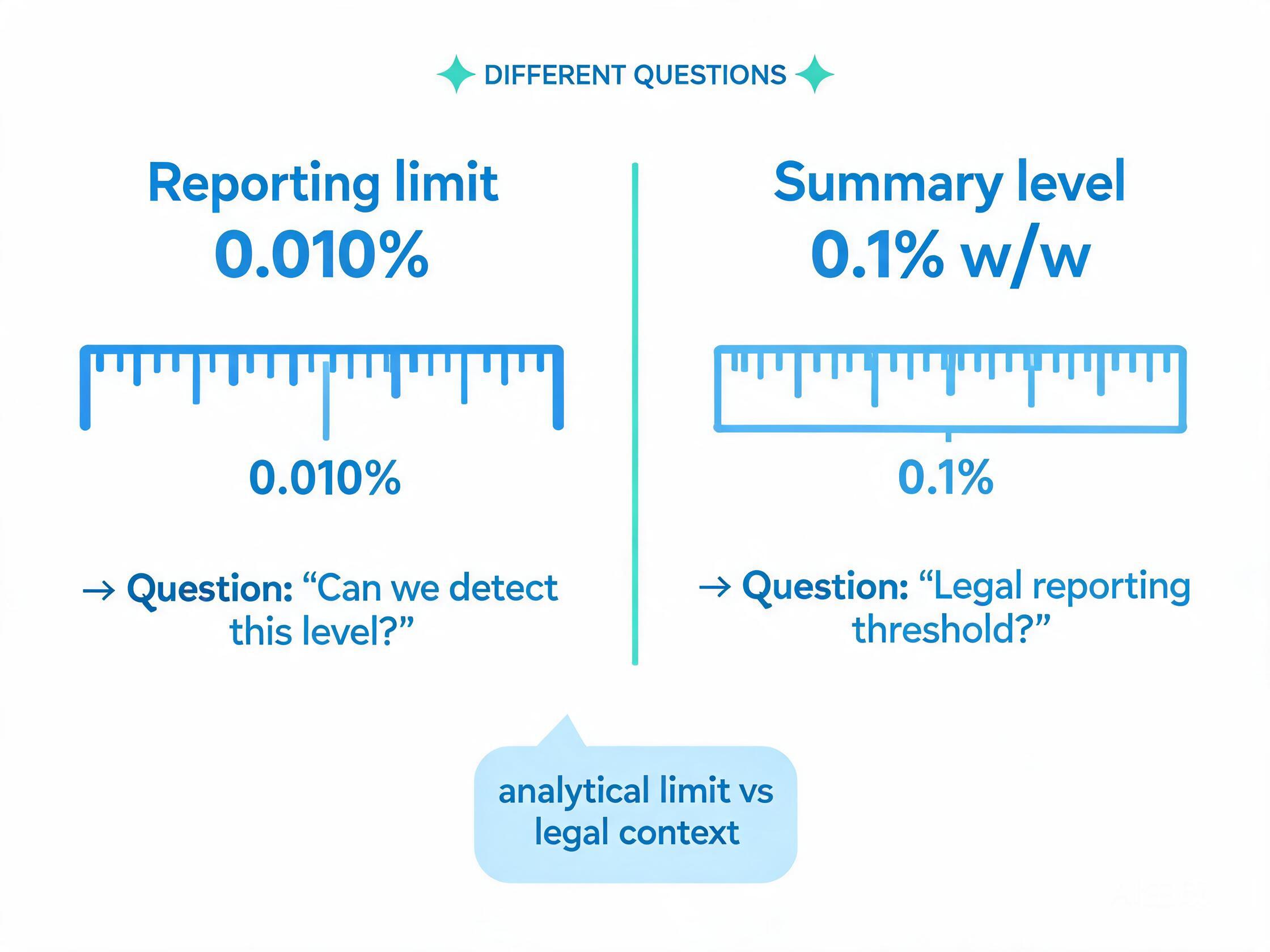
0.010% and 0.1% (w/w) answer different questions. The first is the laboratory’s detailed reporting limit in this report. The second is the percentage-by-weight level used in the report summary and commonly associated with REACH Article 33 communication for an SVHC in an article when the applicable conditions are met.
That threshold should not be used carelessly as a universal pass/fail statement for every REACH duty. Legal obligations can depend on the substance, product, role in the supply chain, intended market and current rules. A test report supports a technical conclusion within its scope; it does not replace a company’s complete regulatory assessment.
How the chemistry is measured
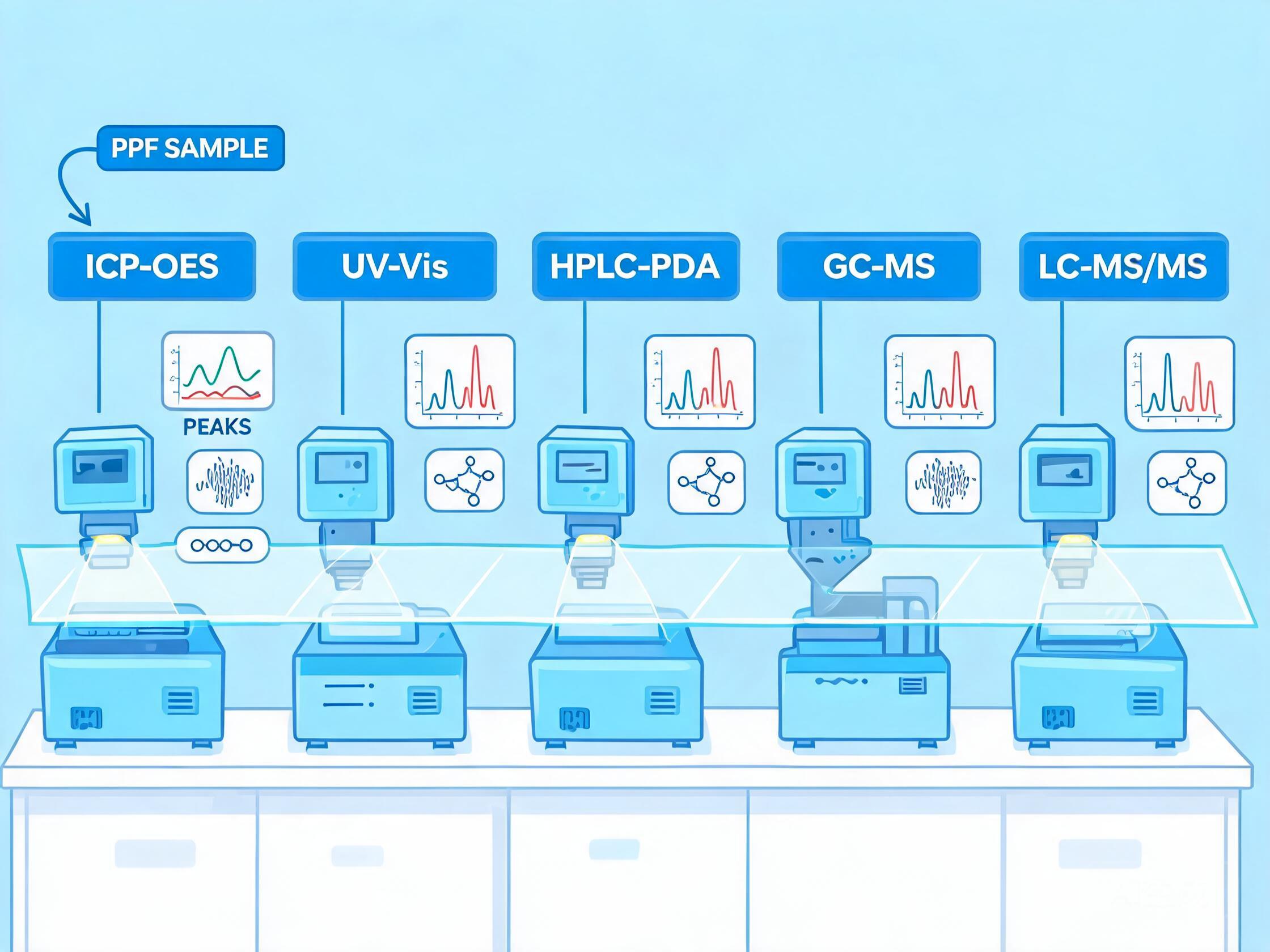
The report lists several analytical techniques because no single instrument is ideal for every chemical family. ICP-OES is commonly used for elemental screening, while UV-Vis, HPLC-PDA, GC-MS and LC-MS/MS are used for different organic substances and concentration ranges.
Why several methods matter
- Element screening: helps look for elements such as lead, cadmium or arsenic, but an element result is not automatically proof of one exact chemical compound.
- Chromatography: separates components in a complex sample so target substances can be identified and measured more specifically.
- Mass spectrometry: helps identify compounds by their mass-related signature and improves selectivity for many organic targets.
In everyday terms, imagine checking a mixed bag of colored beads. One tool counts whether a certain color family exists; another separates beads by size; a third compares each bead with a reference pattern. A reliable conclusion comes from matching the method to the substance family and reporting the result with a stated limit.
What this means for PPF buyers
Ask for product-specific evidence
A buyer should compare the report’s sample name, material description, report date, test scope and product identification with the roll being offered. If a dealer shows a report for a different product, color, construction or supplier, the document may not represent the film on your vehicle.
Check the limits and wording
Look for the Candidate List date, the tested substance scope, the reporting limit, the result notation and any laboratory limitations. “N.D.” is meaningful only when you can see the method and limit behind it. Be cautious when a seller turns “below the report limit for this sample” into “chemical-free” or “permanently certified.”
For a clear walkthrough, our guide to understanding third-party testing reports explains each section of a document so you can compare reports with confidence.
Keep the installation traceable
Ask the installer to record the product series, roll or batch identification, installation date and supplier. This creates a useful chain from the physical material to its technical documents. It also makes a later warranty or quality discussion more factual.
How SHIELD SPIRIT controls material quality
At SHIELD SPIRIT, responsible material communication starts with product identity and batch traceability. A REACH report is one part of that system, alongside supplier control, formulation management, production discipline, equipment maintenance and finished-product evaluation.
The same principle guides our practical PPF quality testing guide , which walks through the seven parameters we evaluate on every batch we ship.
Our product families are designed for different use and budget requirements, including فيلم حماية الطلاء من PCU , premium hydrophobic TPU PPF and standard economical TPU PPF . The correct comparison is not simply “premium” versus “cheap”; it is the actual material construction, documented performance, warranty scope, batch identity and evidence supplied for the product being installed.
We also avoid turning one laboratory document into an unlimited promise. The report covered the submitted sample and stated scope. Future batches, formulation changes, product variations and different jurisdictions may require their own assessment or updated documentation.
A practical buyer checklist
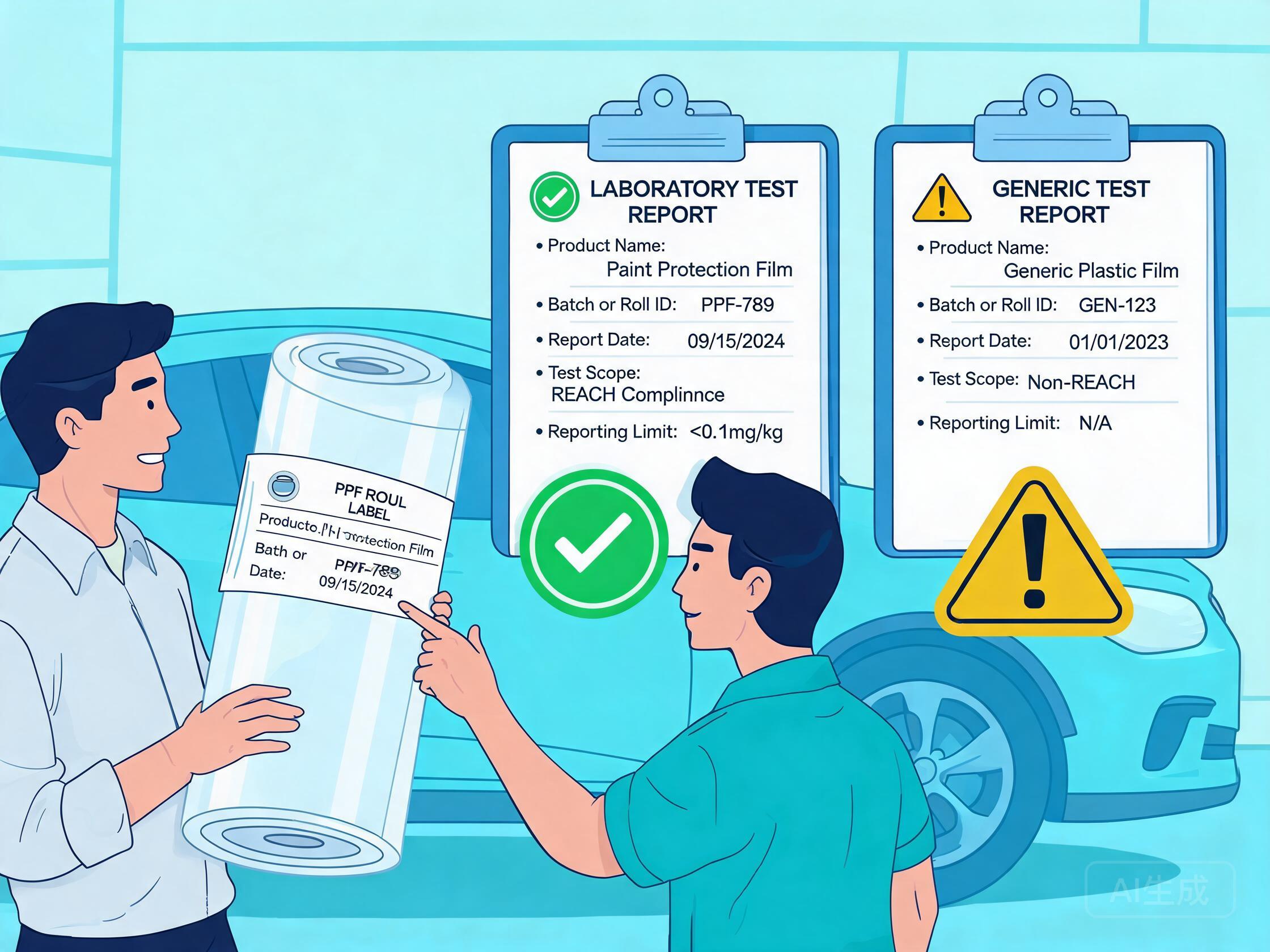
- Request the report for the exact PPF product, not a generic company certificate.
- Confirm the sample description and whether the release liner was excluded.
- Read the Candidate List cut-off date and the number of substances screened.
- Record the reporting limit and understand what N.D. means.
- Separate a laboratory result from a legal communication threshold.
- Match the roll, batch or product code to the paperwork.
- Keep the invoice, warranty and installation record together.
- Ask for updated evidence when the product or formulation changes.
Final takeaway
The REACH report reviewed here supports a clear, limited conclusion: for the tested transparent PPF sample, the specified 253 SVHC substances were reported below 0.1% by weight, with detailed results reported against a 0.010% limit and repeated N.D. notation. That is useful evidence, but it is not the same as saying the film contains no chemicals or that one report covers every future roll.
For a safer purchase, read the document like a material professional: identify the sample, understand the method, check the limit, follow the batch and ask questions when the sales claim is broader than the evidence. That is how technical transparency becomes real confidence.