








What Is Paint Protection Film (PPF)? The Complete Beginner’s Guide
A factory-level breakdown of what paint protection film is, how self-healing works, and why material choice matters for distributors and installers. Written from 70,000 square meters of production experience at SHIELD SPIRIT.
Eyebrow: Fundamentals for distributors and OEM partners
TL;DR:
– PPF is a transparent, multi-layer thermoplastic film that absorbs stone chips, scratches, and UV damage before they reach vehicle paint.
– The top coat self-heals with heat, the TPU core absorbs impact energy, and the adhesive bonds cleanly without residue.
– Material choice between TPU, TPH, and PVC determines lifespan, clarity, and warranty risk. PCU is the next-generation upgrade.
If you distribute or install automotive films, you have heard the question a hundred times. “What exactly is PPF, and why does it cost more than a ceramic coating?” Most customers think it is just a thick sticker. It is not. A quality paint protection film is a precisely engineered multi-layer system that functions as sacrificial armor for automotive paint. After running a 70,000 square meter factory that ships PPF to 70-plus countries, I can tell you the difference between a film that lasts 15 years and one that yellows in 18 months comes down to details most buyers never ask about. This guide covers those details.
What PPF Actually Is (and What It Is Not)
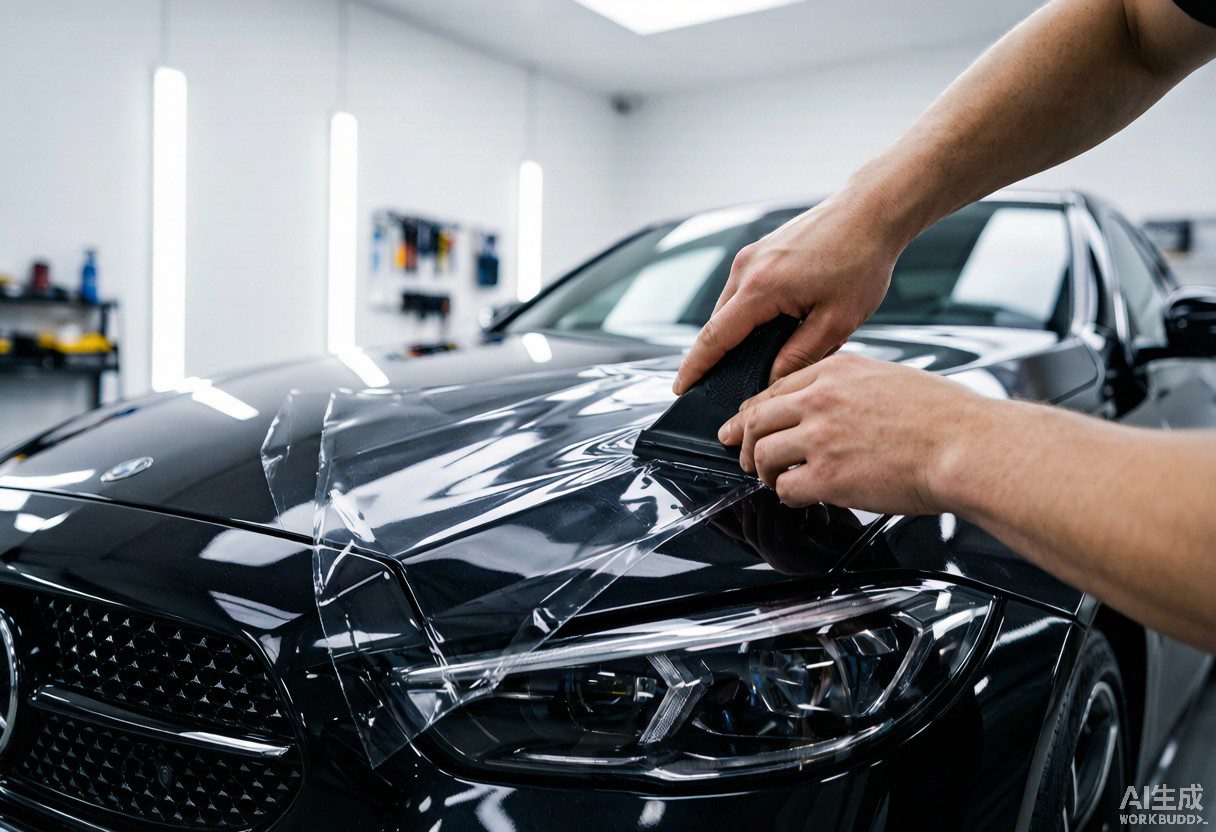
Dry answer: Paint protection film is a transparent thermoplastic urethane sheet bonded to vehicle paint. It absorbs physical impacts and chemical contaminants that would otherwise chip, scratch, or oxidize the clear coat underneath.
PPF goes by several names in the market. Clear bra. Clear film. Car PPF. Auto paint protection. They all refer to the same core product: a flexible, invisible barrier applied directly over painted surfaces. The film is typically 6 to 10 mils thick (about 150 to 250 microns), which is thin enough to wrap complex curves but thick enough to stop road debris at highway speed.
What PPF is not matters just as much. It is not a vinyl wrap. Vinyl wrap changes color or finish and offers minimal impact resistance. It is not a ceramic coating. Ceramic coating bonds at the micron level and provides excellent hydrophobicity and chemical resistance, but it has almost no ability to stop stone chips. A pebble at 70 miles per hour punches straight through a ceramic layer. PPF is the only product in the detailing stack that absorbs kinetic energy.
Many shops sell PPF and ceramic coating together. PPF goes on high-impact zones (hood, bumper, mirrors, rocker panels). Ceramic coating goes on top of the PPF for easier cleaning and extra UV defense. That combination is the most complete protection package. But PPF alone is the physical defense layer. Nothing else does what it does.
The Four Layers Inside Every Roll
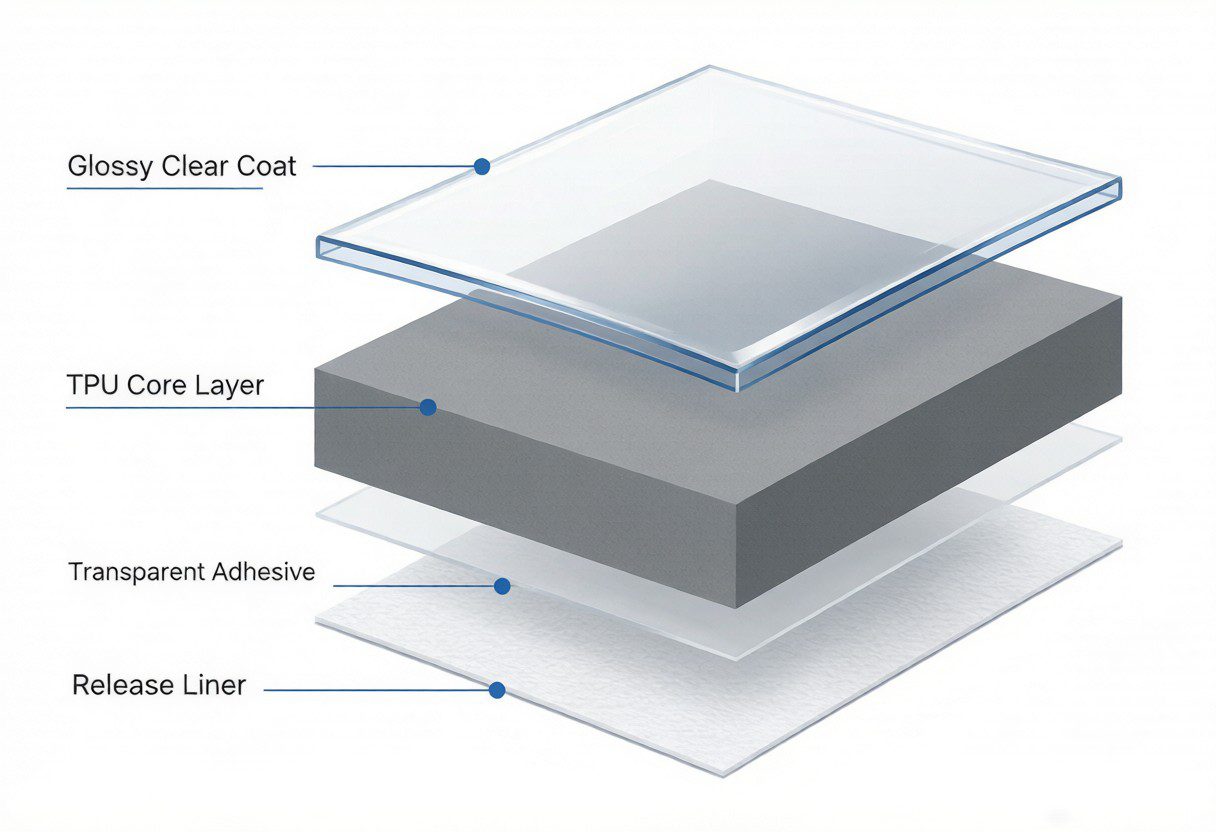
Dry answer: Every PPF sheet contains four functional layers: a self-healing clear coat on top, a TPU impact-absorption core, a pressure-sensitive acrylic adhesive, and a polyester release liner that gets discarded during installation.
Here is what each layer actually does in production and in the field.
Clear coat (top layer). This is the working surface. A premium clear coat provides self-healing capability, UV blocking, stain resistance, and hydrophobic water-repellent properties. The chemistry here varies enormously between manufacturers. At SHIELD SPIRIT, we formulate our top coat with elastomeric polymers that activate at relatively low temperatures. A swirl mark from a car wash brush can disappear in direct sunlight within minutes. A budget film may need a heat gun set to high to achieve the same recovery. That difference matters to installers who field customer complaints.
TPU core (the bulk layer). This is where the protection happens. Thermoplastic polyurethane is an elastomer. Its polymer chains stretch under impact and then spring back, dissipating kinetic energy across the film instead of transferring it downward to the paint. A thicker core absorbs more energy. A denser core resists puncture better. Not all TPU is equal. Aliphatic TPU resists UV-induced yellowing. Aromatic TPU contains benzene rings that discolor 3 to 5 times faster. We only use aliphatic TPU in our premium and PCU lines. It costs more. It also eliminates the warranty calls about yellowing on white cars.
Acrylic adhesive. This bonds the film to the paint. A quality adhesive is optically clear, repositionable during installation, and removable without residue after years of service. Cheap adhesive can pre-cure during shipping (especially through hot climates) or leave ghosting on the paint when removed. We test adhesive peel strength at multiple temperatures and confirm clean removability on test panels before any batch ships.
Release liner. The bottom layer. It protects the adhesive during storage and transport. It gets peeled off at installation and discarded. Standard roll widths are 60 inches (1.52 meters) for full-panel work. Pre-cut kits for specific vehicle patterns reduce waste but require access to a cutting database.
How Self-Healing Really Works
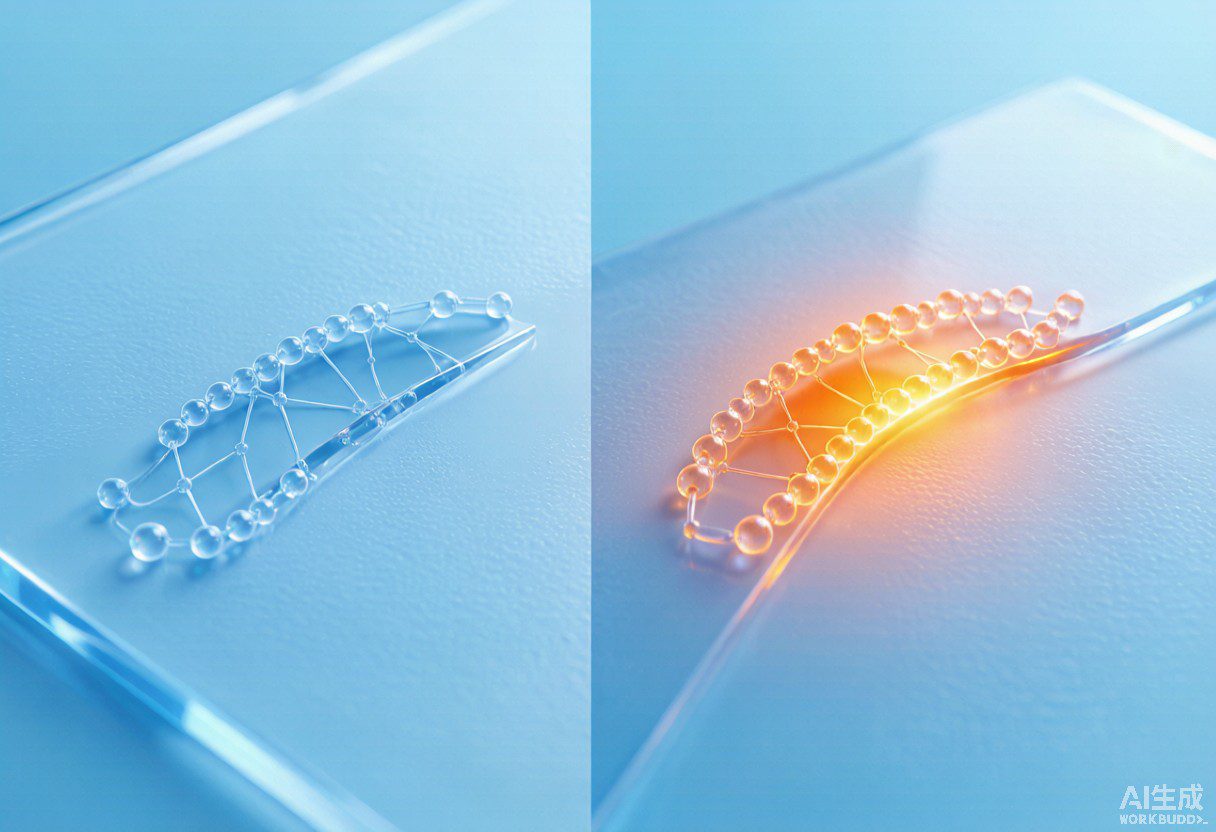
Dry answer: Self-healing relies on elastomeric polymers in the top coat that return to their original molecular arrangement when heated, erasing surface-level scratches and swirl marks. Sunlight, warm water, or engine heat can all trigger the effect.
This is the feature customers ask about most. And it is real. The top coat contains polymers engineered with shape memory. When a fine scratch displaces these polymers, heat excites the molecules and they revert to their lowest-energy state. The scratch literally disappears.
There are two limits every installer should communicate clearly. First, self-healing addresses surface marring in the top coat. A deep cut that penetrates through the film does not heal. In that case, the damaged section of film gets replaced. The paint underneath remains untouched. That is still a win. Second, healing speed and temperature threshold vary by formulation. Premium films heal at ambient temperatures. Budget films may need deliberate heat application. We test every batch at SHIELD SPIRIT by inducing controlled scratches and measuring recovery time at 25 degrees Celsius and at 60 degrees Celsius. The results go into the batch certificate.
A practical note for distributors: self-healing is a major selling point, but it is also a major source of unrealistic expectations. Train your installers to explain the limits. It prevents callbacks.
TPU, TPH, or PVC: Why Base Material Determines Everything
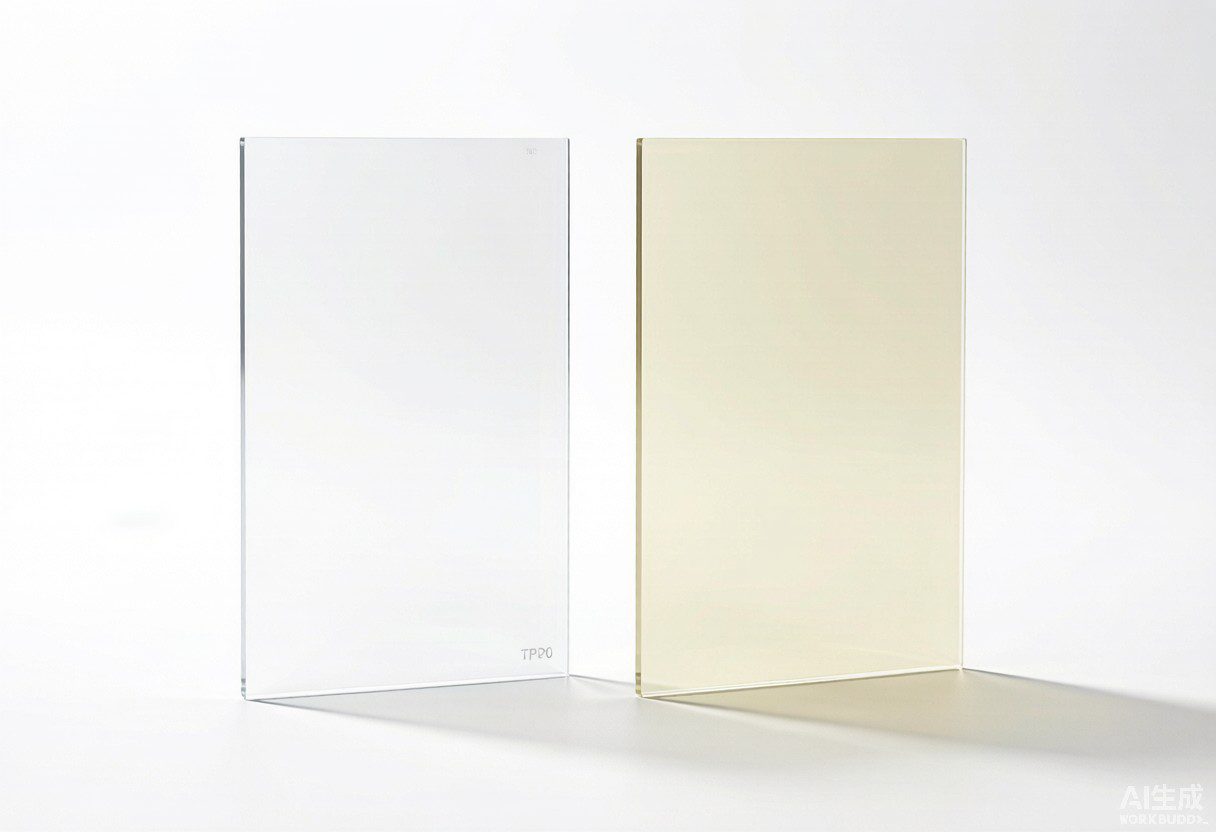
Dry answer: TPU is the professional standard for elasticity, clarity, and longevity. TPH is a lower-cost hybrid that yellows faster and heals weaker. PVC is rigid, non-healing, and prone to cracking. Material choice directly affects warranty risk and customer satisfaction.
The base polymer is the single most important specification in a PPF roll. Yet most buyers look at thickness or brand name first. That is backwards. Here is the breakdown.
Aliphatic TPU (premium tier). This is what professionals install. Aliphatic thermoplastic polyurethane has no benzene rings in its molecular structure, which means UV exposure does not trigger the cross-linking reactions that cause yellowing. After 2,000 hours of accelerated QUV weathering, color change stays below delta E of 2. Essentially invisible. It stretches easily around complex curves. It self-heals reliably. Service life is 5 to 10 years for standard TPU, and up to 15 years for our PCU formulation. This is what you want on any vehicle, but especially on white or light-colored paint.
Aromatic TPU / TPH (mid tier). TPH stands for thermoplastic hybrid. It is typically a modified PVC or blended material with some TPU content. It performs acceptably for a shorter period. Yellowing appears in 2 to 5 years. Self-healing is weaker or absent. It suits price-sensitive markets, but distributors should be transparent with customers about the lifespan gap. A TPH film that costs 30 percent less but needs replacement in half the time is not a bargain.
PVC (budget tier). The lowest grade. Rigid, hard to stretch, prone to cracking, and non-self-healing. Yellowing can begin within 2 years. We do not produce PVC-based PPF at SHIELD SPIRIT. It does not meet our QC standards. If a customer asks for the cheapest option, we explain the total cost of ownership including replacement labor. Usually they move up to at least economical TPU.
A practical takeaway for distributors: always ask your supplier what base polymer they use. If they cannot give a clear answer about aliphatic versus aromatic, or if they claim “all TPU is the same,” that is a red flag. It is not the same. The molecular structure determines the yellowing rate, the healing performance, and the warranty exposure you will carry.
Thickness, Gloss, and Hydrophobicity
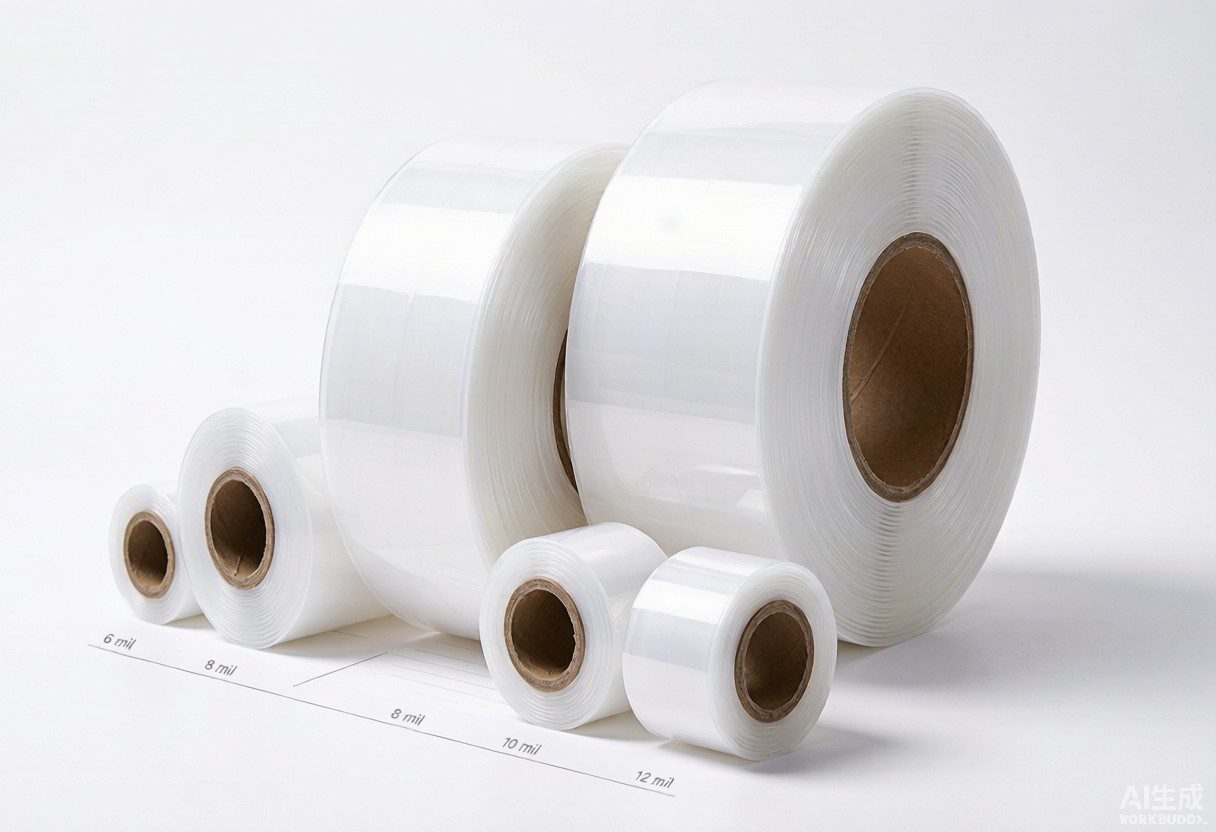
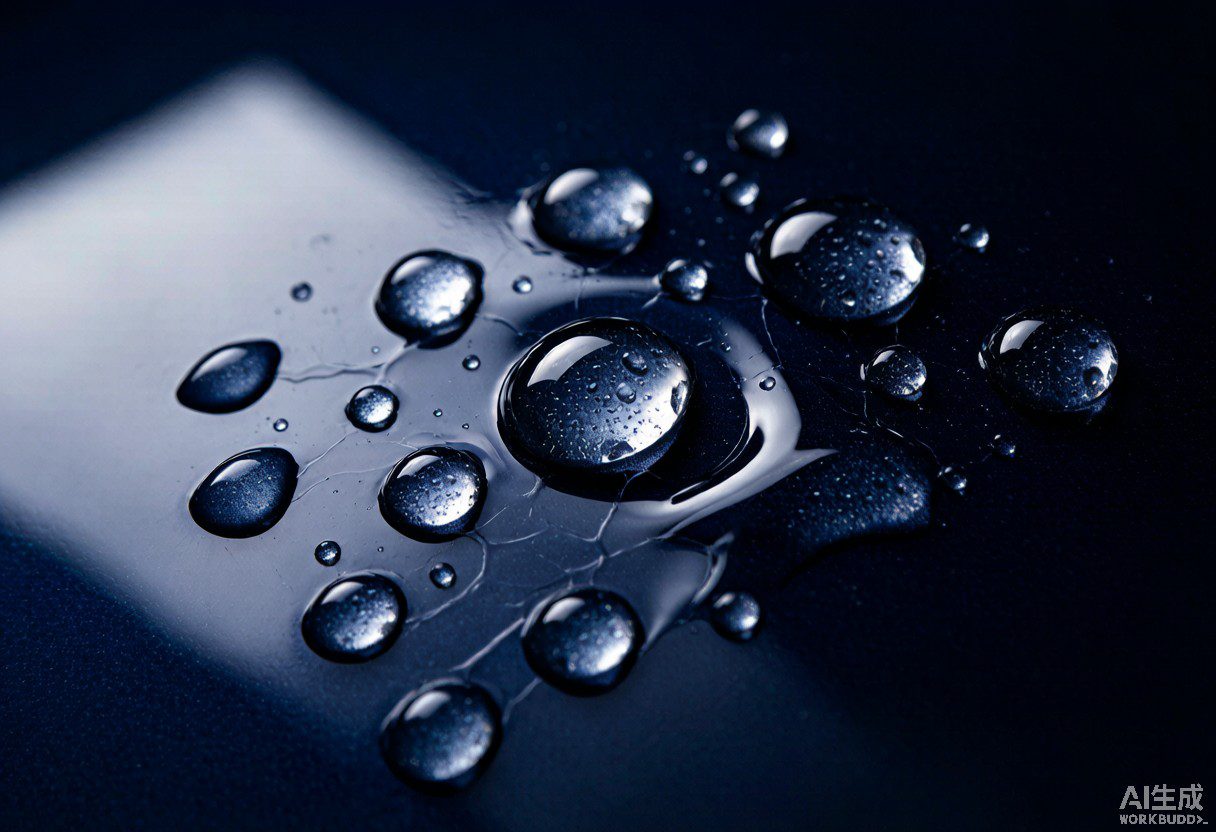
Dry answer: Standard PPF thickness ranges from 6 to 10 mils. Thicker films absorb more impact but are harder to install on tight curves. Gloss, matte, and satin finishes match different customer preferences. Hydrophobic top coats repel water and dirt, reducing cleaning effort.
Thickness is usually the first number buyers look at. A common construction is 7.5 to 8 mils total, split between top coat, base film, and adhesive. Thicker films like 10 or 11.5 mils absorb more stone chip energy. They are popular for off-road vehicles and high-end sports cars. The tradeoff is reduced stretchability. A 10-mil film is harder to wrap around tight mirror housings or bumper corners. Installers need more heat and more skill.
Our product line spans 7.5, 8.5, 9.5, and 11.5 mils. We match thickness to application. Daily drivers get 7.5 or 8.5. Track cars and luxury SUVs get 9.5 or 11.5. For distributors, carrying two thickness options covers most of the market.
Surface finish is the next decision. Gloss PPF preserves the factory paint shine and is nearly invisible. Matte PPF converts a glossy paint job to a satin or matte finish while adding protection. Satin sits between the two. We produce all three. Matte and satin are popular with Tesla owners and custom shops.
Hydrophobicity refers to the top coat’s ability to repel water. A hydrophobic film causes water to bead and roll off, carrying dirt with it. This keeps the vehicle cleaner between washes and reduces water spot staining. Our premium lines include a hydrophobic clear coat. We also produce a hydrophilic variant for markets that prefer water to sheet off rather than bead. Both work. The choice depends on regional preference and climate.
What PPF Stops (and What It Cannot)
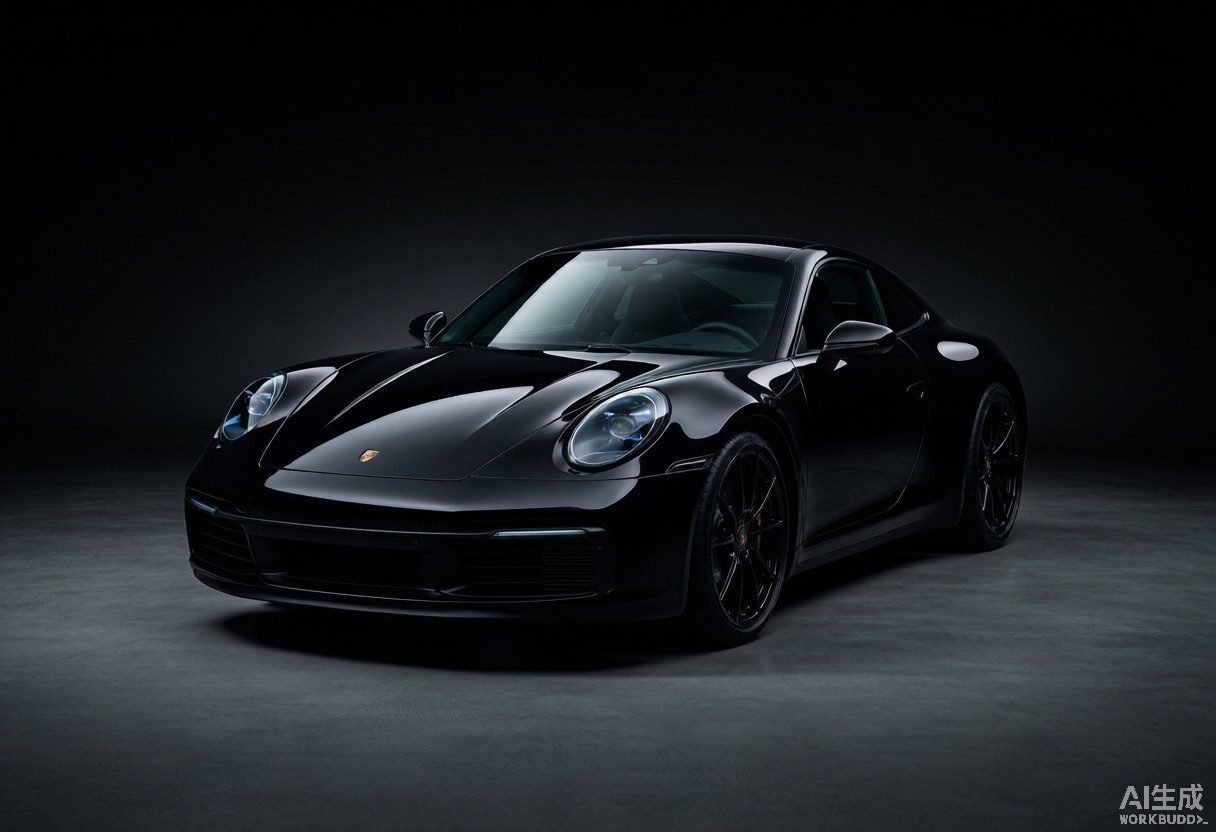
Dry answer: PPF stops stone chips, bug acid, bird droppings, tree sap, light scratches, and UV fading. It does not stop deep cuts that penetrate the film, and it does not eliminate the need for washing.
This section is about managing expectations. PPF is excellent protection. It is not magic.
What it stops. Road debris at highway speed. The TPU core absorbs and disperses the impact energy. Bug splatter and bird droppings. The clear coat resists etching and buys time for cleaning. Tree sap and road salt. The film acts as a barrier against chemical contaminants. Light scratches from brushes, keys, or automatic car washes. The self-healing top coat recovers. UV radiation. The film blocks ultraviolet rays that would otherwise oxidize and fade the clear coat underneath.
What it does not stop. A deep gouge from a shopping cart or a sharp metal edge can cut through the film. In that case, the film has still done its job. The paint underneath is untouched. You replace the damaged section of film. PPF also does not make a car self-cleaning. It makes cleaning easier, but regular washing is still required. And PPF does not prevent rock chips on unprotected areas. Partial front packages leave doors, roofs, and rear panels exposed. Customers need to understand the coverage map before installation.
For distributors, the warranty terms should mirror these limits clearly. We offer up to 15 years on our PCU line. The warranty covers yellowing, delamination, and cracking under normal use. It does not cover damage from collisions, improper installation, or neglect. Clear terms prevent disputes.
From TPU to PCU: Where the Industry Is Heading
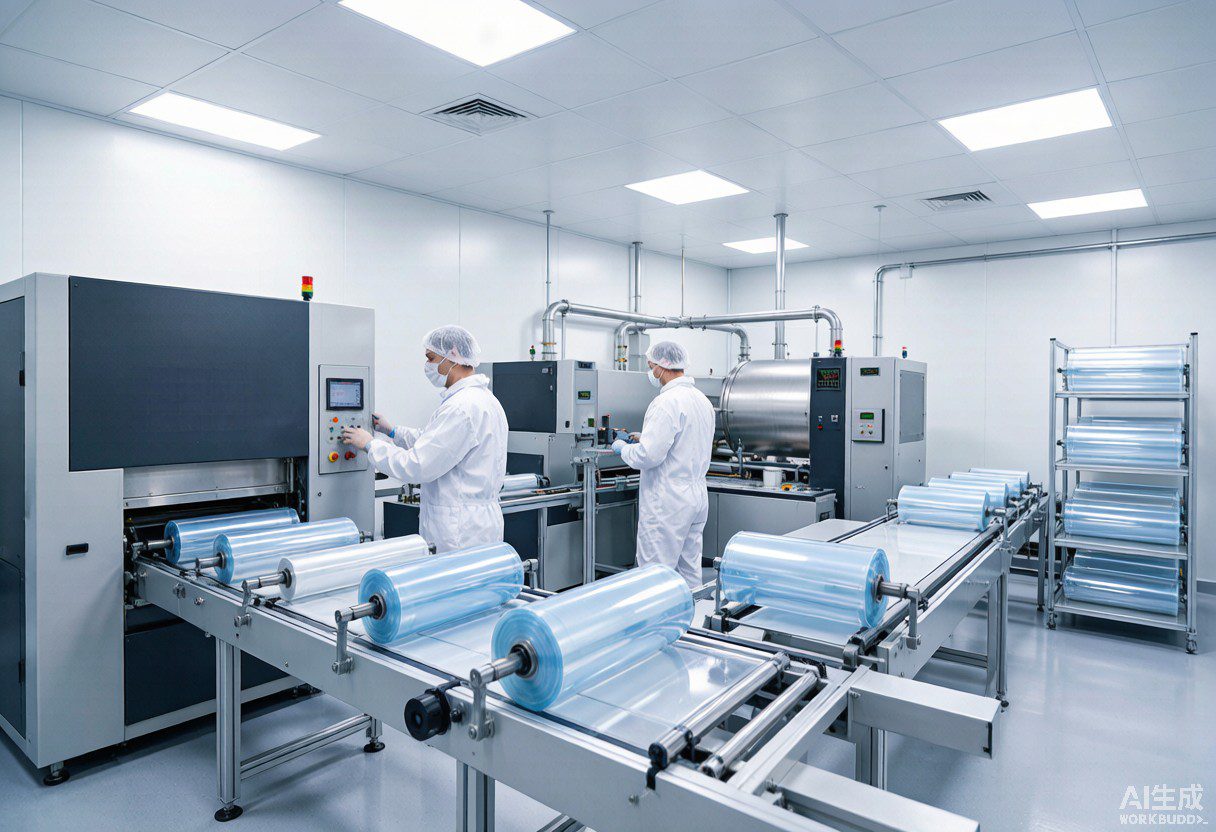
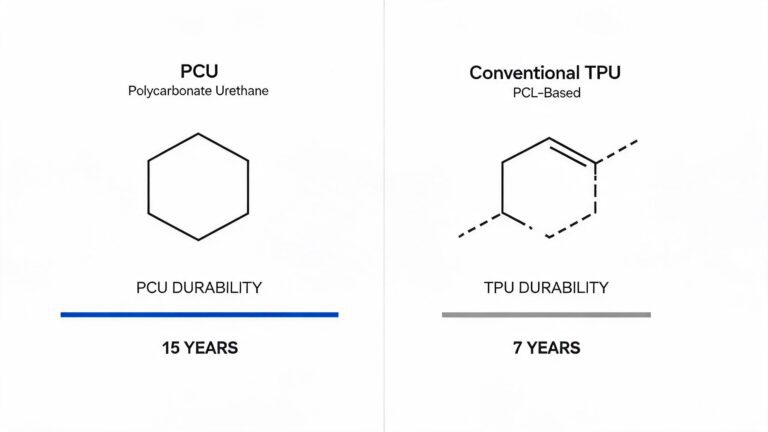
Dry answer: PCU (polycarbonate TPU) is the next-generation PPF material. It delivers approximately 30 percent better overall performance than standard TPU and roughly 3 times the hydrolysis resistance, extending service life up to 15 years.
Standard aliphatic TPU is excellent. But material science keeps moving. At SHIELD SPIRIT, we have shifted our flagship line to PCU, or polycarbonate thermoplastic polyurethane. Here is what that means in practical terms.
PCU incorporates polycarbonate segments into the TPU polymer chain. These segments add rigidity and chemical stability without sacrificing elasticity. The result is a film that performs better across every metric we test. Hydrolysis resistance jumps by roughly a factor of 3. In climates with high humidity or frequent rain, that translates to longer service life before the material begins to degrade. Tensile strength and puncture resistance improve by about 30 percent. The film stops harder impacts without tearing. Optical clarity is measurably higher. Installers report fewer orange-peel effects and better gloss retention.
Our PCU line comes in 7.5, 8.5, 9.5, and 11.5 mils, in both gloss and matte. It carries our longest warranty. For distributors, PCU is the premium tier that commands premium pricing. It also differentiates your offering from competitors still selling standard TPU at TPU prices.
The shift from PVC to TPU took about a decade to become universal in the professional market. The shift from TPU to PCU is happening faster. Early adopters are already seeing the margin and customer retention benefits. Late adopters will be selling yesterday’s material at tomorrow’s prices.
Next step: If you are evaluating PPF suppliers for your distribution network, the questions in this guide give you a framework. Ask about base polymer type (aliphatic TPU or PCU). Ask for QUV and hydrolysis test data. Ask about adhesive peel strength and removability. Ask about roll width consistency and batch traceability. A factory that has nothing to hide will have answers ready. If you want sample rolls or our full specification sheet, reach out through manhappf.com. We ship sample kits globally with MOQ starting at 10 rolls.
Related Reading
- Materials & Technology: TPU vs PCU and film thickness guides
- Selection & Buying Guide: wholesale PPF quality, warranty, MOQ, FOB
- SHIELD SPIRIT — PCU/TPU PPF manufacturer and OEM/ODM factory
Preguntas frecuentes
What is paint protection film (PPF)?
PPF is a transparent, multi-layer thermoplastic film applied over vehicle paint. It absorbs stone chips, scratches, UV rays, and chemical contaminants before they damage the clear coat underneath. The top layer self-heals with heat, while the TPU or PCU core dissipates impact energy.
How does self-healing PPF work?
The top coat contains elastomeric polymers with shape memory. When a light scratch displaces these polymers, heat from sunlight, warm water, or a heat gun excites the molecules. They revert to their original arrangement and the scratch disappears. Deep cuts through the film do not heal.
What is the difference between TPU and PCU PPF?
TPU (thermoplastic polyurethane) is the current professional standard with 5-10 year lifespan. PCU (polycarbonate TPU) is the next generation. It offers roughly 30 percent better overall performance and about 3 times the hydrolysis resistance, extending service life up to 15 years. PCU is the premium tier.
How thick should PPF be?
Standard PPF ranges from 6 to 10 mils (150-250 microns). Daily drivers typically use 7.5 to 8.5 mils. Off-road vehicles and luxury cars benefit from 9.5 to 11.5 mils for maximum impact absorption. Thicker films offer more protection but are harder to install on complex curves.
Is PPF worth it for wholesale distribution?
Yes. PPF is a high-margin, repeat-purchase product with growing global demand. The global market reached approximately USD 1.09 billion in 2025 and is projected to grow to 1.55 billion by 2030. Distributors who stock quality aliphatic TPU or PCU film with clear warranties build long-term installer relationships.