








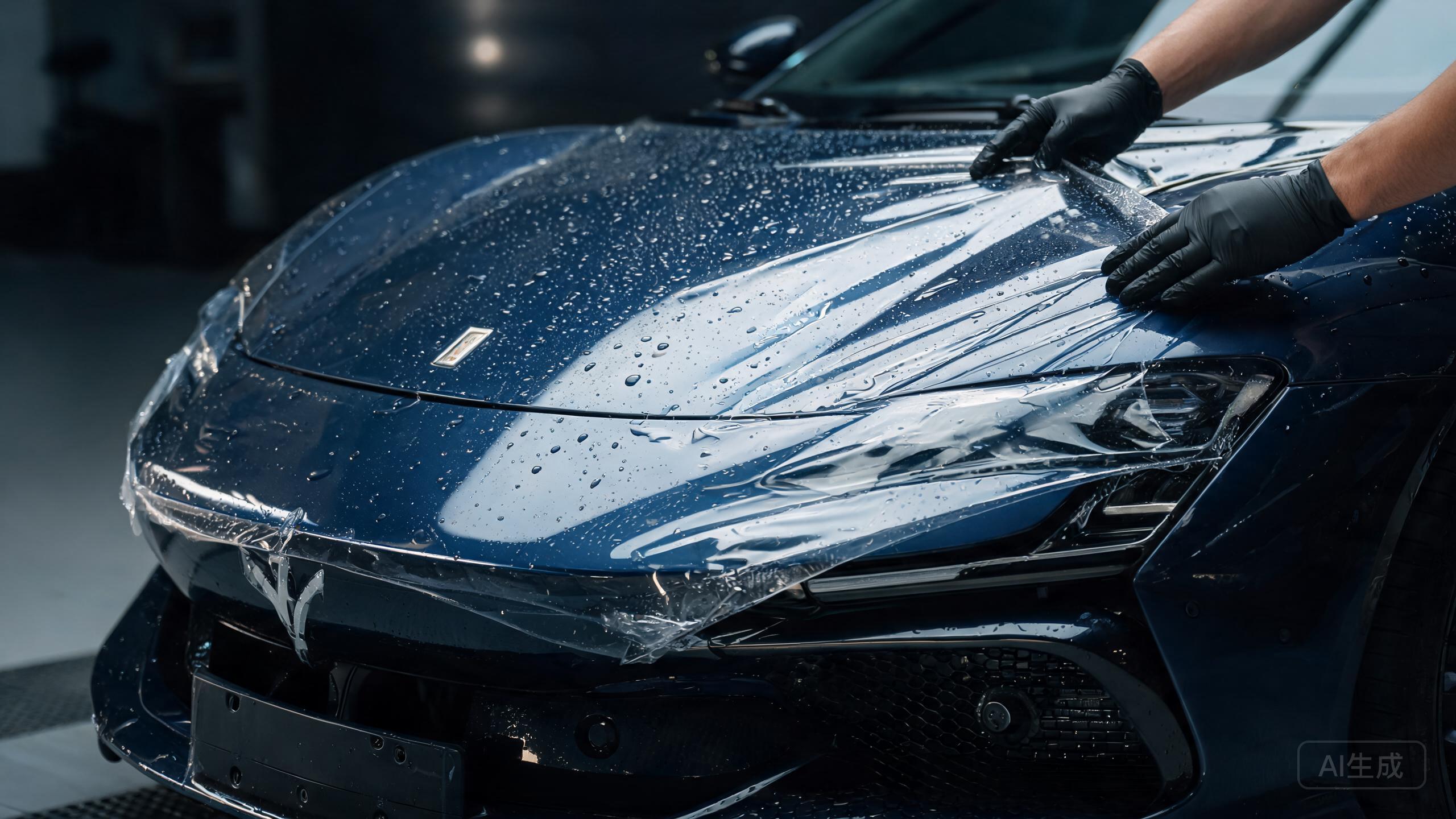
ما الذي يجعل صندوق التمويل العقاري (PPF) مؤهلاً؟ دليل للمبتدئين
A PPF label can say “TPU” or “PCU” and still tell you very little about the film you are about to put on a car. The real question is whether the finished film system has defined construction, measurable acceptance criteria, batch testing, and support after installation.
This is a practical first guide for car owners, new buyers, dealers, and procurement teams. It is not a ranking of brands. It explains what a qualified PCU or TPU paint protection film should disclose and what the numbers are actually trying to protect.
Start With the Whole Film System
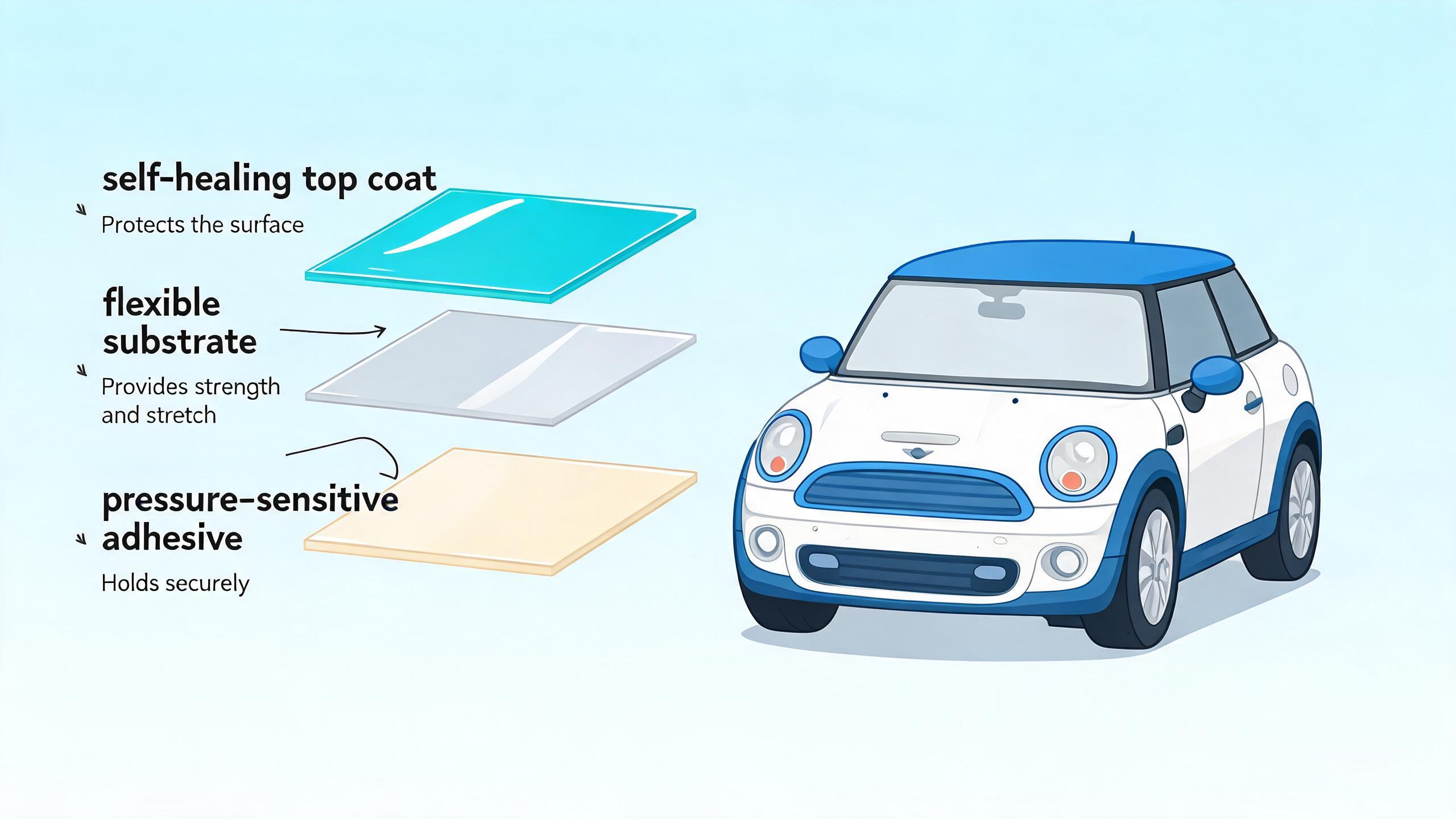
A clear PPF is usually a layered construction: a polyurethane substrate, a functional top coat, a pressure-sensitive adhesive, and a release liner. A good result depends on how these layers work together. Thickness alone is not proof of quality. A thick film with weak coating adhesion or unstable glue can still haze, stain, lift, or leave residue.
| Layer | What it does | What a buyer should ask for |
|---|---|---|
| Substrate | Absorbs impact and provides stretch, strength, and clarity. | Polymer type, thickness tolerance, tensile strength, elongation, aging data. |
| Top coat | Delivers gloss or matte finish, stain resistance, hydrophobicity, and self-healing. | Coat thickness, gloss or haze target, contact angle where applicable, recovery method. |
| Adhesive | Holds film securely while allowing clean installation and removal. | Adhesive thickness, early tack, 24-hour adhesion, odor, weather resistance, residue test. |
1. Substrate: The Structural Layer
PCU and TPU are both polyurethane-family materials used in PPF. Neither name alone is a pass certificate. A qualified film should have a documented grade, a stable film-making process, and finished-film tests that show the material can stretch around complex panels without tearing or losing its shape. See our PPF substrate fundamentals for the deeper technical detail.
Which substrate numbers matter?
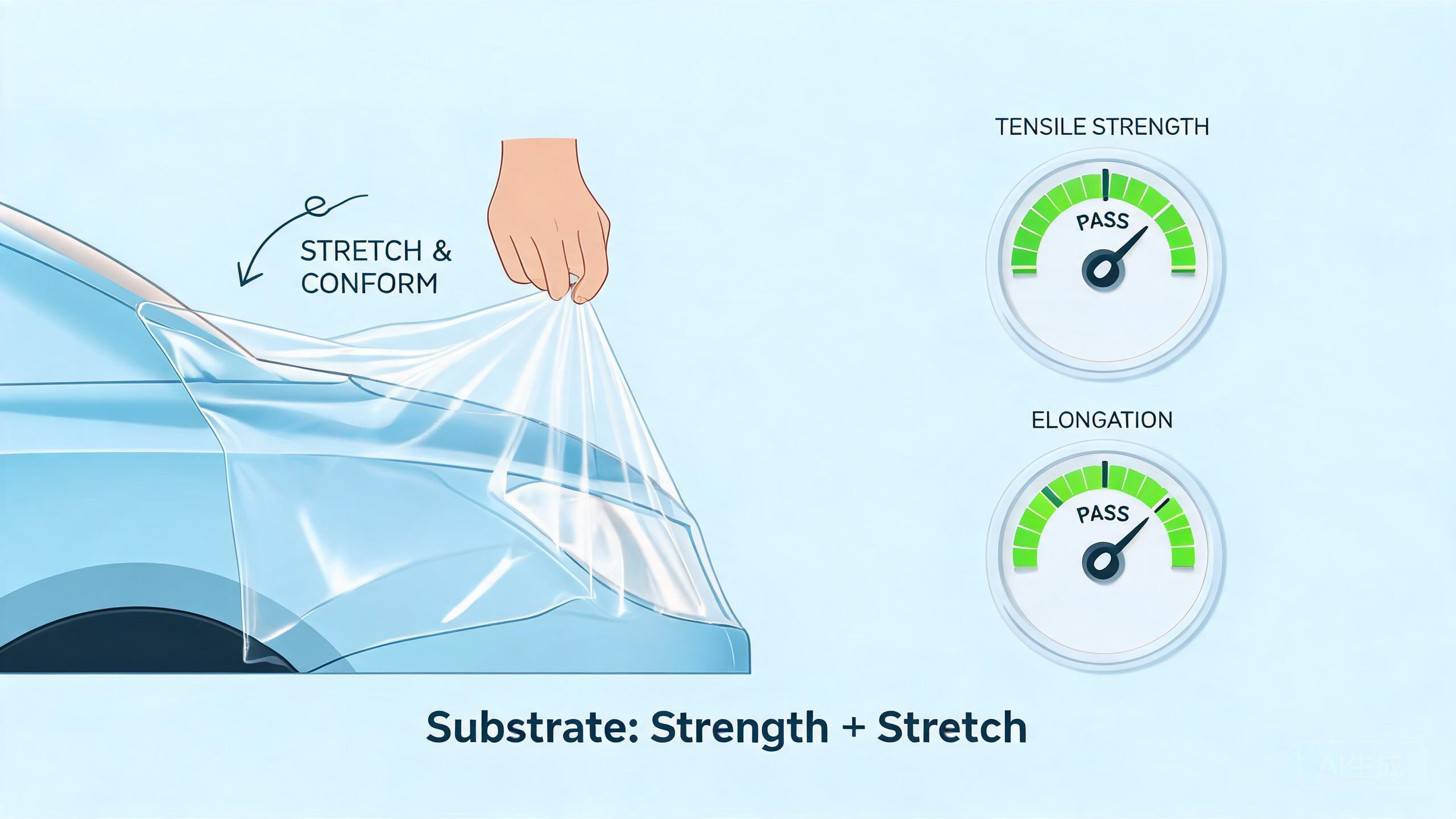
Look at substrate thickness, tensile strength, and elongation at break in both machine and transverse directions. The attached finished-product inspection records show transparent samples with substrates around 150–205 μm, tensile strength results around 21–35 MPa, and elongation results around 243–359%, depending on construction. Those figures are not universal targets; they are examples of the kind of documented, direction-specific result a buyer should expect to see.
Why test both directions? Film is manufactured in a direction. A number taken in only one direction can hide an imbalance that becomes visible when an installer stretches the material around mirrors, bumpers, and recessed areas.
Practical case: a curved bumper
Imagine a shop wrapping a deeply curved bumper. A film with adequate elongation and balanced strength is more likely to conform without whitening, tearing, or pulling back from the edge. But a high elongation number by itself is not enough: it must be paired with strength, dimensional stability, and a sensible installation window from the manufacturer.
2. Top Coat: The Layer You See and Clean
The top coat is the surface that meets sun, rain, road grime, wash chemicals, and the installer’s squeegee. It largely determines whether the film remains easy to clean, whether water beads, how it looks under light, and whether shallow marks can recover under the stated heat conditions.
What should be documented?
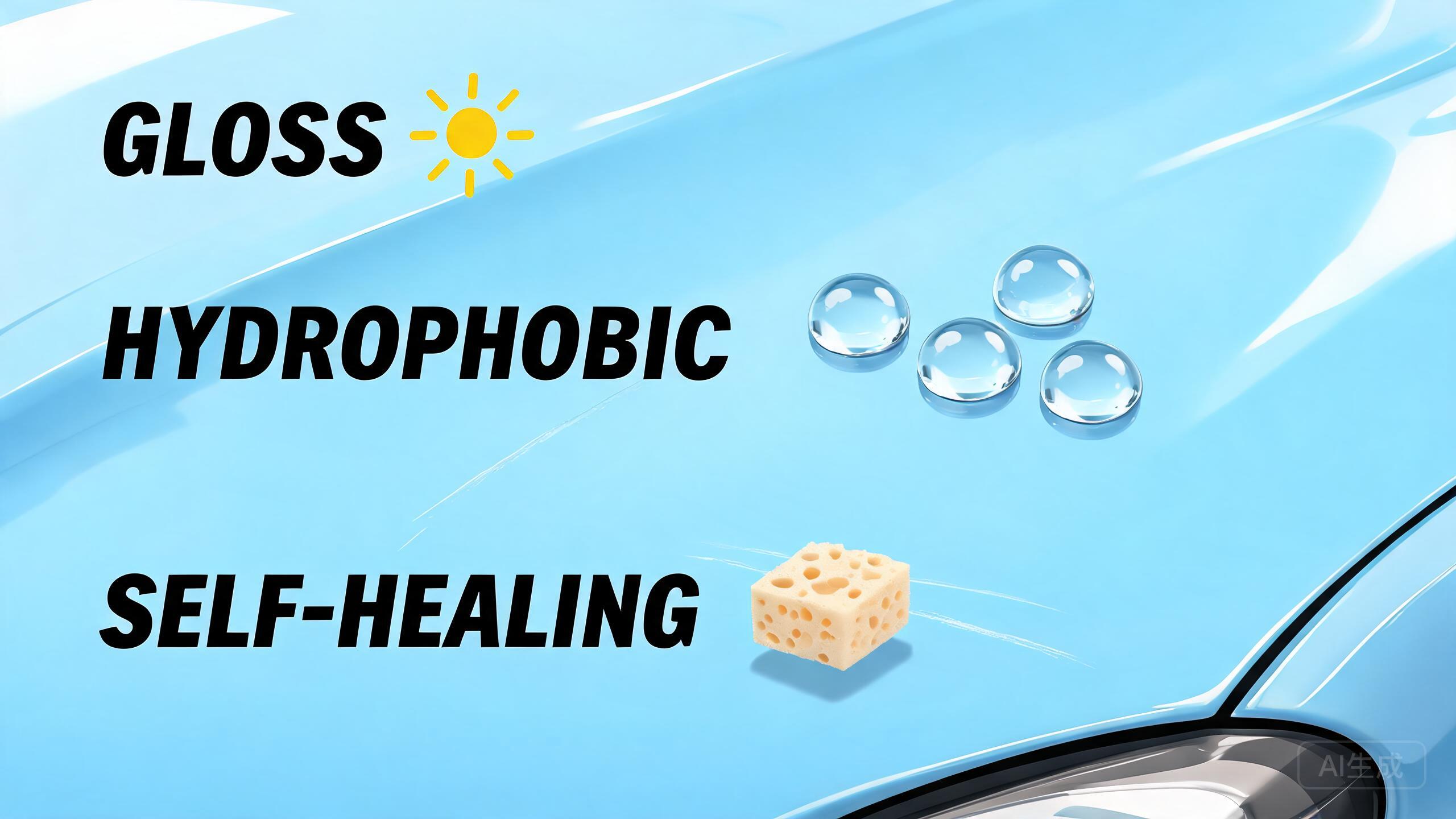
Start with coating thickness and a clear definition of the finish. The inspection records list a 7 μm self-healing layer for the reviewed constructions. Glossy examples returned roughly 91–98.3 GU, while matte examples returned roughly 21.2–21.3 GU. That difference is expected: a matte film should not be judged by a gloss-film target.
For hydrophobic glossy products, the records also show water contact angles around 102–103°. This can be a useful surface-behavior indicator, but it is not a lifetime guarantee. Ask how the measurement was taken, on which batch, and what cleaning or maintenance conditions apply.
A meaningful report should also state the stain test method, the recovery method for self-healing, and the acceptance rule. In the provided records, the surface was reported as fully recovered after the stated steel-brush and hot-air procedure, with stain resistance marked acceptable and no obvious yellowing after the specified balling check. The method and acceptance rule are as important as the word “pass.”
Practical case: daily parking and car washing
A commuter car may spend all week outdoors and be washed at the weekend. A qualified coat should be easy to evaluate: ask whether it has a stated gloss or haze target, a stain-resistance procedure, and a realistic self-healing condition. “Self-healing” should never be read as permission to ignore deep scratches, stone impact, or incorrect washing tools.
3. Adhesive: The Hidden Layer That Decides Trust
Adhesive problems are often discovered late: edge lift, tunnel bubbles, difficult repositioning, or residue at removal. This is why a legitimate film specification should state more than “high tack.” It should define the adhesive layer, early peel or tack, 24-hour adhesion, odor requirement, and expected removal behavior. The adhesive layer explained guide breaks down the basics in plain language.
Across the reviewed finished-film reports
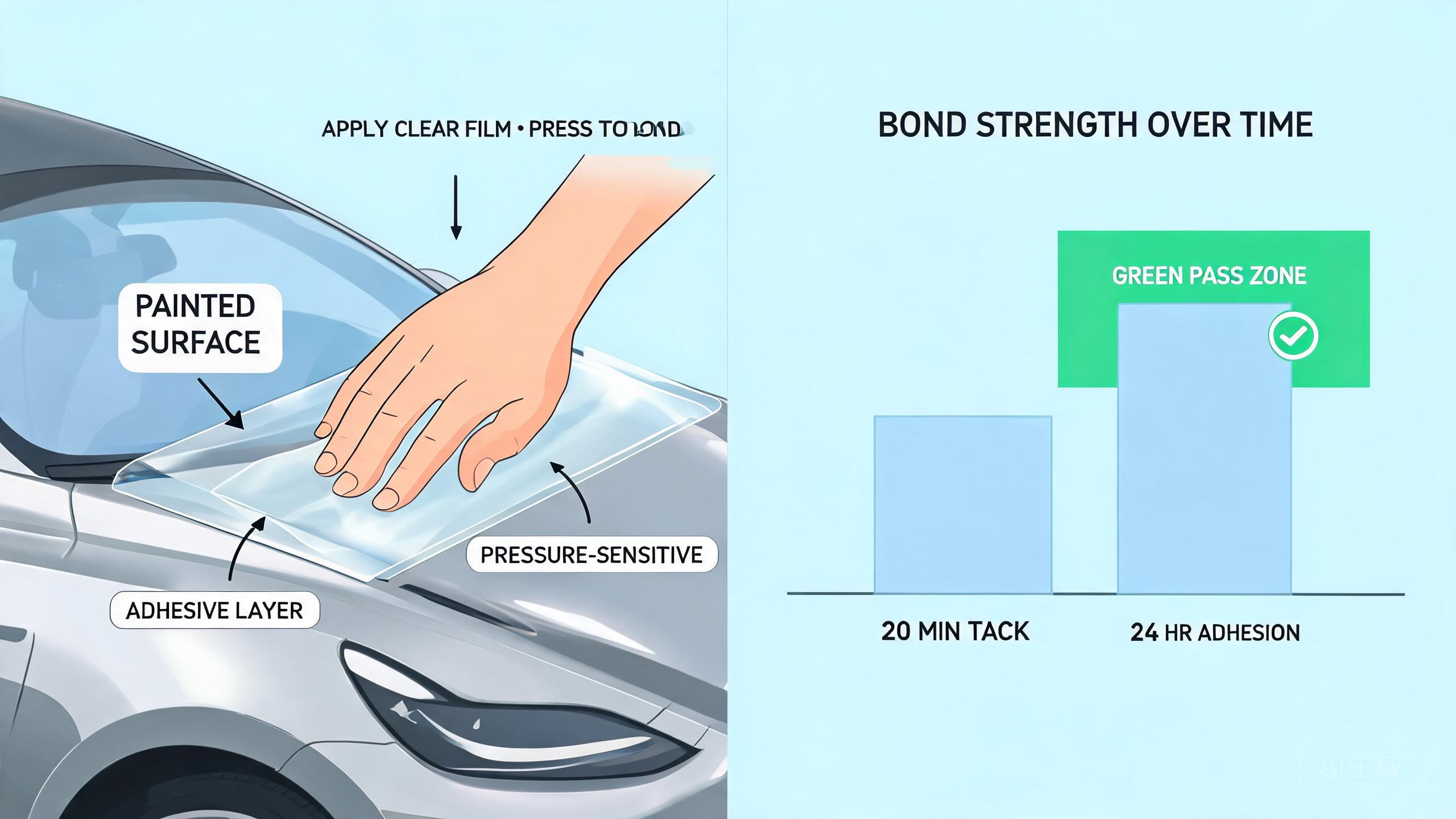
, the adhesive layer was recorded at 26 μm. Twenty-minute peel results were approximately 1,478–1,792 g, while 24-hour adhesion was approximately 2,049–2,169 g. The increase after dwell time makes sense: pressure-sensitive adhesives need time to wet out and build bond. These are examples from the supplied reports, not a replacement for a buyer’s own vehicle-, climate-, and substrate-specific validation.
Case: repaint-risk removal. A car owner plans to remove film years later. The correct question is not just “Will it stick?” Ask the supplier for the supported removal window, surface-preparation instructions, residue criteria, and limitations for repainted panels. A responsible manufacturer should separate factory-film performance from the variable condition of the vehicle’s paint.
4. Finished-Film Tests Are the Final Check
A material certificate is useful, but it does not prove the finished PPF. Once coating and adhesive are added, the finished article needs its own inspection. At minimum, a buyer should expect width and thickness checks, appearance inspection, adhesion testing, self-healing confirmation, delamination inspection, and finished mechanical testing.
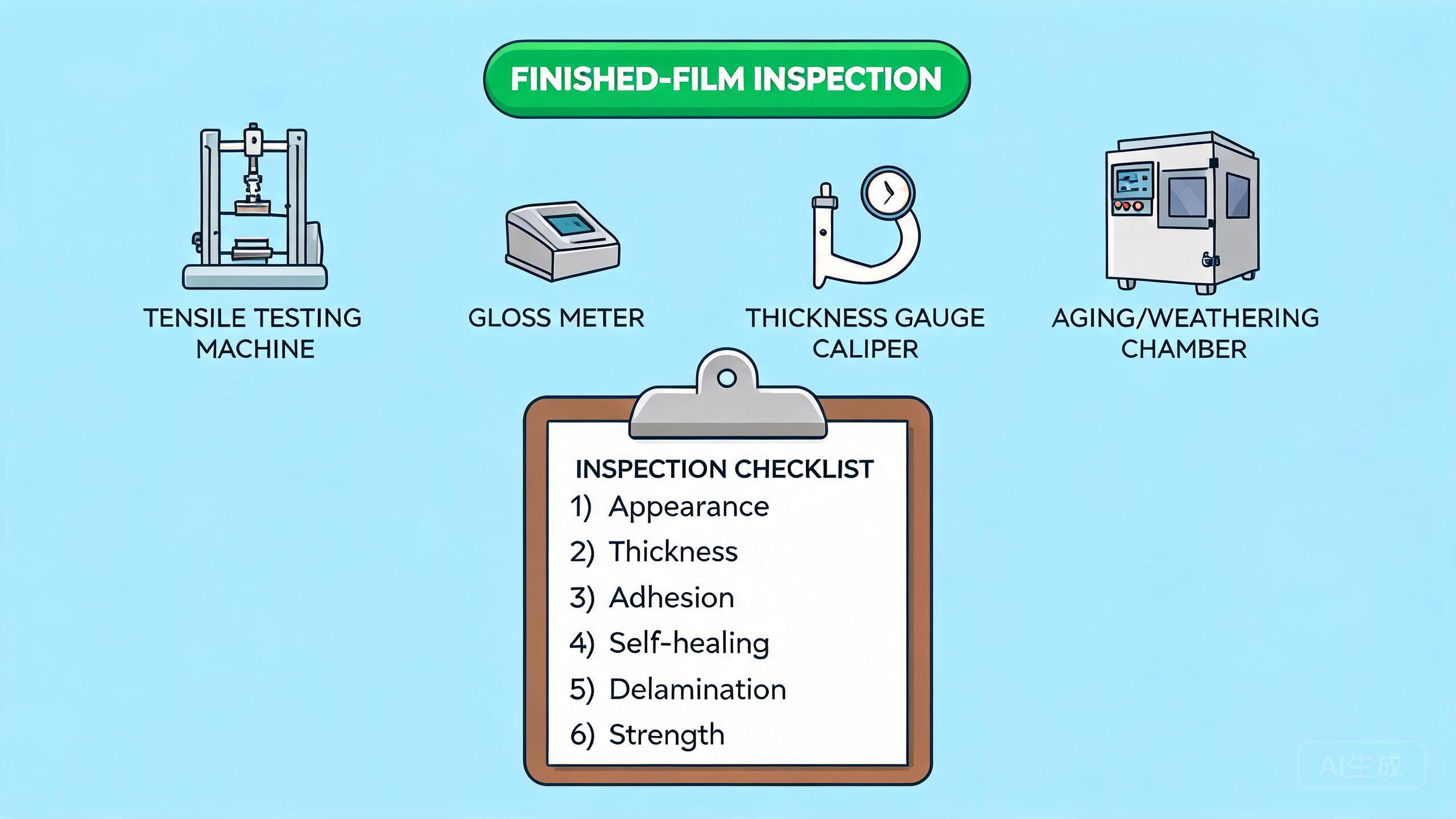
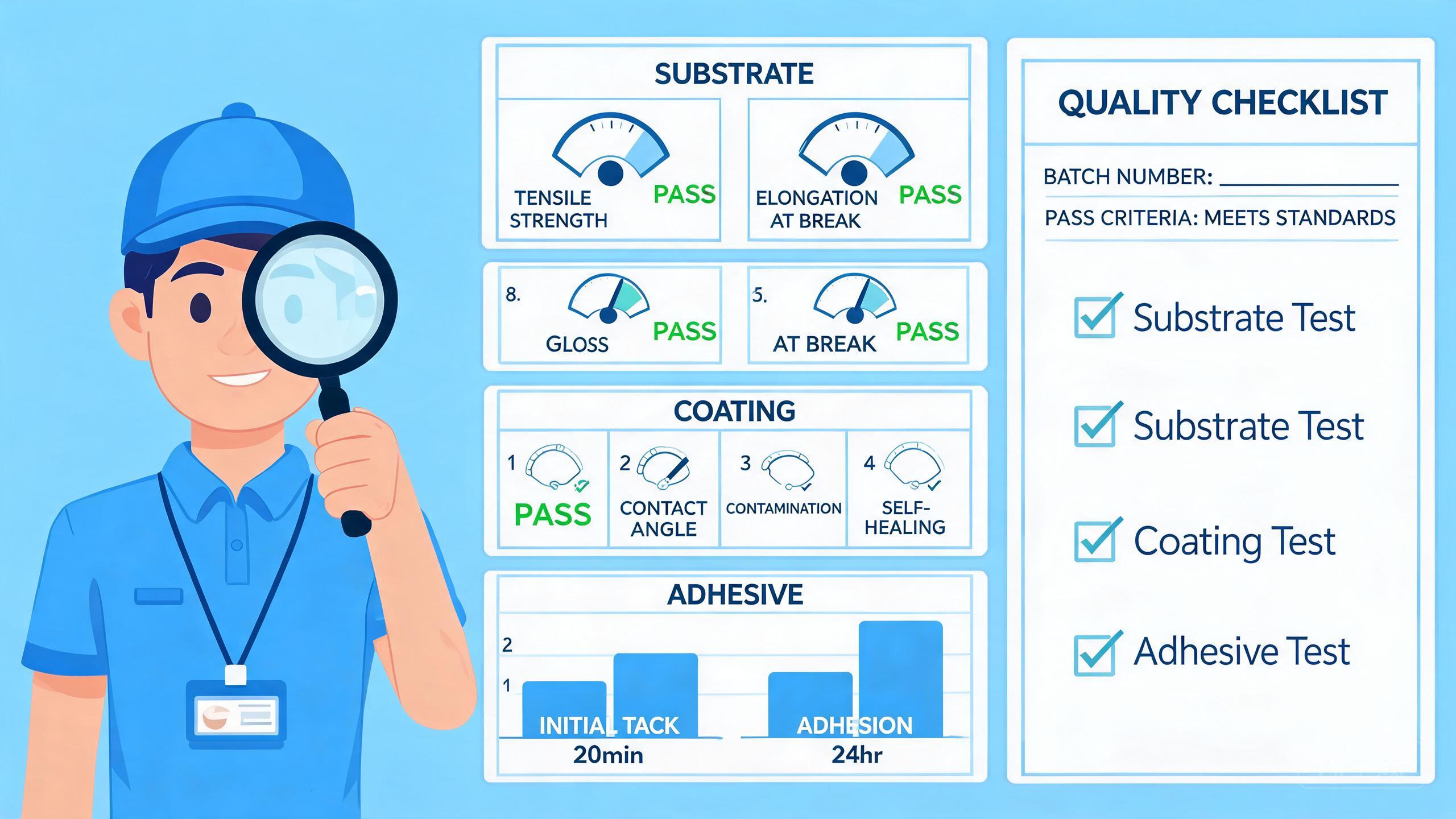
| Check | Why it matters | Example from the attached reports |
|---|---|---|
| Appearance and width | Confirms the roll can be installed consistently. | No wrinkles, flow marks, crystal points, embossing, or other visible defects; width measured at 1560 mm. |
| Total construction | Shows whether the delivered film matches the specified build. | Transparent samples recorded roughly 186–238 μm total thickness, depending on grade. |
| Delamination | Checks whether layers remain bonded as one product. | No delamination reported. |
| Adhesion | Helps screen for early lift and weak bonding. | 24-hour results above 2,000 g in the reviewed reports. |
| Surface recovery | Tests the stated self-healing function under a defined procedure. | Surface fully recovered under the listed test procedure. |
A qualified report also needs traceability. It should identify the product, specification, lot or batch, inspection date, method, target, actual result, conclusion, and reviewer. A generic PDF with attractive claims but no batch reference is much less useful for a procurement decision.
5. What a Responsible PPF Brand or Manufacturer Should Provide
A professional supplier does not ask a first-time buyer to trust marketing words alone. It should be able to provide a current technical data sheet, construction description, product-specific test methods and acceptance limits, lot traceability, installation guidance, care instructions, warranty terms, and a clear contact route for a claim.
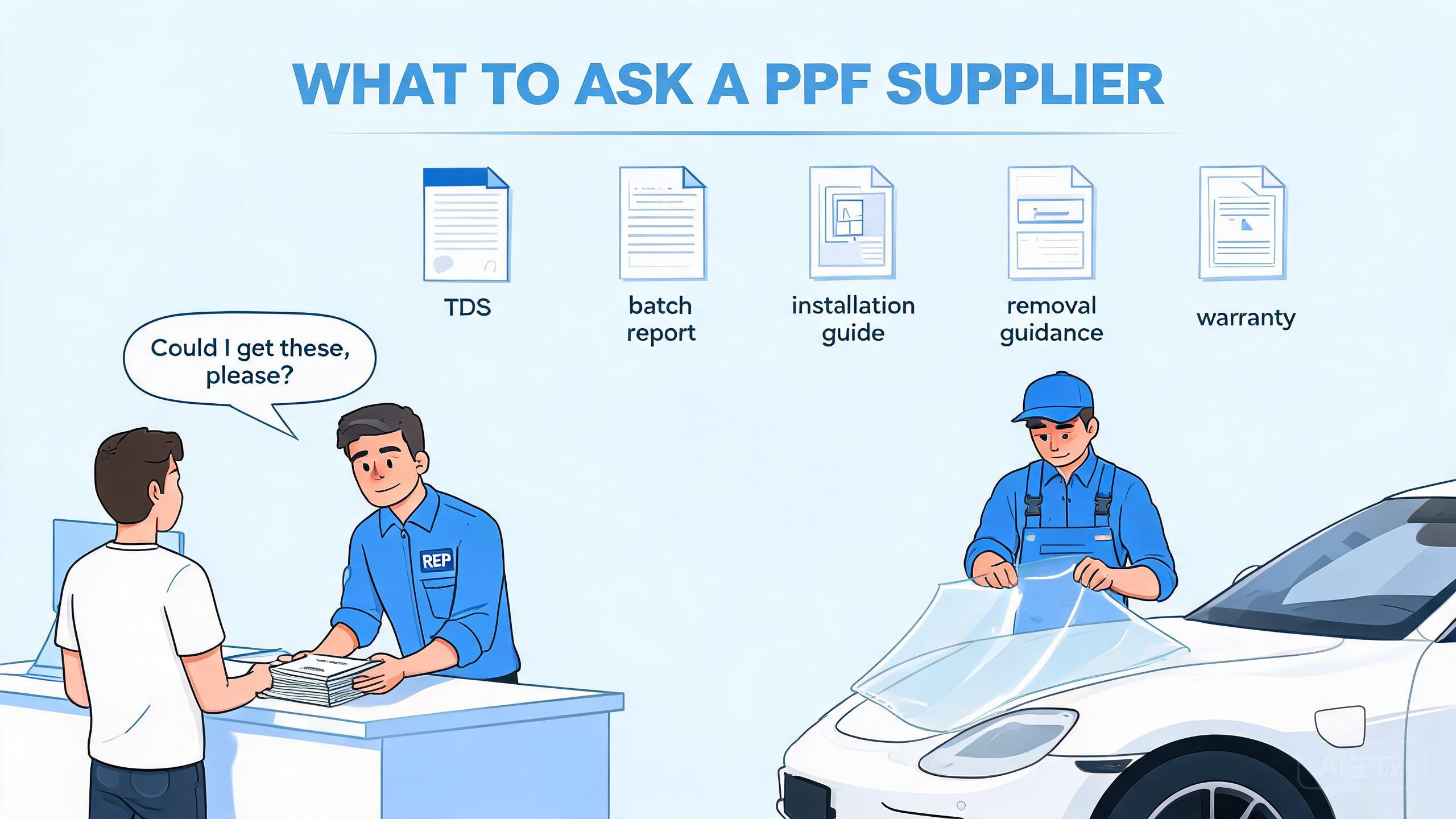
- Before purchase: documented construction, key finished-film values, intended use, warranty exclusions, and sample/lot identification.
- During installation: storage conditions, installation temperature guidance, slip/tack solution guidance, stretching limits, and edge-sealing instructions where needed.
- After installation: wash and maintenance guidance, removal conditions, a written claim process, and evidence requirements for warranty review.
For distributors and purchasing teams, request a Certificate of Analysis or finished-product inspection report for the lot being supplied. For installers, confirm that the film’s published test conditions match the vehicle, climate, and installation practice. For consumers, treat a clear warranty as one part of the decision, not proof on its own.
A Simple First-Time Buyer Checklist
Before choosing a PCU or TPU film, ask these questions: What is the complete layer structure? Which values are measured on the finished product? Is the report tied to a lot? How are gloss, stain resistance, self-healing, and adhesion tested? What are the installation and removal limitations? Who handles a verified claim? If the answers are specific, documented, and consistent, you are evaluating a supplier on production discipline rather than slogans.
Final Takeaway
A qualified PPF is not defined by one polymer name, one thickness figure, or one headline claim. It is a documented finished-film system with a capable substrate, functional coating, stable adhesive, clear acceptance criteria, batch-level traceability, and support that lasts beyond installation.
If you would like help reading a PPF specification, comparing supplied test reports, or sourcing paint protection film, contact SHIELD SPIRIT for a practical discussion.