










How to Read PPF Material Test Data Before You Buy
How to Read PPF Material Test Data Before You Buy
A material chart can make every PPF sound scientific, even when it does not answer the question a car owner actually has. The goal is not to memorize chemistry. The goal is to know which numbers describe flexibility, strength after aging and real-world support for the exact film on offer.
Use this guide as a buyer's translation sheet for three common base-film routes: PCDL-type, PCL-type and polyester-type. These are starting points for comparison, not automatic rankings. The supplied data is anonymized and presented only under its stated test conditions.
First, learn the three labels without the chemistry lecture
PCDL-type can be remembered as an endurance-oriented route in the supplied comparison: it combined lower-force stretch with stronger hot-humid and chemical-test retention. PCL-type is a practical TPU route often used to balance processing and everyday PPF performance, but it still needs product-level proof for the climate. Polyester-type is another established route; when hot humidity is part of ownership, ask especially carefully for finished-film aging data. No label alone tells you whether the final PPF is right for your car.
What "easy to install" looks like in data
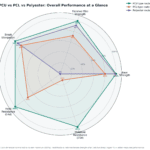
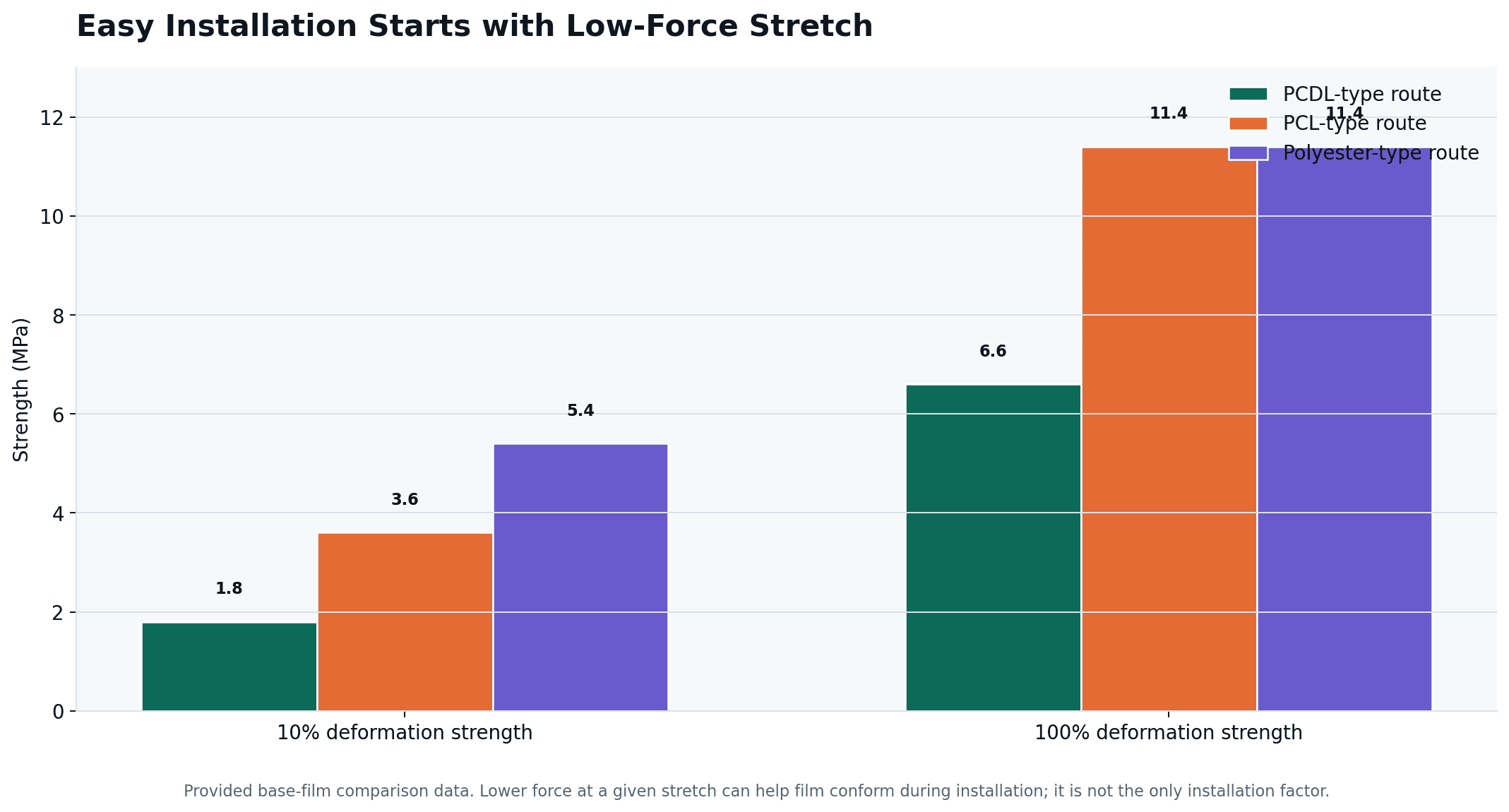
The 10% deformation number describes the force needed for a small stretch. In the supplied base-film comparison, the PCDL-type route was lower at 1.8 MPa, versus 3.6 MPa for the PCL-type route and 5.4 MPa for the polyester-type route. Lower force may help conform film around curves, but installers also need to judge adhesive behavior, thickness, temperature and technique. This is why a PPF base-film explanation should be paired with an installation demonstration.
Then check the finished film, not only the raw material
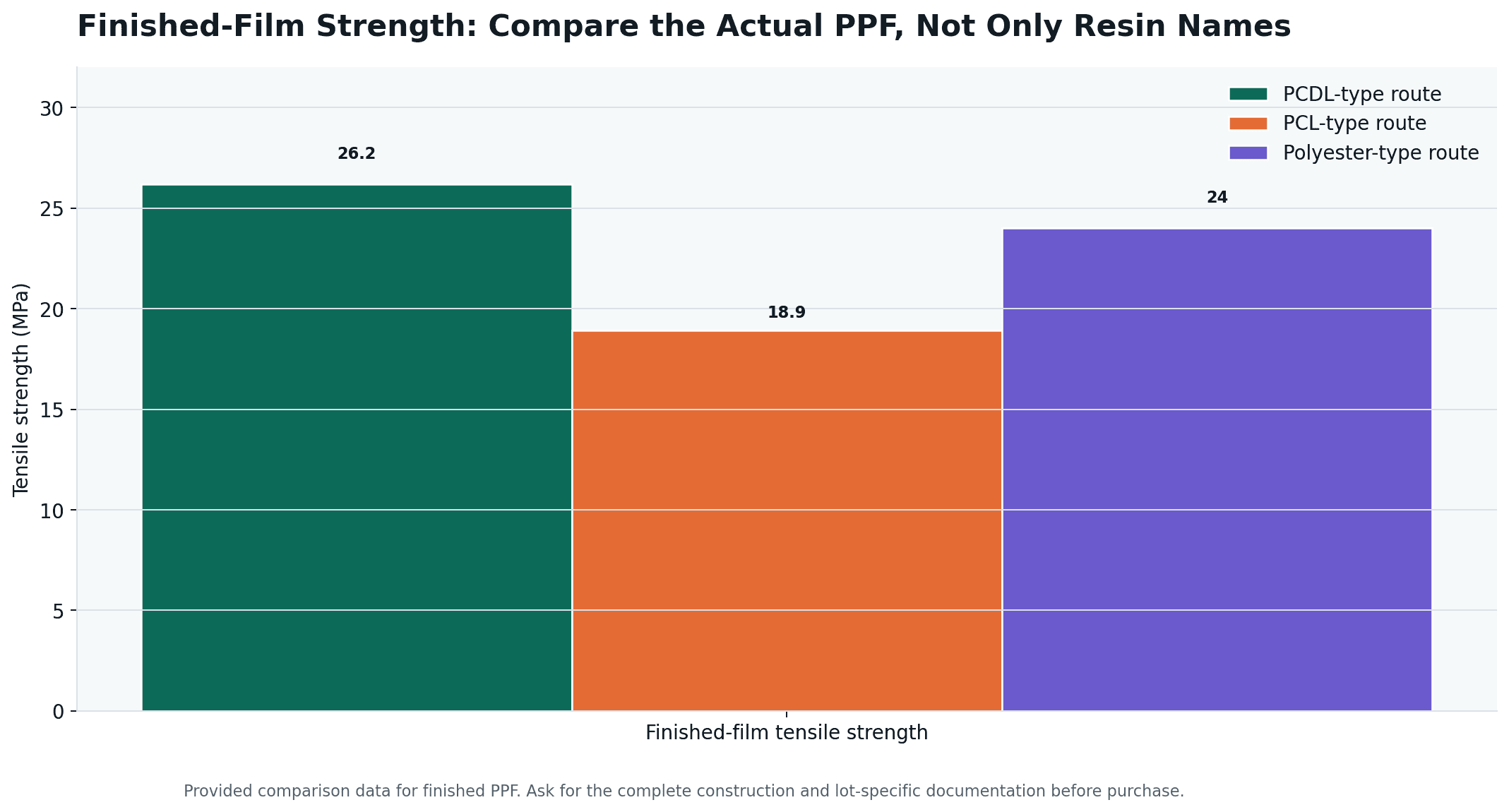
One of the most useful lines in any technical sheet is finished-film tensile strength. The supplied finished PPF comparison reported 26.2 MPa for the PCDL-type route, 18.9 MPa for the PCL-type route and 24.0 MPa for the polyester-type route. That is a better buying clue than a base-film claim alone, but a complete decision still includes the topcoat, adhesive, thickness and warranty.
How to understand heat and humidity charts
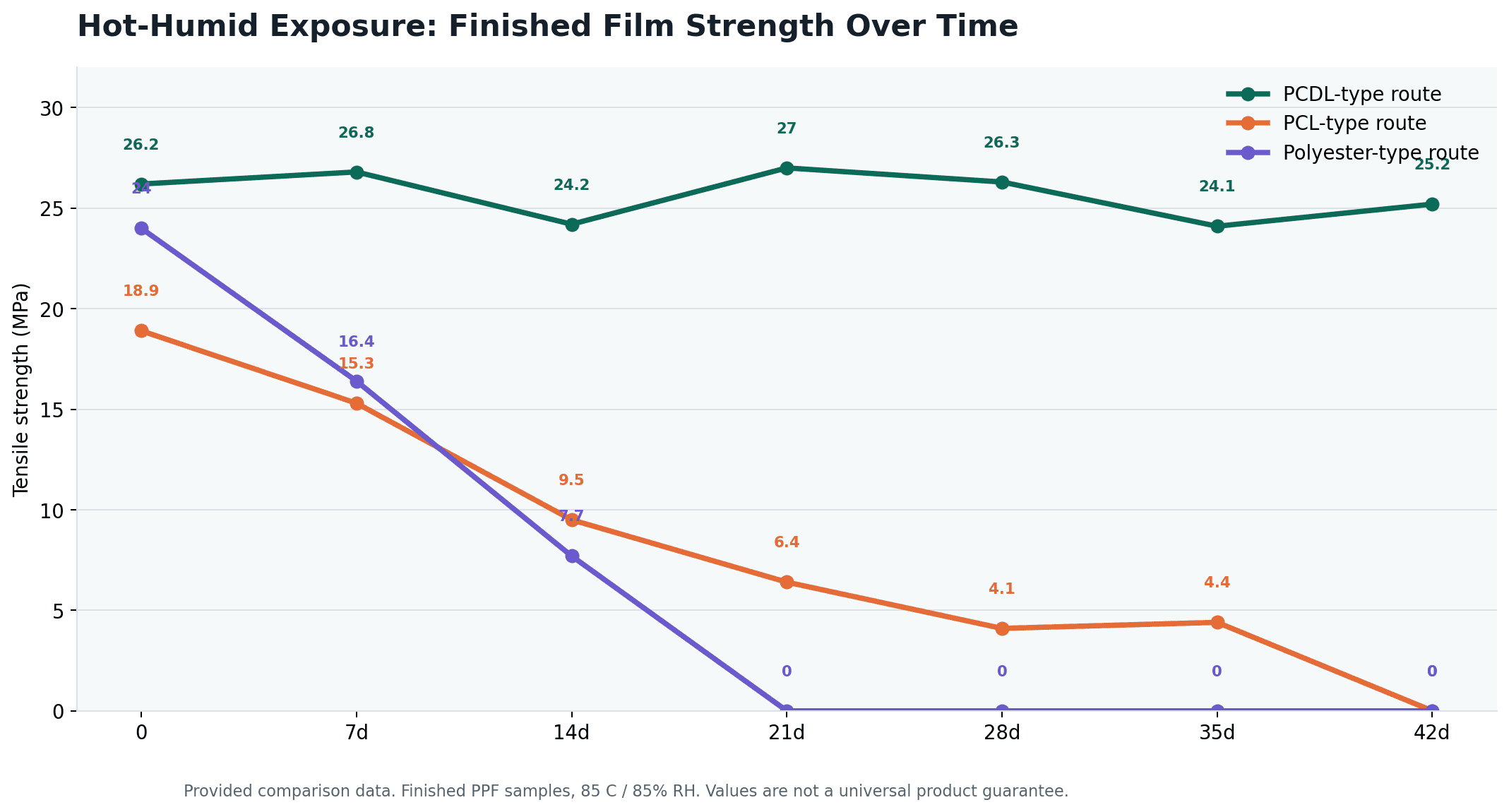
When comparing an aging chart, do not look only at day zero. Look at the last relevant time point. In the supplied 85 C / 85% RH test, the PCDL-type finished film stayed near its initial strength range through 42 days, while the other two curves fell more sharply. If you live in a hot, humid location, that is the type of comparison to request from a seller for the exact product you are considering.
How to understand acid and alkali retention
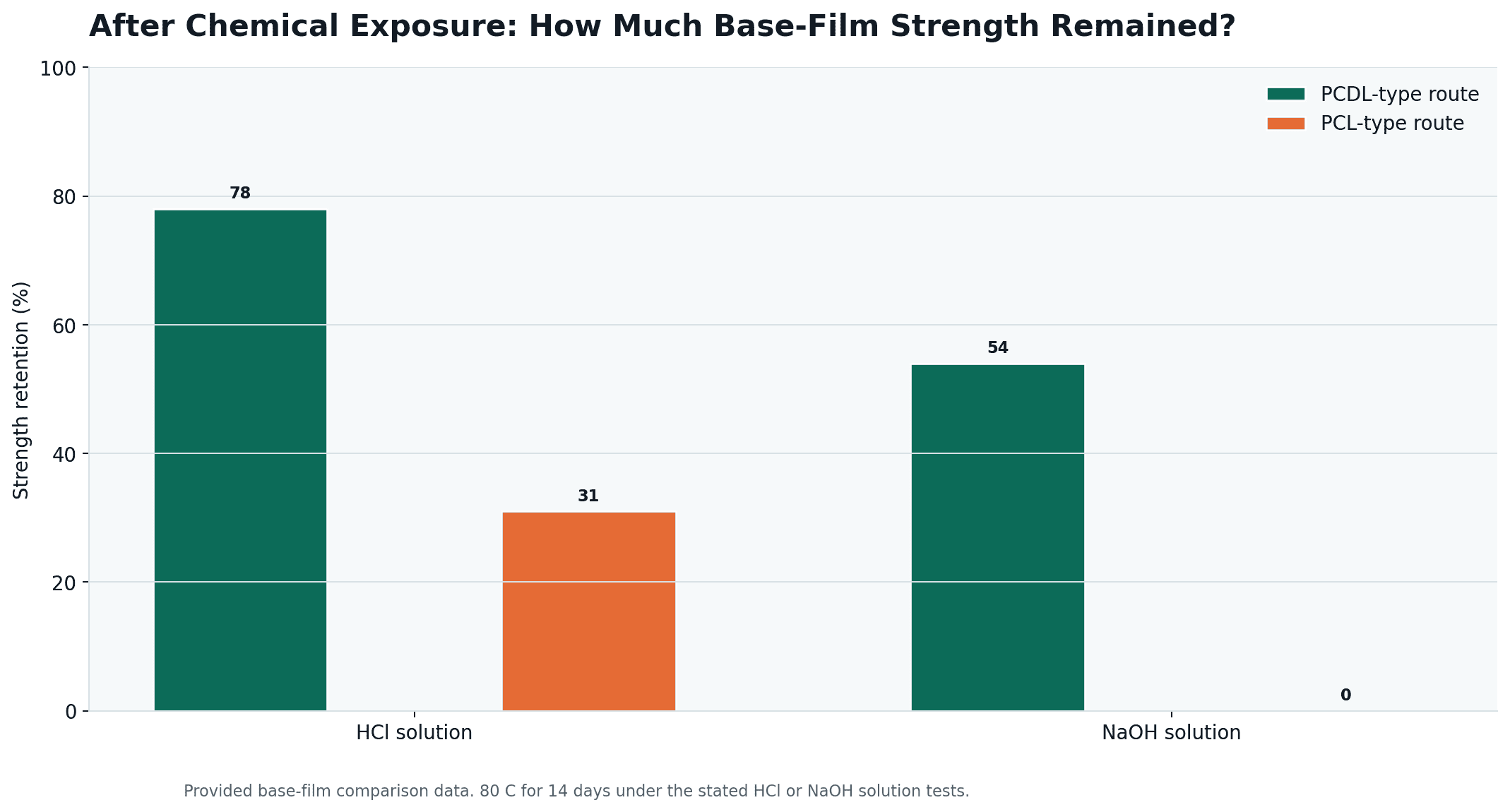
Strength retention means: after the stated stress, how much of the material's original strength remains? In the supplied base-film tests at 80 C for 14 days, the PCDL-type comparison retained 78% after acid exposure and 54% after alkali exposure. The PCL-type comparison retained 31% and 0% respectively. Do not use this to predict every cleaner or contaminant. Use it to ask better questions about approved care products and the PPF topcoat that faces the outside world.
Turn the chart into a purchase checklist
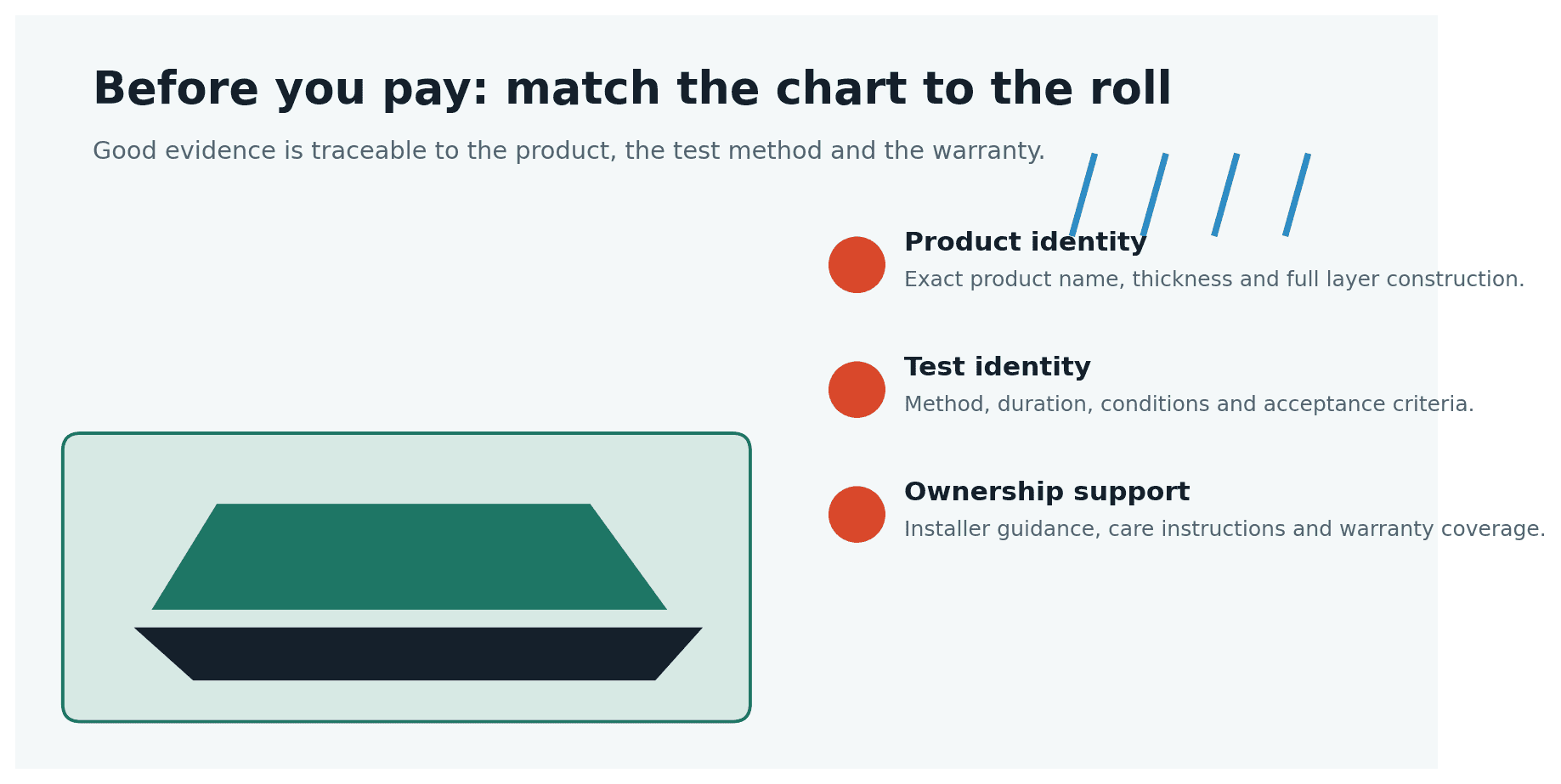
A dealer should be able to connect the evidence to the roll: exact product identity, full construction, test method, stated conditions, acceptance criteria, care guidance and warranty. If those parts do not line up, the chart may not apply to the product being sold. You should also ask how the PPF adhesive and topcoat fit into the complete system.
The honest trade-off
There is no universal winner written into a material acronym. The practical lesson from the supplied comparison is that a polycarbonate-based PCDL-type route showed stronger performance under the listed high heat, hot-humid and acid/alkali conditions. That makes it a meaningful direction for demanding climates. Your final choice should still match budget, vehicle use, local installation quality and a product-specific warranty.
FAQ
Is PCDL-type PPF automatically premium?
No. Material route is one part of a multilayer PPF. Review the finished product, documentation and warranty rather than buying on a label alone.
Which PPF chart is most useful to a normal driver?
Start with finished-film aging data under a condition close to your climate, then verify the sample, test duration and product identity. This is more useful than comparing unrelated laboratory numbers.
For a broader purchase framework, see the PPF tier selection guide.