







So beziehen Sie PPF direkt von OEM-Werken: Ein umfassender Leitfaden für die B2B-Beschaffung
Learn to evaluate and select a reliable PPF OEM factory. Discover 8 critical factors every B2B buyer must verify before sourcing paint protection film — from QC protocols to supply reliability.
Why Source Paint Protection Film Directly from an OEM Factory?
PPF OEM factory sourcing has become one of the most consequential supply chain decisions for automotive aftermarket businesses. The global paint protection film market is expanding at a 17.8% CAGR, with the automotive tinting film segment alone projected to reach $6.42 billion by 2030. For B2B distributors, wholesalers, and retail chains, this growth creates an urgent strategic question: how do you secure a reliable, cost-competitive PPF supply chain that can scale with your business?
Sourcing directly from a PPF OEM factory eliminates multiple layers of intermediary markup. In a traditional distribution model, brand licensing fees, regional distributor margins, and channel partner costs can inflate wholesale prices by 30–50% before the product reaches an installer’s shelf. By partnering with a manufacturer that offers factory-direct OEM/ODM programs, B2B buyers capture those margins while gaining full control over product formulation, branding, packaging, and specifications.
This guide outlines the eight critical factors every procurement professional should evaluate before committing to a PPF manufacturing partner — drawn from real-world experience supplying 70+ countries with automotive film products.
1. Factory Infrastructure: Does the Manufacturer Actually Make the Film?
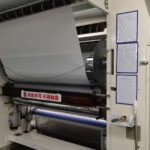
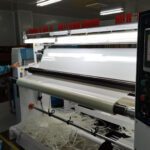
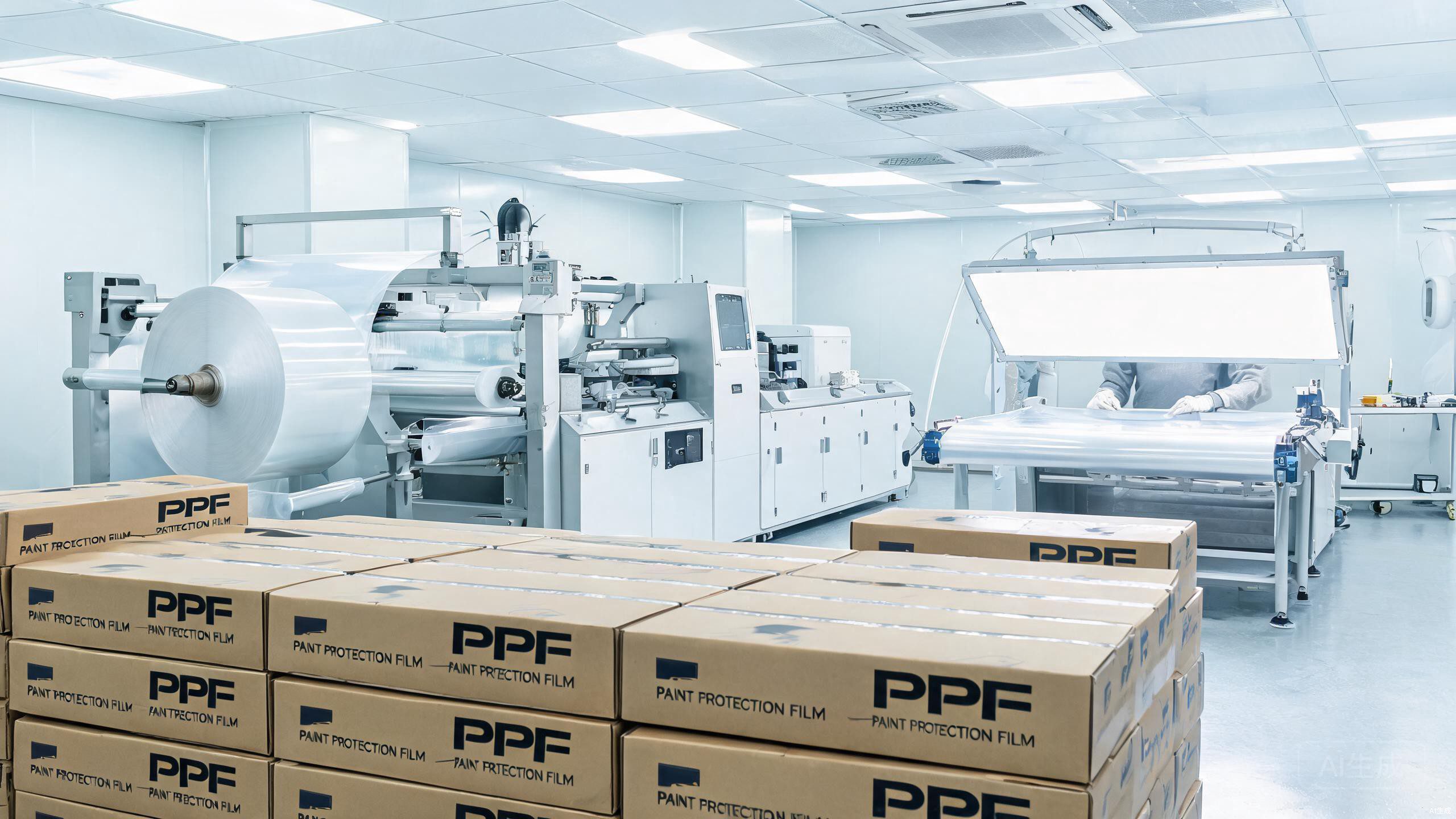
The single most important distinction in PPF sourcing is whether your supplier is a true manufacturer or a trading company that purchases semi-finished rolls from third parties. A genuine OEM factory operates in-house production lines — TPU extrusion, coating application, slitting, and packaging all under one roof.
When evaluating factory infrastructure, verify these specifics:
- Total production area: Facilities exceeding 50,000 sqm signal serious manufacturing capability rather than small-batch operation
- Cleanroom classification: PPF production requires ISO-classified dust-free environments; contamination at the coating stage creates irreparable optical defects. Every PPF product line — from conventional TPU to premium PCU — demands this level of production hygiene
- In-house lab and R&D center: True OEM partners formulate their own coatings rather than buying off-the-shelf solutions — this is what enables custom product development
- Production capacity and inventory depth: Can the factory fulfill a container order without 60-day lead times? Adequate rolling stock inventory prevents stockouts during peak seasons
SHIELD SPIRIT operates from 70,000 sqm of integrated production facilities with ISO-classified workshops, in-house R&D, and dedicated warehousing — the kind of vertically integrated manufacturing infrastructure that separates genuine OEM partners from resellers.
2. R&D Capability and Technology Ownership
A factory’s patent portfolio is the most objective indicator of genuine innovation capability. Look for manufacturers that hold invention and utility patents — not just design registrations — covering areas such as film defect detection, coating formulation, adhesive systems, and production equipment.
The global PPF patent landscape now exceeds 12,700 active patents, with self-healing coatings, multi-layer co-extrusion, and nano anti-scratch technologies accounting for 62.8% of all filings. A factory that contributes to this innovation ecosystem — rather than simply replicating existing formulas — can offer exclusive product differentiation that generic trading companies cannot match.
Ask potential partners: What proprietary technologies differentiate your films? Can you customize substrate chemistry for specific climate requirements? Do you have documented patents we can review?
3. Quality Control: The Non-Negotiable Factor
In PPF manufacturing, batch consistency is everything. Even small variations in coating thickness, adhesive tack, or substrate formulation create installation headaches that multiply across hundreds of vehicles — and each rework incident erodes your brand’s reputation with installers and end customers.
A credible OEM factory implements three-stage quality control as a minimum:
- Incoming raw material inspection: TPU pellets, coating chemicals, adhesives, and release liners tested before entering production
- In-process monitoring: Real-time checks on coating uniformity, repair layer thickness, and process parameter stability at every production stage
- Post-production verification: Every roll undergoes appearance inspection, adhesion testing, optical clarity measurement, and tensile strength validation — with documented batch traceability records
Beyond standard QC, leading manufacturers conduct accelerated aging tests — 5,000-hour QUV exposure and extended water immersion — to validate long-term performance claims before product release. If a factory cannot produce batch-level QC documentation on request, consider it a red flag.
4. OEM/ODM Customization: What Should You Actually Ask For?
The value of an OEM partnership lies in customization depth, not just private labeling. Here are the customization dimensions that separate full-service manufacturers from limited-capability suppliers:
- Substrate formulation: Can the factory adjust TPU hardness, elongation, and hydrolysis resistance to match your target climate and vehicle segment?
- Top-coat performance: Options for self-healing speed, hydrophobic properties, stain resistance, and gloss level (glossy, matte, satin)
- Adhesive system: Custom tack levels for different installation environments — lower initial tack for dry climates, higher repositionability for humid regions
- Color matching: For color PPF lines, can the factory match specific OEM paint codes or custom brand colors?
- Packaging and branding: Custom box design, private-label roll packaging, branded squeegees and installation kits, multilingual instruction inserts
- Slitting and sizing: Custom roll widths and lengths optimized for your most popular vehicle patterns
Many distributors begin with a small-batch order to validate film quality and installation characteristics before scaling to container volumes — a low-MOQ approach that minimizes risk while testing market fit.
5. Logistics, MOQ, and Supply Chain Reliability
The best product quality means nothing if your factory partner cannot deliver on time, every time. Evaluate supply reliability across these dimensions:
- Minimum order quantity (MOQ): A factory offering a low entry MOQ of 10–20 rolls allows you to test market response before committing to container volumes — this is particularly valuable for distributors entering new geographic territories
- Lead time consistency: Confirm realistic production-to-shipment timelines and verify through reference checks with existing clients
- Global logistics experience: The factory should demonstrate familiarity with customs documentation, freight forwarding, and regional import requirements across multiple continents
- Order tracking: Real-time visibility into production status and shipment tracking is a baseline expectation for professional B2B partnerships
A 10-roll MOQ with real-time order tracking gives distributors the agility to test new markets without overcommitting inventory — an approach that has proven effective across SHIELD SPIRIT’s distribution network in 70+ countries.
6. Technical Support and After-Sales Partnership
A transactional supplier ships boxes. A strategic OEM partner invests in your success through ongoing technical support, installation training, and marketing resources. This is particularly critical when you are introducing a new PPF brand to installers who may be unfamiliar with your product’s specific handling characteristics.
Evaluate whether the factory provides:
- Installation training materials: Video guides, technique manuals, and live training sessions that help your installer network achieve consistent, professional results
- Marketing collateral: Product data sheets, comparison charts, sample swatches, and digital assets for your sales team and website
- Warranty administration support: Clear claims procedures, reasonable processing timelines, and a demonstrated track record of honoring warranty commitments
- Dedicated account management: A single point of contact who understands your business, your markets, and your growth objectives. This is standard in comprehensive OEM programs that include formulation support, private labeling, and marketing collateral
Conclusion: Building a Long-Term PPF Supply Partnership
Sourcing PPF from an OEM factory is not a one-time transaction — it is a strategic partnership decision that shapes your brand’s reputation, your installer relationships, and your competitive positioning for years to come. The right manufacturing partner brings R&D depth, QC rigor, customization flexibility, and supply chain reliability that enable you to compete on value rather than price alone.
As the global PPF market accelerates toward $6.42 billion by 2030, the window of opportunity for building differentiated, private-label PPF brands is wide open — but only for distributors who partner with genuine, full-chain manufacturers rather than resellers. The first step is requesting technical specifications, sample rolls, and QC documentation from factories that meet the criteria outlined in this guide. Start that conversation today and discover what factory-direct PPF sourcing can do for your product line and margins.